Twenty-two days into the US-Israeli war on Iran, at least 20 countries are now militarily involved. The Strait of Hormuz is functionally closed. Oil prices have surged nearly 50 percent. Eighty-five nations are reporting rising petrol prices. Pakistan and the Philippines have moved to four-day work weeks to conserve fuel. And yet, by every official and academic definition available, this is not a world war.
The boss suggested we take a look at this particular absurdity, and honestly, it is worth sitting with for a moment.
It is, instead, a “regional conflict with international dimensions,” or a “multi-theater military operation,” or whatever other euphemism allows us to file it under something less terrifying than what it looks and feels like to the rest of the planet. So let us examine what this not-a-world-war actually looks like on the ground, in the markets, and at the negotiating tables where nobody is negotiating.
What Is Actually Happening
On February 28, 2026, the United States and Israel launched surprise airstrikes on Iran. The operation killed Supreme Leader Ali Khamenei in the opening minutes, along with senior military officials and, at one elementary school in Minab, 168 people, including over 100 children. Iran struck back, hard, hitting Israel and US bases across the Gulf with hundreds of ballistic missilesA rocket-propelled weapon launched on a high arcing trajectory; after its engines burn out, it follows a ballistic (unpowered) path to its target, typically carrying conventional or nuclear warheads over long distances. and drones.
Three weeks later, neither side shows interest in stopping.
Who Is Involved
The shortlist of countries that have been drawn in, willingly or otherwise:
- United States and Israel: the initiators, conducting ongoing airstrikes against Iranian military, nuclear, and energy infrastructure.
- Iran: retaliating against Israel, US bases, and Gulf states including the UAE, Qatar, Kuwait, Saudi Arabia, and Bahrain.
- United Kingdom: after an Iranian drone struck the British base on Cyprus, PM Starmer authorized the US to use British air bases and deployed a Royal Navy destroyer.
- Italy, Netherlands, Spain: sending warships to defend Cyprus.
- France and Germany: initially calling for negotiations, now involved after Iranian strikes hit their personnel in Jordan.
- Hezbollah/Lebanon: broke its ceasefire on March 2, launching missiles and drones into Israel, prompting a limited Israeli invasion on March 17.
- Azerbaijan: hit by Iranian drones on a civilian airport, preparing retaliatory measures.
- Oman: struck by Iranian drones at Duqm port despite being the war’s primary mediator.
That is a lot of flags on the map for something that is not a world war.
Why You Should Care Even If You Are Nowhere Near Iran
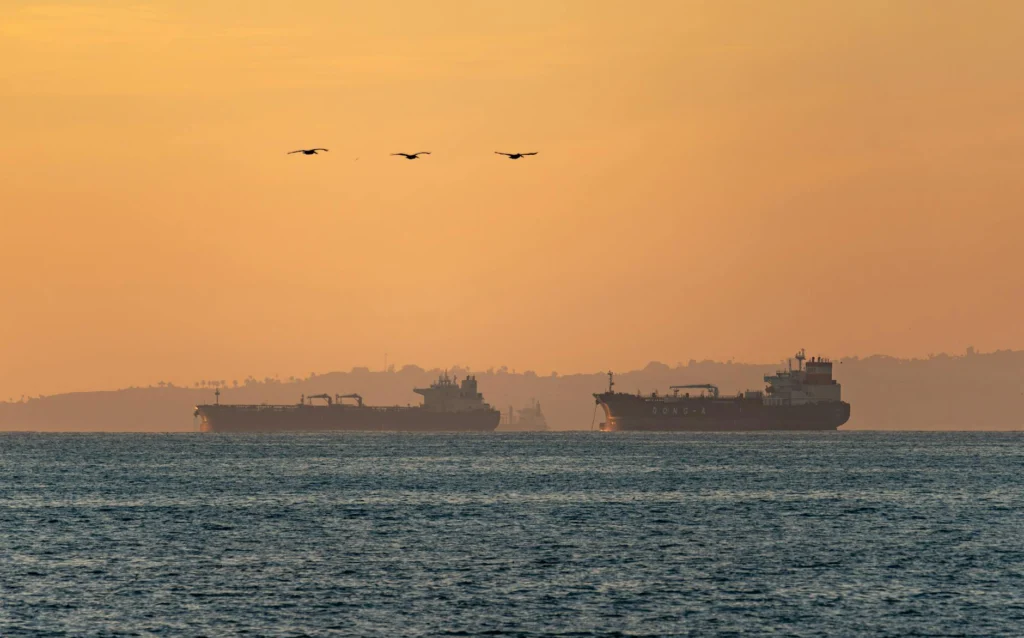
Iran declared the Strait of Hormuz “closed” on March 4. An IRGCIran's Islamic Revolutionary Guard Corps, an elite military and security organization that operates independently from conventional armed forces and oversees external operations and proxy networks. commander said any vessel attempting to pass would be set “ablaze.” About 150 ships were immediately stranded. Shipping traffic dropped 80 percent.
This matters because one-fifth of the world’s oil passes through that strait. Brent crude hit $106 per barrel by mid-March, up more than 40 percent from $72 before the war. LNG prices jumped almost 60 percent. Global stocks fell 5.5 percent. Japan’s Nikkei dropped 11 percent. Saudi Arabia’s Tadawul fell 9.6 percent.
At least 85 countries have reported petrol price increases since February 28. Cambodia’s pump prices rose 68 percent. Vietnam: 50 percent. Nigeria: 35 percent. Pakistan introduced a four-day government workweek. The Philippines did the same. Thailand made work-from-home mandatory for government employees. Myanmar restricted driving to alternate days. Sri Lanka introduced QR codes for fuel purchases.
This is the texture of a not-a-world-war: fuel rationing in Colombo, cancelled flights from Sydney, and the Nikkei in freefall.
Can Anyone Stop It?
The short answer: not right now.
Oman, which had been mediating nuclear talks between Iran and the US, says peace was “within reach” hours before the strikes began. Iran’s foreign minister has rejected the idea of a ceasefire, insisting the war must simply “end.” Trump has said he is not interested in a ceasefire either, though he has mentioned “winding down” military operations.
So: one side will not stop fighting because it views this as existential. The other will not negotiate because it has not gotten good enough terms yet. And everyone else is paying for it at the pump.
The Taxonomy of War
The phrase “World War III” carries a very specific weight. It implies great-power alliances in direct opposition, total mobilization of national economies, and a scale of destruction that reshapes the international order. By that definition, this conflict does not qualify. Russia, China, and India are not belligerentsA state or armed group legally recognized as an active party to an armed conflict, subject to the laws of war.. NATO has not invoked Article 5NATO's collective defense clause in the North Atlantic Treaty. States that an armed attack on one member nation is considered an attack on all, triggering collective military response.. No country has declared general mobilizationThe mass activation of a nation's military reserves and conversion of its economy to war production, typically requiring emergency legislation..
But the definition is doing a lot of heavy lifting. At least 20 countries are now militarily involved in shooting, shielding, or supplying. Iran has struck at least 10 countries since the war began. The economic shockwave has triggered fuel rationing or emergency measures in dozens more. The conflict has reopened the Lebanon front. It has shut down the world’s most critical energy chokepoint. It has killed a head of state in the opening salvo.
If this is not a world war, it is the most convincing imitation in decades.
The Opening Salvo: February 28
The US-Israeli strikes began at 9:45 AM local time on February 28, 2026. The operation targeted Iran’s nuclear program, missile infrastructure, and leadership. Supreme Leader Ali Khamenei was killed in the initial minutes. His son Mojtaba narrowly survived. Multiple senior officials were also killed.
The deadliest single incident was the strike on Shajareh Tayyebeh Elementary School in Minab, Hormozgan province. Amnesty International’s investigation found that 168 people were killed, including over 100 children. The school building was directly struck alongside 12 structures in an adjacent IRGCIran's Islamic Revolutionary Guard Corps, an elite military and security organization that operates independently from conventional armed forces and oversees external operations and proxy networks. compound. Amnesty’s forensic analysis identified a US-manufactured Tomahawk missile as the likely weapon. The organization concluded that the strike constituted “a serious breach of international humanitarian lawThe body of law that governs armed conflict, setting rules to protect civilians, prisoners of war, and the wounded. Also called the laws of war.,” noting that satellite imagery from as early as 2016 showed the school had been separated from the military compound.
The US military’s own preliminary investigation, reported by the New York Times on March 11, found the strike resulted from reliance on outdated intelligence data.
Iran’s Retaliation and the Gulf Dimension
Iran responded with a massive retaliatory campaign, firing hundreds of ballistic missilesA rocket-propelled weapon launched on a high arcing trajectory; after its engines burn out, it follows a ballistic (unpowered) path to its target, typically carrying conventional or nuclear warheads over long distances. and drones at Israel and US bases across the region. But the strikes went far beyond the two countries that attacked it.
The UAE was struck by hundreds of drones and missiles, with Iranian drones striking a luxury hotel on Dubai’s Palm Jumeirah and igniting fires at Jebel Ali Port. Qatar suspended most of its LNG production after drone strikes hit two energy facilities, and its air force shot down two Iranian Su-24 fighter jets. Kuwait was hit on the first day of the war in an attack that produced the first American combat deaths. Azerbaijan’s civilian airport was struck. Oman’s Duqm port was hit by drones, despite Oman’s role as the primary diplomatic mediator.
The logic, from Tehran’s perspective, is strategic: impose maximum pain on Washington’s allies to fracture the coalition. As the Atlantic Council’s analysis noted, “The Iranian regime perceives that it is in an existential conflict, and it does not appear to be interested in an immediate off-rampIn diplomacy, a negotiated exit path that allows a party to de-escalate or withdraw from a conflict without appearing to capitulate..”
The European Entanglement
Europe’s involvement has been escalatory and somewhat reluctant. After an Iranian drone struck the UK’s Akrotiri base on Cyprus, Prime Minister Starmer authorized US use of British air bases for strikes on Iranian missile sites and deployed naval assets. Italy, the Netherlands, and Spain sent warships to defend Cyprus. France and Germany, which initially called for a return to negotiations, shifted their posture after Iranian strikes hit their personnel in Jordan.
France announced the deployment of nuclear-armed aircraft to eight European countries as a deterrent against spillover. This is not the behavior of nations in a region at peace.
The Economic War Everyone Is Losing
The Strait of Hormuz closure is, by the Federal Reserve Bank of Dallas’s assessment, the largest supply disruption in the history of the global oil market. Previous geopolitical oil shocks removed 4 to 6 percent of global supply. This one has removed close to 20 percent.
The Dallas Fed’s modeling projects that the closure will lower global real GDP growth by an annualized 2.9 percentage points in Q2 2026, raising the average WTI price to $98 per barrel. If the closure persists for three quarters, the oil price could reach $132 per barrel, with global GDP growth falling 1.3 percentage points for the year.
The real-world effects are already visible. Brent crude hit $106 per barrel by mid-March, up more than 40 percent. LNG prices rose almost 60 percent. Qatar, which supplies 20 percent of the world’s LNG, suspended production after Iranian attacks. At least 85 countries have reported rising petrol prices since February 28.
Capital Economics forecasted that if the war continues for several months, Brent crude could average $150 per barrel over the next six months, eurozone GDP growth would slow to 0.5 percent, and China’s growth would fall below 3 percent. The IMF’s Kristalina Georgieva warned of inflationary risk to the global economy on March 9.
Global stock markets have fallen 5.5 percent since the war began. The Nikkei dropped 11 percent. The Tadawul fell 9.6 percent. The NYSE Composite fell 6 percent. Economists are invoking the crises of 1973, 1978, and 2008, noting that every significant oil price spike has preceded some form of global recession.
The Ceasefire That Nobody Wants
Oman’s Foreign Minister Badr al-Busaidi said “significant progress” had been reached in nuclear talks just hours before the strikes began. Iran had reportedly offered to forgo stockpiling enriched uranium and accept broad IAEA oversight. Then the bombs fell.
Since then, the diplomatic landscape has been barren. Iran’s foreign minister stated that Iran “never asked for a ceasefire” and that the war must simply end. The Atlantic Council’s Nate Swanson assessed that Iran “may only accept an off-ramp if it ensures there is not another near-term war,” likely requiring Trump to enforce a ceasefire that Israel adheres to.
On the American side, Trump has rejected ceasefire talks while floating the idea of “winding down” military operations. “We are getting very close to meeting our objectives as we consider winding down our great Military efforts in the Middle East,” he wrote on social media, while ruling out a ceasefire agreement with Iran.
The gap between “winding down” and a ceasefire is the gap in which people continue to die, oil continues to not flow, and the global economy continues to absorb the shock.
The Label Problem
Whether or not this is “World War III” is not an academic question. The label carries legal, financial, and psychological weight. Insurance policies have world-war exclusion clauses. Treaty obligations shift depending on how a conflict is classified. Public tolerance for casualties and economic pain changes when people believe they are in a world war versus watching one from a distance.
The distance, however, is collapsing. When Pakistani government employees switch to a four-day workweek because of a war in Iran, when Cambodian fuel prices jump 68 percent, when Australian airlines raise fares because of Hormuz, when Myanmar restricts driving to alternate days, the distinction between “involved” and “uninvolved” becomes a polite fiction.
This is not World War III. It is something we do not yet have a name for: a conflict in which the fighting is regional but the consequences are planetary, where 20 countries are shooting but 85 are bleeding, and where the people with the power to stop it have decided the terms are not good enough yet.