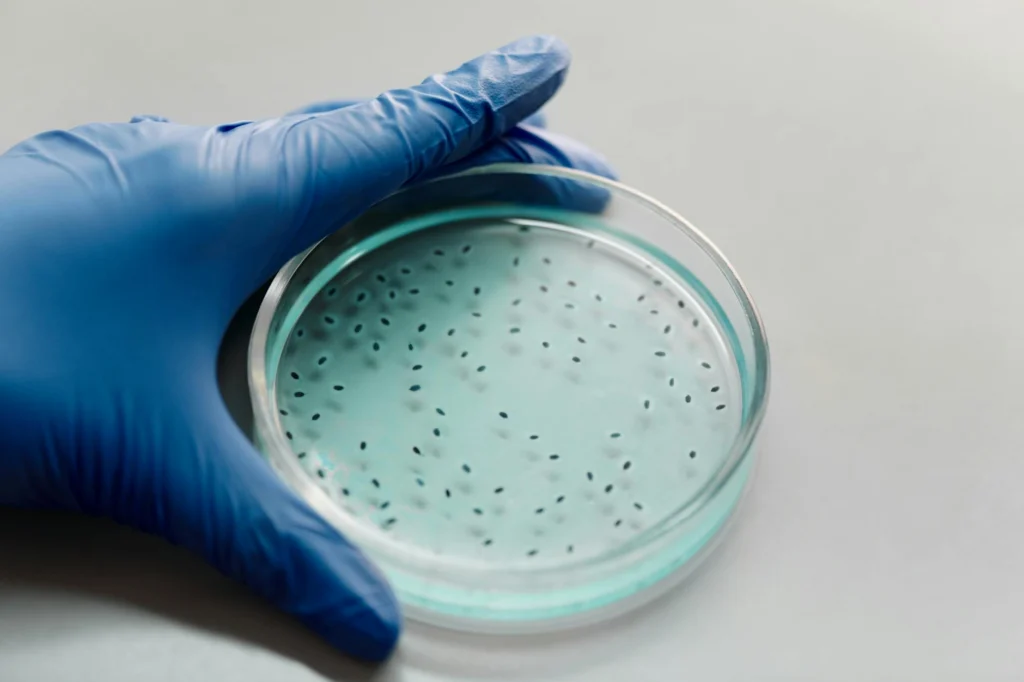
Your gut is home to trillions of microorganisms. Bacteria, viruses, fungi, and other microscopic life forms outnumber your human cells, and their collective genetic toolkit dwarfs yours. The science behind this ecosystem is real, fast-moving, and genuinely exciting. But somewhere between the peer-reviewed journals and your Instagram feed, the story got distorted.
A multi-billion dollar supplement industry now sells “gut health” as though it were a simple problem with a capsule-shaped solution. The truth is more complicated, more interesting, and in some cases, more uncomfortable for the companies asking for your money.
What lives inside you
The NIH Human Microbiome Project, which mapped the microbial communities of 242 healthy adults, found that more than 10,000 microbial species occupy the human body. Those microbes contribute roughly 8 million protein-coding genes, compared to the approximately 22,000 in the human genome. In practical terms, that means the bacteria in your gut help you digest foods, produce vitamins, and regulate inflammation in ways your own cells cannot.
One of the project’s most important findings was that healthy people routinely carry known pathogens. In a well-functioning microbiome, those pathogens simply coexist with beneficial microbes without causing disease. The balance matters more than the presence of any single species.
But here is the part that undercuts much of what the supplement industry tells you: there is no agreed-upon definition of what a “healthy” microbiome actually looks like. As researchers from the University of Maryland stated in a 2024 Science Perspectives article, “There is no scientifically agreed-upon definition of a ‘healthy’ microbiome; the microbiome is dynamic and changes frequently.” Every person’s microbial community is unique, and what the Human Microbiome Project found is that functional diversity matters more than species composition. Different bacteria can perform the same metabolic jobs.
Where the clinical evidence is strong
Not everything about the microbiome is hype. There are specific, well-studied areas where manipulating gut bacteria produces real clinical results.
Recurrent C. difficile infection
This is the clearest success story. Clostridioides difficile infects roughly half a million Americans per year and kills about 15,000. One in six patients experiences a recurrence. In February 2024, the American Gastroenterological Association published its first comprehensive guideline recommending fecal microbiota transplant (FMT) for most patients with two or more C. diff recurrences. The FDA has approved two FMT-based products: REBYOTA (an enema) and VOWST (an oral capsule).
These are not probiotics from a health food store. They are regulated biological products that went through clinical trials.
Preventing necrotizing enterocolitisA severe intestinal disease mainly affecting premature infants, where gut tissue becomes inflamed and dies. Mortality rates reach 20 to 30 percent. in preterm infants
A 2025 review in the Journal of Clinical Investigation called this “the strongest vote of confidence in any microbiome-targeting strategy by a major clinical society to date.” Specific probiotics given to preterm, low-birth-weight infants may reduce the risk of necrotizing enterocolitis (NEC), a devastating intestinal disease that kills 20 to 30 percent of affected infants. The evidence is rated moderate to high certainty.
But even here, the story is complicated. In October 2023, the FDA issued a safety alert after a preterm infant died from sepsis traced to the probiotic they were given. The agency noted more than two dozen adverse events linked to probiotic products in preterm infants since 2018. The FDA has not approved any probiotic product as a drug for infants of any age.
Antibiotic-associated diarrhea
According to the National Center for Complementary and Integrative Health, a 2017 review of 17 studies found that probiotics taken alongside antibiotics roughly halved the risk of diarrhea. The evidence quality was moderate. For C. difficile-associated diarrhea specifically, a review of 31 studies covering 8,672 patients found moderate certainty that probiotics can reduce risk in patients receiving antibiotics.
Where the evidence is weak or absent
The supplement industry implies that probiotics help with a long list of conditions. For most of them, the evidence does not hold up.
The JCI review summarized the state of play: “Despite a multi-billion dollar ‘gut health’ supplement industry and thousands of published clinical trials to date, overall evidence is limited that microbiome-targeting therapies affect clinically relevant outcomes.” The AGA found too little evidence to recommend probiotics for Crohn’s disease, ulcerative colitis, or irritable bowel syndrome, and recommended against giving them to children with acute infectious gastroenteritis.
FMT, despite its success with C. diff, is not recommended by the AGA for inflammatory bowel disease or irritable bowel syndrome. The evidence simply is not there yet.
Do probiotics even change your gut?
Here is perhaps the most inconvenient finding for the supplement industry. A 2026 systematic review and meta-analysis in BMC Medicine, covering 22 randomized controlled trials with 1,068 participants, found that probiotic supplements produced no statistically significant changes in gut microbiota diversity in healthy people. Not by any measure: Shannon diversity, observed species, Chao1, or Simpson’s index all came back flat. Subgroup analyses by probiotic type and duration of use did not change the result.
In other words, the central selling point of most probiotic supplements, that they will improve or diversify your gut bacteria, has not been demonstrated in healthy populations.
The supplement industry’s blind spots
The gap between what science knows and what gets sold to consumers is wide, and it exists for structural reasons.
Strain specificity is everything
The NIH Office of Dietary Supplements is clear: “Because the effects of probiotics can be specific to certain probiotic strains, recommendations for their use in the clinic need to be strain-specific.” A Lactobacillus that helps prevent one condition does not necessarily help with another. Most supplement labels list genus and species but not the specific strain that was tested in clinical trials.
What is on the label may not be in the bottle
Current labeling regulations only require manufacturers to list the total weight of microorganisms, which includes both live and dead organisms and has no relationship to the number of viable cells. A product claiming 50 billion CFU at the time of manufacture may contain far fewer living organisms by the time you swallow it. Products with higher CFU counts are not necessarily more effective.
Testing companies can’t agree on what they find
A 2026 study by researchers at NIST and the University of Maryland sent the same standardized stool sample to seven direct-to-consumer microbiome testing companies. The results showed “major discrepancies.” Some companies found mostly Clostridia; others found mostly Bacteroides. The same sample, seven different answers.
As one researcher involved told Chemical & Engineering News: “It’s an issue of microbiome science. It’s not an issue of direct-to-consumer companies. It’s where the microbiome field is.”
The supplement-to-test pipeline
A 2024 report in Science, covered by TechCrunch, found that nearly half of the DTC microbiome testing companies surveyed also sell the supplements they recommend. The business model is straightforward: test reveals “problem,” company sells “solution,” then recommends retesting to track the “improvement.”
Dr. Sameer Berry, a gastroenterologist at NYU, wrote in STAT News that “many patients come to my office having unnecessarily suffered for years while they tried to optimize their microbiome based on ambiguous test results.” His central concern: “many companies are taking advantage of patient suffering to profit from selling these tests or using the results to sell the company’s own supplements.”
What actually works for gut health
The NCCIH notes that some fermented foods like yogurt contain potentially beneficial microbes, but many fermented foods marketed for gut health (kombucha, sauerkraut, kimchi) have not been proven to contain probiotic organisms with demonstrated health benefits. The distinction between “contains live cultures” and “contains clinically proven probiotics” is one the industry prefers to blur.
The most evidence-supported approach to gut health is not a supplement. It is dietary diversity: eating a wide variety of plant-based foods, including fruits, vegetables, legumes, whole grains, nuts, and seeds. This feeds the beneficial microbes already living in your gut rather than trying to add new ones from a capsule.
The bottom line
The gut microbiome is one of the most important frontiers in medicine. Real breakthroughs are happening: FMT for C. diff, potential NEC prevention in preterm infants, and early work on phage therapies that can precisely target harmful bacteria. These advances come from rigorous clinical research, not from supplement marketing.
If you are healthy and considering a probiotic supplement to “improve gut health,” the honest answer from current science is that there is no evidence it will change your gut microbial diversity, and the specific product on the shelf likely has not been tested for whatever benefit you are hoping to get. If you have a specific condition, talk to a gastroenterologist, not a microbiome testing company that also sells supplements.
The microbiome is real. The science is real. But the gap between what we know and what gets sold is still enormous, and the people profiting from that gap are not always the ones with your health as their priority.
This article is for informational purposes only and does not constitute professional medical advice.
The human gut microbiome has become one of the most intensively studied ecosystems in biomedical research. The trajectory from the NIH Human Microbiome Project’s initial characterization work to the first FDA-approved microbiota-based therapeutics spans barely a decade. Yet the commercial ecosystem that has grown around this science consistently outpaces the evidence, selling interventions and diagnostics that the clinical literature does not support.
This is a field where the gap between legitimate translational science and consumer-facing products is unusually wide. Understanding where that gap lies requires examining what the evidence actually shows, condition by condition, and what structural features of the supplement and testing industries allow unsupported claims to persist.
The microbiome as a functional organ
The Human Microbiome Project (HMP), which sampled 242 healthy volunteers across 15 to 18 body sites, cataloged over 10,000 microbial species in the human body. The collective metagenome contributes approximately 8 million unique protein-coding genes, roughly 360 times the 22,000 in the human genome. These microbial genes encode metabolic functions essential for human survival: digestion of otherwise inaccessible dietary components, synthesis of vitamins, production of short-chain fatty acids (particularly butyrate, which regulates intestinal immunity via HDAC inhibition and Treg cell induction), and maintenance of colonization resistance against pathogens.
A key HMP finding was that healthy individuals routinely harbor known pathogens without developing disease. The functional redundancy of the ecosystem means that metabolic roles matter more than taxonomic identity. Different species can perform equivalent metabolic functions, which is why individual microbiome profiles vary substantially between healthy people without clinical consequence.
This finding has a direct implication that the supplement and testing industries largely ignore: there is no scientifically agreed-upon definition of a “healthy” microbiome composition in any population or subpopulation. The concept of “dysbiosisAn imbalance in the gut microbial community where harmful bacteria outnumber beneficial ones. The term remains loosely defined in scientific literature.” that companies use to sell products remains poorly defined in the literature.
Clinical evidence: what holds up to scrutiny
Fecal microbiota transplant for recurrent C. difficile
Clostridioides difficile infection (CDI) affects approximately 500,000 Americans annually, with roughly 15,000 deaths. One in six patients experiences recurrence within two to eight weeks. This is where microbiome-based therapy has its strongest evidence base.
The 2024 AGA clinical guideline recommends FMT-based therapy for most patients with two or more CDI recurrences, after completion of standard-of-care antibiotics. Only severely immunocompromised patients are excluded. The guideline covers conventional FMT (typically donor stool via colonoscopy) and the two FDA-approved products: fecal microbiota live-jslm (REBYOTA, delivered via enema) and fecal microbiota spores live-brpk (VOWST, oral capsule), approved in 2022 and 2023 respectively.
Critically, the AGA does not recommend FMT for IBD or IBS, noting that the evidence base for these conditions remains insufficient.
NEC prevention: strongest probiotic evidence, complicated by safety signals
A 2025 JCI review by Lynch et al. noted that moderate to high certainty evidence supports specific probiotics for reducing NEC risk in preterm, low-birth-weight infants. The authors described this as “the strongest vote of confidence in any microbiome-targeting strategy by a major clinical society to date.” NEC affects 6 to 7 percent of newborns weighing less than 1,500 grams, with mortality rates of 20 to 30 percent.
However, the FDA’s October 2023 safety alert complicates this picture. A preterm infant died after developing invasive disease linked to an administered probiotic product (Evivo with MCT Oil). The agency documented over two dozen adverse events since 2018 and emphasized that no probiotic product has been approved as a drug or biological product for infants of any age. Warning letters were issued to Abbott Laboratories (Similac Probiotic Tri-Blend) and Infinant Health for marketing unapproved products for disease treatment in preterm infants.
AGA probiotic guidelines: mostly negative or low certainty
The JCI review summarized the AGA’s 2024 clinical practice guidelines: conditional recommendations (low or very low certainty) for specific probiotics to prevent CDI in patients receiving antibiotics, and to prevent pouchitis in patients with ileal pouch-anal anastomosis from chronic ulcerative colitis. Too little evidence for any recommendation regarding probiotics for CDI treatment, Crohn’s disease, ulcerative colitis, or IBS. The AGA recommended against probiotics for children with acute infectious gastroenteritis.
The overall assessment from Lynch et al.: “Despite a multi-billion dollar ‘gut health’ supplement industry and thousands of published clinical trials to date, overall evidence is limited that microbiome-targeting therapies affect clinically relevant outcomes.”
The diversity claim: a 2026 meta-analysis deflates it
One of the most commonly marketed benefits of probiotic supplements is their supposed ability to increase gut microbial diversity. A 2026 systematic review and meta-analysis published in BMC Medicine tested this claim directly. Covering 47 studies (22 eligible for meta-analysis, 1,068 subjects), the researchers found no statistically significant effects of probiotics on any standard diversity metric in healthy populations:
- Shannon diversity: MedD = -0.08 (95% CI: -0.16 to 0.01)
- Observed OTUs: MedD = 2.19 (95% CI: -2.20 to 6.57)
- Chao1: MedD = -3.19 (95% CI: -27.28 to 20.89)
- Simpson’s index: MedD = -0.01 (95% CI: -0.02 to 0.00)
Subgroup analyses by probiotic taxonomic family, risk of bias, and intervention duration did not alter the findings. The authors concluded: “probiotic supplementation does not produce statistically significant changes in gut microbiota diversity in healthy individuals.”
This is a clean null result, and it directly contradicts the core marketing claim of most probiotic supplements.
Regulatory architecture: why the gap persists
The supplement-drug distinction
The NCCIH explains the regulatory framework: probiotics marketed as dietary supplements do not require FDA approval before sale. They may make structure/function claims (e.g., “supports digestive health”) but not disease claims (e.g., “treats IBS”) without FDA review. If a probiotic claims to treat a disease, it is legally a drug and requires clinical trials and FDA approval. No probiotic has cleared that bar.
The NIH Office of Dietary Supplements notes a specific labeling gap: current regulations only require listing total microorganism weight, which includes dead cells and bears no relationship to viable organism count. The distinction between “10 billion CFU at manufacture” and “viable organisms at consumption” is one that labeling does not capture.
Strain specificity vs. commercial labeling
The NIH states plainly: “recommendations for their use in the clinic need to be strain-specific.” Lactobacillus rhamnosus GG has different clinical evidence than Lactobacillus rhamnosus from another source. Yet most commercial products list only genus and species. Even when strains are identified, the clinical evidence typically exists for specific doses used in specific conditions, not for the general “gut health” claims on supplement labels.
DTC microbiome testing: analytical validity failures
The direct-to-consumer microbiome testing industry adds another layer. A 2024 Perspectives article in Science by Hoffmann et al. from the University of Maryland called for greater regulation, documenting that testing processes “have been shown to lack analytical validity, resulting in inconsistent test results from the same sample across different laboratories as well as within the same laboratory.”
This was empirically confirmed by a 2026 NIST/University of Maryland study that sent a NIST standard reference stool sample (designed for uniform composition) to seven DTC testing companies. The companies returned “major discrepancies” in their results, with substantial disagreements on the relative abundance of major bacterial groups.
The business model compounds the problem. As documented in TechCrunch’s coverage of the Science report, nearly half of surveyed DTC companies sell the supplements they recommend. The conflict of interest is structural.
As gastroenterologist Dr. Sameer Berry wrote in STAT News: “The biggest concern from clinicians is that many companies are taking advantage of patient suffering to profit from selling these tests or using the results to sell the company’s own supplements.” He reported seeing patients who had “unnecessarily suffered for years while they tried to optimize their microbiome based on ambiguous test results” instead of pursuing evidence-based evaluation.
What is actually coming next
The Lynch et al. JCI review outlines two genuinely promising directions beyond conventional probiotics:
Synthetic bacterial communities: manually assembled consortia of two or more human-derived bacterial strains, designed to model the functional and ecological properties of native gut communities. Unlike single-strain probiotics, these aim to occupy nutritional niches, provide colonization resistance, and establish stable, diverse communities.
Phage therapyA treatment using bacteriophages, viruses that infect bacteria, to precisely target and eliminate specific harmful bacterial species inside the body.: using lytic bacteriophages to precisely target specific bacterial species. A 2025 clinical trial demonstrated efficacy of a phage cocktail in selectively reducing Fusobacterium nucleatum loads in colorectal cancer patients. The specificity of phage-host interactions allows modulation of the microbiome without the collateral damage of broad-spectrum antibiotics.
Both approaches represent the direction the field is moving: away from the “add generic bacteria and hope” model of current supplements, and toward precision interventions targeting specific microbial communities in specific clinical contexts.
Practical implications
For healthy individuals, the evidence does not support routine probiotic supplementation to “improve gut health” or increase microbial diversity. For specific clinical conditions (recurrent CDI, possible NEC prevention), microbiome-based therapies have genuine evidence, but these are regulated medical products used under clinical supervision, not over-the-counter capsules.
For DTC microbiome testing, the analytical validity problems documented by NIST mean that results cannot be reliably interpreted, and the absence of any agreed-upon standard for a “healthy” microbiome means there is nothing meaningful to compare results against. Tests that cannot produce consistent results, measuring against a standard that does not exist, used to recommend products that have not been validated, is not a diagnostic pipeline. It is a sales funnel.
The microbiome is a legitimate and important area of biomedical research. The translational pipeline from basic science to clinical application is real and producing results. But the consumer-facing industry has raced far ahead of the evidence, and the regulatory framework has not caught up. Until it does, the most evidence-based approach to gut health remains what it has always been: a varied, plant-rich diet.
This article is for informational purposes only and does not constitute professional medical advice.