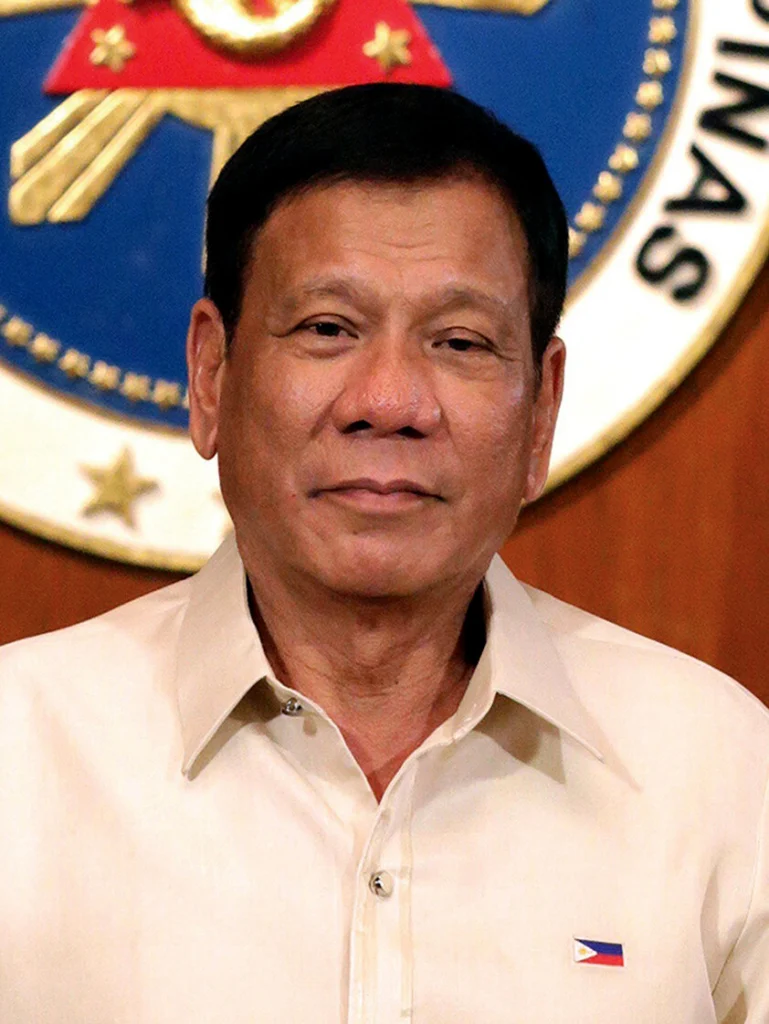
On the evening of March 11, 2025, a plane carrying former Philippine President Rodrigo Duterte lifted off from Manila’s Ninoy Aquino International Airport, bound for The Hague. Hours earlier, Philippine authorities acting on an arrest warrant transmitted through Interpol had detained the 79-year-old at Villamor Air Base. The man who once declared “I don’t care about human rights” was now in the custody of the International Criminal Court.
It was a moment that many thought would never come. For nearly a decade, families of the dead had waited. Rights organizations had documented. Prosecutors had investigated. And Duterte himself had withdrawn the Philippines from the ICC‘s founding treaty, the Rome Statute, in a bid to place himself beyond the court’s reach. None of it worked.
The Charges
The ICC’s case against Duterte rests on three counts of crimes against humanitySerious crimes such as murder, torture, or persecution committed as part of a widespread or systematic attack directed against a civilian population.. The first covers murders carried out by the so-called Davao Death Squad during his years as mayor. The second targets the killing of “high-value targets” during his presidency. The third addresses murders and attempted murders in barangay-level drug clearance operations ordered from the presidential palace.
At the core of the prosecution’s argument is a theory of indirect co-perpetrationICC legal theory holding a person criminally responsible for crimes committed through others within an organized structure they controlled or directed.: that Duterte, jointly with and through other persons, agreed to kill individuals they identified as suspected criminals, including but not limited to drug offenders, first in Davao and then across the entire country.
The charges cover a timeframe from November 1, 2011, when the Philippines joined the Rome Statute, through March 16, 2019, the last day before the country’s withdrawal took effect. Though the Philippines is no longer an ICC member, the court retains jurisdiction over crimes committed during the membership period.
From Davao to The Hague
The Davao Death Squad emerged in the 1990s, when Duterte was mayor of Davao City. He openly vowed to make the city “the most dangerous place for criminals,” declaring that drug pushers, kidnappers, and rapists were “legitimate targets of assassination.” Between 1998 and 2015, a local monitoring group, the Coalition Against Summary ExecutionsKilling of a person without legal process or trial, typically carried out by state agents or groups acting with state tolerance., documented 1,424 victims of summary executions in Davao City alone.
The killings did not go unnoticed internationally. In 2007, UN Special Rapporteur Philip Alston confirmed that a death squad operated in Davao, with men “routinely killing street children and others in broad daylight.” He recommended stripping Duterte of control over the local police. The recommendation was ignored.
In 2016, Duterte won the Philippine presidency on a platform of extending his Davao approach nationwide. On July 1, his first full day in office, police carried out anti-drug operations across the country, killing at least 12 people. He offered police his “official and personal guarantee” of immunity from prosecution for deaths carried out in the performance of their duties.
Official police statistics put the death toll of the drug war at more than 6,000. Human rights groups contend the number is more than 30,000, the discrepancy driven by killings carried out by unidentified vigilantes and deaths outside official operations.
The ICC’s Long Road
The ICC’s preliminary examination into the Philippines began in 2018. Duterte responded by withdrawing the Philippines from the Rome Statute, effective March 2019. But the court’s jurisdiction over crimes committed during the membership period survived the exit.
In September 2021, Pre-Trial Chamber I authorized a formal investigation. The Philippine government, first under Duterte and then under his successor Ferdinand Marcos Jr., challenged the court’s jurisdiction and refused cooperation.
What changed was politics. After a political falling out between the Marcos and Duterte camps in 2024, the Marcos administration signaled it would work with Interpol if an arrest warrant were issued. In October 2024, Duterte himself appeared before the Philippine Senate and confessed under oath to maintaining a death squad of seven “gangsters” during his time as mayor. “I can make the confession now if you want,” he said.
On February 10, 2025, the ICC Prosecutor applied for an arrest warrant. The chamber found reasonable grounds to believe Duterte was individually responsible as an indirect co-perpetrator for crimes against humanity. The warrant was issued under seal on March 7 and made public on March 11, the same day Duterte was arrested.
The Confirmation Hearing
From February 23 to 27, 2026, Pre-Trial Chamber I held confirmation of chargesICC pre-trial hearing to determine whether sufficient evidence exists to send a case to full trial. hearings in The Hague. The purpose was not to determine guilt, but to assess whether the prosecution’s evidence meets the threshold of “substantial grounds to believe” that the crimes were committed.
Duterte, found fit for trial in January 2026 after his defense argued he was too frail, waived his right to attend the hearing. The prosecution presented its case. The legal representatives of 539 victims also addressed the court.
The judges now have 60 days to issue a written decision. They may confirm the charges and send the case to trial, decline to confirm and halt proceedings, or request further evidence.
What Justice Looks Like
The near-total impunity that surrounded the drug war is central to why the ICC case exists at all. Of the thousands of killings, only four cases resulted in convictions in Philippine courts, all of low-ranking police officers. No senior official was ever held accountable domestically.
The drug war has not ended. Under President Marcos, more than 1,000 people have reportedly died as part of the anti-drug campaign since he took office in July 2022. Marcos has never repudiated the drug war as state policy or rescinded Duterte’s standing orders.
For the families of the dead, the ICC proceedings carry a weight that domestic courts never did. “My eyes were filled with tears,” Llore Pasco, whose two sons were killed in a 2017 police operation, told Al Jazeera after Duterte’s arrest. “At long last, after so many years of waiting, it’s happening.”
Whether the ICC can deliver on that hope remains an open question. But the fact that a former head of state sits in a cell in Scheveningen, answering for a campaign that killed thousands of his own citizens, is itself a statement: that drug wars fought with death squads are not domestic policy disputes. They are potential crimes against humanity.
On the evening of March 11, 2025, a plane carrying former Philippine President Rodrigo Duterte lifted off from Manila’s Ninoy Aquino International Airport, bound for The Hague. Hours earlier, Philippine authorities acting on an arrest warrant transmitted through Interpol had detained the 79-year-old at Villamor Air Base. The International Criminal Court had issued the warrant under seal on March 7 and reclassified it as public on March 11, the same day Duterte was arrested and surrendered to the court.
It was a moment that many thought would never come. For nearly a decade, families of the dead had waited. Rights organizations had documented. Prosecutors had investigated. And Duterte himself had withdrawn the Philippines from the ICC‘s founding treaty, the Rome Statute, in a bid to place himself beyond the court’s reach.
The Legal Architecture of the Charges
On February 10, 2025, the ICC Office of the Prosecutor applied for an arrest warrant against Duterte for the crimes against humanitySerious crimes such as murder, torture, or persecution committed as part of a widespread or systematic attack directed against a civilian population. of murder, torture, and rape. Pre-Trial Chamber I, composed of Presiding Judge Iulia Antoanella Motoc and Judges Reine Adelaide Sophie Alapini-Gansou and Maria del Socorro Flores Liera, found reasonable grounds to believe Duterte was individually responsible as an indirect co-perpetrator for the crime against humanity of murder. The chamber issued a warrant for that charge, not for torture or rape.
The prosecution’s case is structured around three counts of crimes against humanity:
- Count One: Murders in or around Davao City during Duterte’s mayoral period, allegedly carried out by the Davao Death Squad (DDS). The prosecution identified nine specific incidents resulting in 19 victims, including three children.
- Count Two: Murders of so-called “high-value targets” during his presidential period.
- Count Three: Murders and attempted murders in barangay (village-level) clearance operations during his presidency.
In total, the prosecution focused on 49 incidents involving 78 victims across the three counts. This is a representative sample; the chamber noted that the alleged attack “took place over a period of several years and resulted in thousands of deaths.”
The legal theory is indirect co-perpetrationICC legal theory holding a person criminally responsible for crimes committed through others within an organized structure they controlled or directed. under Article 25(3)(a) of the Rome Statute. The prosecution argues that “Mr. Duterte and his co-perpetrators shared a common plan to neutralise alleged criminals in the Philippines… through violent crimes, including murder.” The chamber found two distinct organizational frameworks: an attack directed against a civilian population pursuant to an organisational policy while Duterte headed the DDS, and pursuant to a State policy while he was president.
The Davao Death Squad: Origins and Evidence
The Davao Death Squad emerged in the 1990s when Duterte became mayor of Davao City. He openly vowed to make the city “the most dangerous place for criminals,” declaring that drug pushers, kidnappers, and rapists were “legitimate targets of assassination.”
The scale of the DDS killings was documented by multiple sources. Between 1998 and 2015, the Coalition Against Summary ExecutionsKilling of a person without legal process or trial, typically carried out by state agents or groups acting with state tolerance. (CASE) reported 1,424 victims of summary executions in Davao City. Human Rights Watch published a detailed investigation in 2009, titled “You Can Die Any Time,” which mapped the DDS’s structure, recruitment, operations, and financing. The report documented how victims received warnings before being killed, how killings occurred in broad daylight, and how the DDS operated with complete impunity.
In 2007, UN Special Rapporteur Philip Alston confirmed that “a death squad operates in Davao City, with men routinely killing street children and others in broad daylight.” He recommended that Duterte be stripped of control over the local police and that the national government take responsibility for dismantling the death squad. The recommendation was never implemented.
In October 2024, Duterte appeared before the Philippine Senate and confessed under oath to maintaining a death squad of seven “gangsters” as mayor. “I can make the confession now if you want,” he said. “I had a death squad of seven, but they were not policemen, they were also gangsters.” He also admitted instructing police to “encourage the criminals to fight, encourage them to draw their guns. That was my instruction. Encourage them to fight, and when they fight, kill them so the problem in my city is done.”
The Presidential Drug War: Scale and Method
In 2016, Duterte won the Philippine presidency on a platform of extending his Davao approach nationwide. On July 1, his first full day in office, police carried out anti-drug operations across the country, killing at least 12 people. He offered police his “official and personal guarantee” of immunity from prosecution for deaths carried out in the performance of their duties. “I don’t care about human rights, believe me,” he declared.
The killings followed a distinct pattern. Officers of the Philippine National Police raided homes at night without warrants, arresting and then executing suspects, frequently planting evidence to justify their acts. Police routinely claimed that suspects had “nanlaban” (fought back), a justification that victims’ lawyers would later challenge at the ICC.
By December 2016, more than 5,000 people had been killed, including 2,041 drug suspects slain in police operations. By the end of Duterte’s term in 2022, official police statistics put the total at more than 6,000. Human rights groups contend the actual number exceeds 30,000, the discrepancy driven by killings carried out by unidentified vigilantes and deaths that occurred outside official operations.
The victims were overwhelmingly poor. An Amnesty International report in 2017 found that most of those killed lived below the poverty line, and that police officers confessed to receiving reward money equivalent to $150 to $300 for every drug suspect they killed, creating what Amnesty described as an “incentive to kill.”
Children were not spared. Among the most documented cases: three-year-old Myca Ulpina, killed during a 2019 raid targeting her father; four-year-old Althea Fhem Barbon, shot while riding a motorbike with her father; and seventeen-year-old Kian delos Santos, dragged into an alley by police and shot dead despite CCTV footage showing he was unarmed.
Jurisdiction and the Withdrawal Question
The Philippines joined the Rome Statute on November 1, 2011, and deposited a notification of withdrawal on March 17, 2018, shortly after the ICC announced a preliminary examination. The withdrawal took effect one year later, on March 17, 2019.
Under Article 127 of the Rome Statute, withdrawal does not affect the court’s jurisdiction over crimes committed during the membership period. The ICC investigation therefore covers November 1, 2011, through March 16, 2019, encompassing Duterte’s latter years as Davao mayor and his first three years as president.
In September 2021, Pre-Trial Chamber I authorized a formal investigation. The Philippine government sought a deferral, arguing that domestic proceedings were underway. In July 2023, the ICC Appeals Chamber rejected that argument and confirmed the investigation could proceed.
The Political Dynamics Behind the Arrest
For years, both the Duterte and Marcos administrations refused to cooperate with the ICC. What changed was the political relationship between the two camps.
After a falling out between the Marcos and Duterte political factions in 2024, the Marcos administration gradually shifted its position. In November 2024, following Duterte’s death squad confession before the Senate, Marcos stated that the government would comply with Interpol if an arrest warrant were issued.
President Marcos framed Duterte’s arrest not as cooperation with the ICC, but as fulfillment of the Philippines’ obligations to Interpol. “Mr Duterte was arrested in compliance with our commitments to Interpol,” he said. “Interpol asked for help and we obliged because we have commitments to the Interpol, which we have to fulfill.”
The Confirmation Hearing: February 2026
From February 23 to 27, 2026, Pre-Trial Chamber I held confirmation of chargesICC pre-trial hearing to determine whether sufficient evidence exists to send a case to full trial. hearings. The hearing was not a trial and was not aimed at establishing guilt or innocence. Its purpose was to determine whether there are “substantial grounds to believe” that Duterte committed the crimes charged.
Duterte, found fit for trial on January 26, 2026 after his defense argued he was too frail to participate, waived his right to attend the hearing. His lead lawyer, Nick Kaufman, presented the defense case.
The prosecution, led by Deputy Prosecutor Mame Mandiaye Niang, argued that Duterte was at the top of a command structure that implemented a state policy of killing. The legal representatives of 539 victims also addressed the court.
The victims’ legal representatives focused on social inequality. Lead counsel Paolina Massidda told the chamber that “individuals targeted by Mr. Duterte’s anti-drug operations overwhelmingly came from impoverished communities where social mobility is limited and opportunities are scarce.” Filipino lawyer Gilbert Andres described how the victims’ marginalized conditions “exponentially multiplied” the harm: “Mr. Duterte’s drug war campaign targeted the very humanity of the victims, of their families, and of their communities. In Filipino, the indirect victims expressed this in one sentence: ‘Inalisan kami ng dangal’ (We were stripped of our dignity).”
Impunity and What Comes Next
The near-total domestic impunity surrounding the drug war is central to why the ICC case exists. Of the thousands of killings, only four cases resulted in convictions in Philippine courts, all involving low-ranking police officers. No senior official was ever held accountable. The drug war was, in the words of the International Federation for Human Rights, “a campaign that overwhelmingly targeted people from poor and marginalised communities” while offering the victims’ families virtually no access to justice.
The drug war has not ended. Under President Marcos, more than 1,000 people have reportedly died as part of the anti-drug campaign since he took office in July 2022. Marcos has never repudiated the drug war as state policy or rescinded Duterte’s standing orders.
The judges now have 60 days from February 27 to issue their decision. They may confirm the charges and commit Duterte to trial, decline to confirm and halt proceedings, or adjourn and request further evidence from the prosecution. Neither side can directly appeal the decision, though they can request authorization to do so.
For the families of the dead, the proceedings carry a weight that Philippine courts never did. “My eyes were filled with tears,” Llore Pasco, whose two sons were killed in a 2017 police operation, told Al Jazeera after Duterte’s arrest. “At long last, after so many years of waiting, it’s happening. This is it.”
Whether the ICC delivers a trial or not, the fact that a former head of state sits in detention in Scheveningen for a campaign that killed thousands of his own citizens has already altered the calculus of accountability. Drug wars fought with death squads and extrajudicial killings are not merely domestic policy disputes. In the eyes of international law, they are potential crimes against humanity, and those who order them can be made to answer.