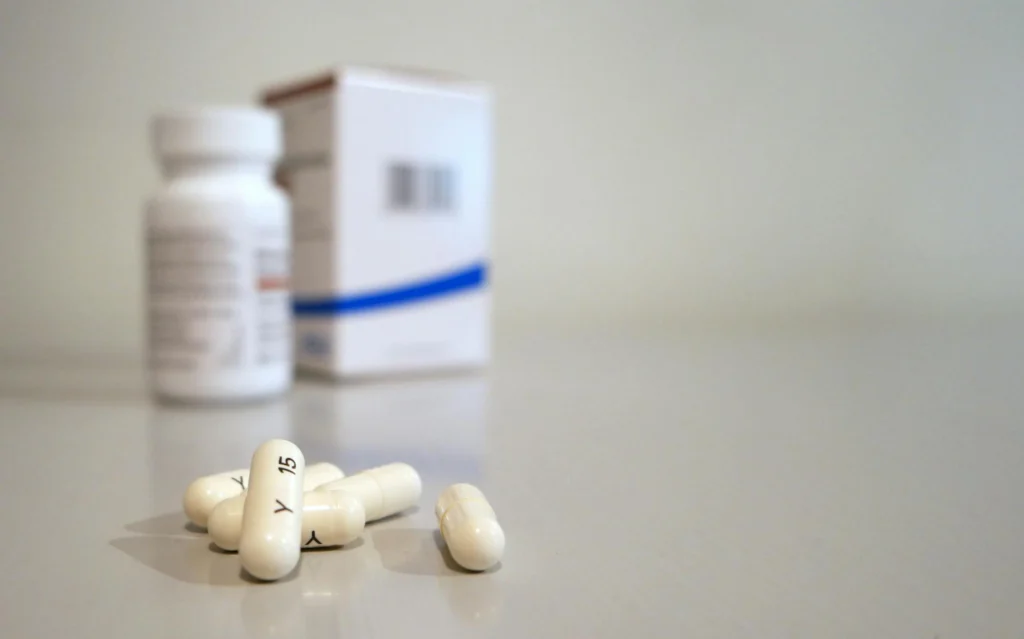
Americans spend roughly twice as much per person on prescription drugs as people in comparable wealthy countries. According to a 2024 RAND Corporation study using 2022 data, U.S. drug prices average 2.78 times those in 33 other OECD nations. For brand-name drugs specifically, the ratio jumps to 4.22 times. The only place Americans get a deal is on generics, which cost about a third less than the international average. The pharmaceutical pricing system that produces these numbers is not random; it is a specific, identifiable machine.
Understanding why your prescription costs what it does requires understanding who sets the price, who negotiates it down, who pockets the difference, and why no single entity has an incentive to make the whole thing cheaper.
How Pharmaceutical Pricing Starts: The Price Nobody Pays
A drug’s journey from manufacturer to patient involves a chain of prices, and almost none of them are what anyone actually pays. It starts with the Wholesale Acquisition Cost (WAC): the manufacturer’s list price to wholesalers. Think of it as the sticker price on a car, the number that exists primarily so someone can offer you a “discount” off it.
From WAC, the system branches into a thicket of benchmarks. The Average Wholesale Price (AWP) is typically set at 120% of WAC for brand-name drugs. The Average Sales Price (ASP) reflects what buyers actually pay after most discounts. The Average Manufacturer Price (AMP) tracks what wholesalers pay for drugs going to retail pharmacies. Each benchmark serves a different part of the system: AWP for commercial insurance reimbursement, ASP for Medicare Part B, AMP for Medicaid rebate calculations.
The gap between these prices is enormous and growing. The Drug Channels Institute coined the term “gross-to-net bubbleThe growing gap between a drug's list price and the net revenue manufacturers actually receive after rebates and discounts; patients often pay based on the inflated list price.” to describe the difference between what drugs are listed at and what manufacturers actually receive. In 2024, that bubble reached $356 billion. Manufacturers set high list prices, then offer rebates and discounts to bring the effective price down. The problem is that patients, particularly those with high-deductible plans or coinsurance, often pay based on the inflated list price rather than the negotiated net price.
The Middlemen: Pharmacy Benefit ManagersA company that administers prescription drug benefits on behalf of insurers and employers, negotiating rebates with manufacturers and deciding which drugs are covered.
Pharmacy Benefit Managers, or PBMs, are the companies that manage prescription drug benefits for insurers and employers. They decide which drugs your insurance covers (the formularyThe official list of prescription drugs covered by an insurance plan; drugs not on the formulary are either excluded from coverage or subject to higher out-of-pocket costs.), negotiate rebates with manufacturers, and set how much pharmacies get paid. Three companies dominate: CVS Caremark handles 34% of all prescription claims, Express Scripts takes 23%, and OptumRx manages 22%. Combined, they process prescriptions for roughly 270 million Americans, according to FTC data from 2023.
Each of these three PBMs is owned by a larger company that also owns an insurance plan and a pharmacy chain. CVS Caremark is part of CVS Health (which owns Aetna and CVS Pharmacy). Express Scripts belongs to Cigna. OptumRx is a subsidiary of UnitedHealth Group (which owns UnitedHealthcare). This vertical integration means the same corporate parent can control which drugs are covered, what rebates are negotiated, and which pharmacy fills the prescription.
The incentive structure is the core issue. PBMs can make more money when drug list prices are higher, because their rebates (a percentage of the list price) grow proportionally. A PBM may prefer placing a $500 drug with a 30% rebate on its formulary over a $200 drug with no rebate, even though the $200 drug would cost the system less. The KFF has noted that PBMs may “favor higher-priced drugs with higher rebates over lower-priced drugs” to maximize revenue. The patient on coinsurance pays a percentage of the higher price either way.
Why Other Countries Pay Less
Most wealthy countries use some form of centralized price negotiation or reference pricing. In the UK, the National Institute for Health and Care Excellence (NICE) evaluates whether a drug’s clinical benefit justifies its cost and recommends a maximum price. In Germany, new drugs face a mandatory health technology assessment within their first year. In Japan, Australia, Canada, and across the EU, governments negotiate directly with manufacturers from a position of being the primary or sole purchaser.
The United States, until very recently, did none of this for its largest drug-purchasing program. Medicare, which covers roughly 67 million Americans, was explicitly prohibited from negotiating drug prices from 2003 (when Medicare Part D was created) until the Inflation Reduction Act of 2022 changed the law. For two decades, the world’s largest single healthcare payer was legally required to accept whatever price manufacturers set, mediated only by PBMs.
The U.S. is also one of only two countries (along with New Zealand) that permits direct-to-consumer advertising of prescription drugs. This creates demand for specific brand-name drugs by name, which gives manufacturers leverage to keep prices high: if patients ask their doctors for a drug by name, generic alternatives face an uphill battle regardless of clinical equivalence.
What Changed: The Inflation Reduction Act
The Inflation Reduction Act of 2022 gave Medicare the authority to negotiate prices on a limited number of drugs, a power that most other national health systems have had for decades. The first round selected ten Part D drugs, including Eliquis (blood clots), Jardiance (diabetes), and Entresto (heart failure). These ten drugs alone accounted for $56.2 billion in total Part D gross costs in 2023, roughly 20% of all Part D spending, and were used by 8.8 million Medicare beneficiaries.
CMS estimated the negotiated prices would save the Medicare program approximately $6 billion per year (a 22% reduction in net spending on those specific drugs) and save beneficiaries an estimated $1.5 billion in out-of-pocket costs when they took effect in January 2026. The program is expanding: 15 additional drugs are slated for 2027, 15 more for 2028, and 20 per year from 2029 onward.
This is meaningful but modest. Ten drugs out of thousands is a start, not a solution. The negotiated discounts, while significant for those specific medications, do not address the structural incentives that inflate prices across the board. The gross-to-net bubble, PBM consolidation, and the absence of pharmaceutical pricing controls for the commercial insurance market remain largely untouched.
The 2026 PBM Reforms
In February 2026, Congress passed PBM reform provisions as part of the Consolidated Appropriations Act. The legislation targets several of the structural problems described above. Starting January 2028, PBM compensation in Medicare Part D must be a flat dollar amount, “not directly or indirectly based on” the price of the drug. This is the “delinking” reform that breaks the incentive for PBMs to prefer expensive drugs with large rebates.
The law also requires PBMs to pass through 100% of manufacturer rebates to plan sponsors, rather than retaining a share. And it introduces transparency requirements: by July 2028, PBMs must report detailed drug-level data including “total manufacturer-derived revenue retained by the PBM and any affiliate.” Commercial market reforms follow in January 2029, extending similar transparency requirements to employer health plans with 100 or more employees.
Whether these reforms reduce what patients actually pay remains an open question. Delinking PBM compensation from drug prices removes one perverse incentiveAn incentive that produces unintended consequences opposite to its intended goal, causing a policy to worsen the problem it was designed to solve., but it does not cap drug prices themselves. Manufacturers remain free to set whatever list price the market will bear. And the reforms do not address vertical integration: CVS, Cigna, and UnitedHealth will still own PBMs, insurers, and pharmacies simultaneously.
The Lobbying Apparatus
The pharmaceutical and health products industry is consistently the largest lobbying force in Washington. In the first half of 2025, the industry spent over $226 million on federal lobbying, roughly $22 million more than the same period in 2024. Close to two-thirds of pharmaceutical lobbyists are former government employees or elected officials. PhRMA, the industry’s main trade group, logged its highest-ever quarterly spending in early 2025.
This spending directly shapes the legislation described above. The 2003 law prohibiting Medicare from negotiating drug prices was itself the product of intensive pharmaceutical lobbying. The Inflation Reduction Act’s negotiation provisions were fought by the industry for years, and the resulting program was significantly narrower than what advocates originally proposed. The structure of the oil market is often cited as opaque, but pharmaceutical pricing involves more intermediaries, more hidden incentive structures, and larger sums flowing through less transparent channels.
What This Means for Patients
For the average American filling a prescription, the practical consequence of this system is unpredictability. Two patients with different insurance plans can pay wildly different amounts for the same drug at the same pharmacy on the same day. A patient with a high-deductible plan may pay the full list price until they hit their deductible, while a patient with better coverage pays a flat copay. Patients without insurance pay the highest prices of all, unless they qualify for manufacturer discount programs or the federal 340B program (which provides discounts of roughly 20% to 50% for qualifying hospitals and clinics).
Generic drugs, which account for roughly 90% of prescriptions filled in the U.S., cost less than in other countries. The problem is concentrated in brand-name medications, which represent only about 10% of prescriptions but account for roughly 80% of total drug spending. For any patient taking a brand-name drug, the American pharmaceutical pricing system extracts significantly more than what comparable patients pay in virtually any other wealthy nation.
The reforms underway are real but incremental. Medicare negotiation covers a small and slowly growing list of drugs. PBM delinking addresses one incentive misalignment but not the underlying pricing power of manufacturers. The system was built over decades by actors with strong interests in its continuation, and it will not be unwound by a single piece of legislation. Understanding the machinery is the first step toward evaluating whether the reforms match the scale of the problem.
The U.S. pharmaceutical pricing system is often described as broken. This is imprecise. It is functioning exactly as its incentive structures predict, which is the more interesting (and more fixable) problem. A 2024 RAND Corporation analysis of 2022 data found U.S. drug prices averaged 2.78 times those in 33 other OECD nations; for brand-name drugs specifically, the multiple was 4.22. Unbranded generics were about 33% cheaper in the U.S. than the international average, but generics account for only about one-fifth of total spending despite representing 90% of prescriptions filled.
The Pharmaceutical Pricing Benchmark Stack
Pharmaceutical pricing in the U.S. operates through a stack of reference prices, each serving a different market segment. Understanding the stack is necessary to understand why the system resists simplification.
Wholesale Acquisition Cost (WAC) is the manufacturer’s list price to wholesalers. It is set unilaterally by the manufacturer. It does not reflect any negotiated discount, rebate, or real-world transaction price. Its function is to serve as the anchor from which all other prices are derived.
Average Wholesale Price (AWP) is typically 120% of WAC for brand-name drugs. Commercial publishers report this figure, and PBMs use it widely as a reimbursement benchmark. For generics, AWP may not track WAC changes closely, creating additional arbitrage opportunities.
Average Sales Price (ASP) is the weighted average of actual manufacturer prices to supply chain entities, net of most discounts. Medicare Part B reimburses provider-administered drugs at ASP + 6%. Critically, ASP data lags by two quarters, meaning reimbursement rates reflect prices from six months prior.
Average Manufacturer Price (AMP) tracks what wholesalers pay for drugs distributed to retail pharmacies. It is the primary benchmark for calculating mandatory Medicaid rebates. The minimum rebate for most brand-name drugs is 23.1% of AMP.
National Average Drug Acquisition Cost (NADAC) reflects actual invoice prices from wholesalers to pharmacies. For brand-name drugs, NADAC typically runs about 5% below WAC. For generics, it runs 45-50% below WAC, a spread that creates significant margin opportunities for PBMs operating between these benchmarks.
Best Price is the lowest price available in a period to any commercial purchaser. It sets a floor for Medicaid rebates: the rebate is the greater of 23.1% of AMP or the difference between AMP and Best Price. This mechanism was designed to prevent manufacturers from offering deep discounts to private buyers while charging Medicaid full price, but it also discourages manufacturers from offering aggressive discounts in any channel, since doing so would drag down their Medicaid pricing across the board.
The Gross-to-Net BubbleThe growing gap between a drug's list price and the net revenue manufacturers actually receive after rebates and discounts; patients often pay based on the inflated list price.
The gap between gross (list price) revenue and net (after-rebate) revenue has been expanding for over a decade. The Drug Channels Institute tracks this as the “gross-to-net bubble.” In 2024, total gross-to-net reductions across all brand-name drugs reached $356 billion, growing 7% year over year, the slowest rate in at least a decade but still an enormous sum.
The bubble’s composition matters. The largest component is rebates paid to third-party payers (PBMs and insurers). Approximately one-third consists of 340B program discounts and Medicaid rebates. The remainder includes distribution fees, hospital discounts, and other purchase concessions.
The bubble’s existence creates a paradox: manufacturers report high gross revenues while earning substantially less in net terms, PBMs capture a share of the spread, and patients with coinsurance or deductibles pay based on the inflated list price rather than the negotiated net price. Everyone in the chain except the patient benefits from the gross-to-net gap being as large as possible.
PBM Economics and Vertical Integration
Three vertically integrated conglomerates dominate the PBM market. Per FTC data from 2023: CVS Caremark (CVS Health, which also owns Aetna and CVS Pharmacy) holds 34% of prescription claims. Express Scripts (Cigna) holds 23%. OptumRx (UnitedHealth Group, which also owns UnitedHealthcare) holds 22%. Together: 79% of all prescription claims for approximately 270 million Americans.
PBM revenue derives from several sources. Rebates from manufacturers in exchange for formularyThe official list of prescription drugs covered by an insurance plan; drugs not on the formulary are either excluded from coverage or subject to higher out-of-pocket costs. placement (favorable positioning on the list of covered drugs). Spread pricingA practice where a pharmacy benefit manager pays a pharmacy one rate for a drug, charges the insurer a higher rate, and keeps the difference as profit.: the PBM reimburses the pharmacy at one rate and charges the insurer a higher rate, keeping the difference. Service fees charged to plan sponsors. And revenue from steering prescriptions to their own affiliated pharmacies (mail-order and retail), where the entire margin stays within the corporate parent.
The vertical integration creates an information asymmetryA situation where one party in a transaction has more or better knowledge than the other, allowing the informed party to gain advantages at the expense of the less informed party. problem. When the same entity owns the PBM, the insurer, and the pharmacy, there is no external check on whether the rebate negotiated, the reimbursement rate set, or the pharmacy dispensing fee charged actually reflects competitive pricing. The FTC’s September 2024 lawsuit against all three major PBMs alleged they engaged in “anticompetitive and unfair rebating practices” that “artificially inflated the list price of insulin drugs.” Express Scripts settled in February 2026; the cases against Caremark and OptumRx continue.
International Comparison Mechanisms
The structural difference between U.S. pricing and international pricing is not primarily about drug quality, R&D cost allocation, or market size. It is about buyer power. In most OECD countries, the government functions as a monopsonyA market in which there is only one buyer, giving that buyer significant power to dictate prices and terms to sellers. or near-monopsony buyer, negotiating directly with manufacturers with the implicit or explicit threat of excluding a drug from national coverage.
The UK uses the National Institute for Health and Care Excellence (NICE) to evaluate cost-effectiveness, typically measured in Quality-Adjusted Life Years (QALYs). Germany requires a mandatory benefit assessment (AMNOG) within the first year of market entry, with prices set based on demonstrated therapeutic advantage over existing treatments. France, Japan, Australia, and Canada employ similar health technology assessment frameworks with varying degrees of price control.
The U.S. fragmented its buyer power across thousands of private insurers, employers, and PBMs, each negotiating independently (or delegating negotiation to PBMs whose incentives are not aligned with minimizing cost). Medicare, the closest thing to a monopsony buyer, was legally prohibited from negotiating prices from 2003 to 2022. The Inflation Reduction Act partially restored this power for a small number of drugs.
The U.S. also remains one of only two countries (with New Zealand) permitting direct-to-consumer advertising of prescription drugs. This creates demand for specific branded products by name, reducing the effectiveness of formulary controls and generic substitution.
Legislative Interventions: IRA and PBM Reform
The Inflation Reduction Act’s Medicare Drug Price Negotiation Program selected ten Part D drugs for its first round, effective January 2026. These ten drugs accounted for $56.2 billion in gross Part D costs in 2023 (roughly 20% of total Part D spending) and were dispensed to 8.8 million beneficiaries. CMS estimated the negotiated prices would reduce net spending on those drugs by 22%, saving Medicare approximately $6 billion per year and beneficiaries an estimated $1.5 billion in out-of-pocket costs.
The program scales: 15 drugs for 2027, 15 for 2028, 20 per year from 2029 onward. However, the program applies only to Medicare, not the commercial market. And the negotiation applies only to drugs that have been on the market for a minimum period (9 years for small-molecule drugs, 13 years for biologics), meaning newly launched drugs at their highest prices are exempt.
The February 2026 PBM reforms in the Consolidated Appropriations Act target the incentive misalignment more directly. Starting January 2028 for Medicare and January 2029 for large employer plans, PBM compensation must be a flat dollar amount unlinked from drug prices. Rebates must be passed through 100% to plan sponsors. PBMs must report detailed drug-level revenue data, including total manufacturer-derived revenue retained.
These reforms address PBM incentives but not manufacturer pricing power. The system’s fundamental asymmetry, where manufacturers set prices unilaterally and no single buyer has sufficient leverage to constrain them in the commercial market, remains structurally intact for the majority of Americans who get insurance through their employer.
Structural Analysis
The U.S. pharmaceutical pricing system is not a single market failure but a stack of interlocking ones: manufacturers face no price constraints at launch, PBMs historically profited from price inflation rather than price reduction, patients bear costs based on list prices rather than net prices, the largest government payer was legally barred from negotiating, and the industry’s lobbying apparatus (over $226 million in federal lobbying in the first half of 2025 alone, with two-thirds of lobbyists being former government employees) actively maintains the structural conditions that generate these outcomes.
The reforms now underway address individual components but not the architecture. Medicare negotiation is real but narrow. PBM delinking removes one incentive but does not cap prices. Vertical integration remains legal and profitable. The $356 billion gross-to-net bubble may begin deflating due to a combination of uncapped Medicaid rebates, the IRA’s pricing constraints, and manufacturers’ own shift toward lower list prices, but the underlying pricing power asymmetry persists.
The system was not designed to be understood by the people paying into it. That is a feature, not a bug.
This article is for informational purposes only and does not constitute medical, financial, or legal advice. Consult a qualified professional for guidance specific to your situation.