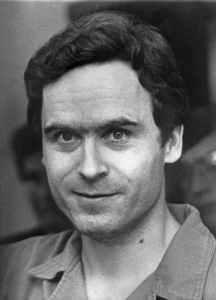
It is, by any measure, one of the most significant child sexual abuse material (CSAM) investigations in law enforcement history. It is also one of the most difficult to write about responsibly.
Peter Gerald Scully, an Australian national, operated a dark webAnonymized sections of the internet accessible through specialized software (like Tor) that hide user identity and location. While legitimate uses exist, it hosts illegal markets and exploitation networks. child exploitation network from the southern Philippines between 2011 and 2015. His arrest, trial, and sentencing involved law enforcement agencies from at least six countries and produced legal outcomes that continue to shape how nations cooperate on transnational child exploitation cases. The case resulted in a life sentence plus 129 additional years in prison, one of the longest combined sentences ever handed down for crimes against children in the Philippines.
Key Facts
- Defendant: Peter Gerald Scully (born 13 January 1963, Melbourne, Australia)
- Arrest: 20 February 2015, Malaybalay City, Bukidnon, Philippines
- Arresting agency: Philippine National Bureau of Investigation (NBI)
- First conviction: June 2018, life imprisonment (one count qualified human traffickingUnder Philippine law, human trafficking that involves minors or use of force, fraud, or coercion. The crime carries life imprisonment as a minimum sentence., five counts rape by sexual assault)
- Second conviction: November 2022, 129 years (attempted human trafficking, syndicated child pornography, child abuse, rape, photo and video voyeurism)
- Supreme Court affirmation: November 2024 (decision made public March 2025)
- Co-accused: Carme Ann Alvarez (life imprisonment), Lovely Margallo (126 years), Alexander Lao and Maria Dorothea Chia (9 years each)
Background: From Melbourne Fraud to Manila
Before he became the subject of an international manhunt, Scully was a suburban mortgage broker in Narre Warren, Melbourne. He operated a rent-to-own property scheme called “The Key Result,” which targeted low-income borrowers who could not qualify for conventional home loans. An investigation by the Australian Securities and Investments Commission (ASIC) identified 117 fraud and deception offenses connected to the scheme, which cost investors over A$2.68 million.
In 2011, before charges could be filed, Scully fled to the Philippines. He settled in Mindanao, in the southern part of the archipelago, and began building what would become one of the most prolific dark webAnonymized sections of the internet accessible through specialized software (like Tor) that hide user identity and location. While legitimate uses exist, it hosts illegal markets and exploitation networks. child exploitation operations ever documented.
The Peter Scully Dark Web Operation
From Mindanao, Scully established a pay-per-view dark web platform called “No Limits Fun” (NLF). The site offered subscribers video streams of children being sexually abused. Access reportedly cost up to US$10,000. The platform’s most notorious product was a series of videos that became known by the name prosecutors would later use in court filings. The material depicted the abuse of multiple children, including an 18-month-old infant.
Scully did not operate alone. He recruited local women as accomplices. Carme Ann Alvarez lured victims from public spaces, including a mall in Cagayan de Oro where she approached two girls, aged 9 and 12, in September 2014 by offering them food. Lovely Margallo, who had herself been trafficked as a child, participated directly in the physical abuse of victims at Scully’s direction.
The Investigation: Six Countries, One Target
The investigation that led to Scully’s arrest began not in the Philippines or Australia, but in the Netherlands. The Dutch National Child Exploitation Team was the first agency to open a formal case after seizing CSAM material during a domestic raid. Analysts initially believed the perpetrator in the videos was speaking Dutch. Further analysis determined the accent was Australian, but by that point Dutch investigators had accumulated substantial evidence and remained on the case through to its conclusion.
The Dutch findings triggered an Interpol-coordinated multinational effort. The investigation required the kind of cross-border forensic cooperation that has become the standard for major transnational cases. The Australian Federal Police (AFP) provided digital forensicsThe practice of extracting, preserving, and analyzing electronic evidence. In criminal investigations, digital forensics can recover deleted files, trace communications, and authenticate digital materials. support and intelligence sharing. Interpol coordinated the global manhunt. Brazilian, German, and Canadian (RCMP) law enforcement agencies contributed to the broader investigation, which extended across multiple jurisdictions where NLF subscribers had been identified.
On the ground in the Philippines, the NBI’s Anti-Human Trafficking Division led the domestic operation. Agents analyzed the seized videos frame by frame, identifying specific house interiors, environmental details, and geographic markers that they matched to locations in and around Cagayan de Oro City. This granular analysis of the abuse material itself, treating each frame as potential evidence of location, became a model for subsequent CSAM investigations.
The Arrest
On 20 February 2015, an NBI SWAT team raided Scully’s residence in Malaybalay City, Bukidnon province. Agents rescued multiple victims from the premises. During related searches of properties Scully had rented, investigators discovered the remains of an 11-year-old girl buried beneath the kitchen floor of an apartment in Surigao City. According to court records, Scully had filmed her abuse and murder before concealing the body.
In total, investigators identified at least eight victims. Two of the primary victims from the most widely circulated material, referred to in court documents by pseudonyms, were located and placed into protective custody.
Trial and Sentencing
The legal proceedings against Scully spanned multiple cases across Philippine courts. In June 2018, the Regional Trial Court convicted Scully and Alvarez of qualified human trafficking under Republic Act 9208 (the Anti-Trafficking in Persons Act of 2003), sentencing both to life imprisonment. The court also convicted Scully of five counts of rape by sexual assault.
In November 2022, Judge Ali Joseph Ryan Lloren of Regional Trial Court Branch 37 in Misamis Oriental handed down a second set of convictions. Scully received an additional 129 years across charges of attempted human trafficking, syndicated child pornography, child abuse, rape, and photo and video voyeurism. Margallo received 126 years. Lao and Chia each received 9 years for their roles.
In a decision penned on 26 November 2024 and made public in March 2025, the Supreme Court of the Philippines affirmed Scully’s life sentence for qualified trafficking. The court rejected the appellants’ claims that their constitutional rights had been violated during trial and ruled that repeated postponements by the defense constituted a waiver of their right to present evidence. Each defendant was fined ₱5 million and ordered to pay ₱600,000 in damages per victim.
The Supreme Court’s ruling established an important precedent: that “the absence of explicit pornographic evidence does not preclude” a conviction for human trafficking when the victims are minors. This clarification strengthened the legal framework for prosecuting trafficking cases even when the most explicit material is withheld from trial proceedings to protect victims’ dignity.
International Cooperation as Precedent
The Scully case is frequently cited in law enforcement literature as a model for international cooperation on transnational crimes. The NBI officer who led the Philippine investigation was awarded a commendation by the Australian Federal Police for the operation. The Australian Centre to Counter Child Exploitation (ACCCE) featured the case in its “Closing the Net” series as an example of how borderless crimes require borderless investigative responses.
The case demonstrated several principles that have since been adopted more broadly: that digital forensics and physical location analysis must work in parallel; that victim identification is as important as perpetrator identification; and that effective prosecution requires sustained cooperation across legal systems with different evidentiary standards and procedural rules.
Reader discretion is advised. This version discusses child sexual exploitation in greater detail, including systemic factors and victim recovery.
Key Facts
- Defendant: Peter Gerald Scully (born 13 January 1963, Melbourne, Australia)
- Arrest: 20 February 2015, Malaybalay City, Bukidnon, Philippines
- Arresting agency: Philippine National Bureau of Investigation (NBI)
- First conviction: June 2018, life imprisonment (one count qualified human traffickingUnder Philippine law, human trafficking that involves minors or use of force, fraud, or coercion. The crime carries life imprisonment as a minimum sentence., five counts rape by sexual assault)
- Second conviction: November 2022, 129 years (attempted human trafficking, syndicated child pornography, child abuse, rape, photo and video voyeurism)
- Supreme Court affirmation: November 2024 (decision made public March 2025)
- Co-accused: Carme Ann Alvarez (life imprisonment), Lovely Margallo (126 years), Alexander Lao and Maria Dorothea Chia (9 years each)
Background: From Melbourne Fraud to Manila
Peter Gerald Scully was a suburban mortgage broker in Narre Warren, Melbourne, who operated a rent-to-own property scheme called “The Key Result.” The scheme targeted low-income borrowers who could not qualify for conventional home loans. An ASIC investigation identified 117 fraud and deception offenses, costing investors over A$2.68 million. In 2011, before charges could be filed, Scully fled to the Philippines and settled in Mindanao.
His transition from financial fraud to child exploitation was not gradual. Within months of arriving in the Philippines, Scully began building a dark webAnonymized sections of the internet accessible through specialized software (like Tor) that hide user identity and location. While legitimate uses exist, it hosts illegal markets and exploitation networks. platform called “No Limits Fun” (NLF), which offered pay-per-view streams of children being sexually abused. Access reportedly cost subscribers up to US$10,000.
How the Investigation Began
The investigation originated with the Dutch National Child Exploitation Team, which seized CSAM material during a domestic raid in the Netherlands. Analysts initially believed the perpetrator was speaking Dutch; further examination revealed an Australian accent. The Dutch team had already accumulated substantial evidence by that point and remained involved through Scully’s arrest.
The Dutch findings triggered an Interpol-coordinated effort involving the Australian Federal Police (AFP), Brazilian, German, and Canadian (RCMP) law enforcement, and the Philippine NBI. The AFP provided digital forensicsThe practice of extracting, preserving, and analyzing electronic evidence. In criminal investigations, digital forensics can recover deleted files, trace communications, and authenticate digital materials. and intelligence. On the ground, NBI agents analyzed the videos frame by frame, matching house interiors and environmental details to locations around Cagayan de Oro City.
On 20 February 2015, an NBI SWAT team arrested Scully in Malaybalay City. During searches of his properties, investigators found the remains of an 11-year-old girl buried beneath the kitchen floor of a rented apartment in Surigao City.
The Scale of the Operation
Scully did not operate alone. He recruited local women as accomplices, exploiting existing vulnerabilities. Carme Ann Alvarez lured victims from public places; in September 2014, she approached two girls aged 9 and 12 at a mall in Cagayan de Oro, offering them food. Lovely Margallo, who had herself been trafficked as a child, was 19 when Scully directed her to participate in the physical abuse of victims. The pattern of exploiting former victims as perpetrators is well-documented in trafficking research, and Margallo’s case illustrates how cycles of abuse reproduce themselves when intervention fails.
Alexander Lao and Maria Dorothea Chia played supporting roles. In total, at least 60 cases were filed against Scully in Philippine courts. The proceedings spanned years and involved multiple judges, courtrooms, and sets of charges.
Victim Recovery
The NBI rescued multiple victims during and after Scully’s arrest. Two of the primary victims depicted in the most widely circulated material were located and placed into a Witness Protection Program while awaiting trial. Child protection organizations funded their medical treatment and therapy.
The recovery process for child exploitation survivors is measured in years, not months. The victims in this case were subjected to abuse at ages as young as 18 months. Court-ordered damages of ₱600,000 per victim, while symbolically important, do not begin to address the long-term psychological and medical costs of recovery. The Philippine government’s witness protection infrastructure, while functional, was not designed for the scale or severity of trauma involved in cases like this one.
Why the Philippines
Scully’s choice of the Philippines as his base of operations was not random. The country has been identified as a global epicentre for online child sexual exploitation. According to research by the International Justice Mission (IJM), during the 2010-2017 period, the Philippines received more than eight times as many CSAM-related referrals from global law enforcement as any other country.
The factors are structural. Widespread poverty creates vulnerability: children in extreme hardship are easier to exploit, and in some documented cases, family members have facilitated abuse in exchange for payment. High English proficiency makes the country accessible to foreign perpetrators. Affordable internet access and established international remittance systems, originally built for the overseas worker economy, provide the infrastructure for both streaming and payment.
Between 2014 and 2017, Philippine IP addresses tied to online child sexual abuse rose from approximately 23,000 to over 81,000, a roughly 250% increase, according to IJM data. A UNICEF Philippines assessment found that two million children in the Philippines were subjected to online sexual abuse and exploitation in 2021 alone.
Researchers note, however, that poverty alone does not explain the phenomenon. The overwhelming majority of impoverished families do not engage in exploitation. The convergence of poverty with technological infrastructure, weak enforcement capacity, and demand from wealthy countries creates the conditions under which operations like Scully’s can flourish.
Systemic Failures
Several systemic failures allowed Scully to operate for years before his arrest. Australian authorities had identified 117 fraud offenses against him before he fled the country in 2011, yet no travel restrictions were imposed. The Philippines, despite being a known hotspot for child exploitation, had limited dark web monitoring capabilities at the time. It took a raid in the Netherlands, thousands of kilometres from either Scully’s origin or his base of operations, to generate the lead that ultimately led to his arrest.
The case also exposed gaps in the Philippine legal system’s capacity to handle complex transnational exploitation cases. The proceedings against Scully took years, with the defense exploiting procedural delays. The Supreme Court’s 2024 ruling noted that repeated postponements by the defense constituted a waiver of their right to present evidence, a finding that reflected the court’s frustration with the pace of proceedings.
Trial, Sentencing, and Legal Precedent
In June 2018, the Regional Trial Court convicted Scully and Alvarez of qualified human trafficking under Republic Act 9208, sentencing both to life imprisonment. In November 2022, Judge Ali Joseph Ryan Lloren of RTC Branch 37, Misamis Oriental, convicted Scully on additional charges, adding 129 years. Margallo received 126 years. Lao and Chia received 9 years each.
The Supreme Court’s November 2024 decision affirming the life sentence established that “the absence of explicit pornographic evidence does not preclude” a trafficking conviction when victims are minors. This precedent means prosecutors can secure trafficking convictions without having to present the most explicit material in court, protecting victims from further harm during proceedings.
Each defendant was fined ₱5 million and ordered to pay ₱600,000 in damages per victim.
Reader discretion is advised. This version contains all publicly available details about the case, including descriptions of the operation’s methods and scope. The content is disturbing.
Key Facts
- Defendant: Peter Gerald Scully (born 13 January 1963, Melbourne, Australia)
- Arrest: 20 February 2015, Malaybalay City, Bukidnon, Philippines
- Arresting agency: Philippine National Bureau of Investigation (NBI)
- First conviction: June 2018, life imprisonment (one count qualified human traffickingUnder Philippine law, human trafficking that involves minors or use of force, fraud, or coercion. The crime carries life imprisonment as a minimum sentence., five counts rape by sexual assault)
- Second conviction: November 2022, 129 years (attempted human trafficking, syndicated child pornography, child abuse, rape, photo and video voyeurism)
- Supreme Court affirmation: November 2024 (decision made public March 2025)
- Co-accused: Carme Ann Alvarez (life imprisonment), Lovely Margallo (126 years), Alexander Lao and Maria Dorothea Chia (9 years each)
- Known victims: At least eight, including one murder victim
- Investigating agencies: Philippine NBI, Australian Federal Police, Dutch National Child Exploitation Team, Interpol, Brazilian Police, German Police, RCMP (Canada)
Who Was Peter Scully Before the Philippines
Peter Gerald Scully grew up in Melbourne and worked as a mortgage broker in the suburb of Narre Warren, where he lived with his wife and two children. He ran a rent-to-own property business called “The Key Result,” which targeted people with poor credit who could not qualify for standard home loans. Buyers paid above-market rent on investor-owned properties with the expectation of acquiring title after five years. An investigation by the Australian Securities and Investments Commission (ASIC) uncovered 117 fraud and deception offenses connected to the scheme, which cost investors over A$2.68 million.
In 2011, before the fraud charges could be formally filed, Scully fled to the Philippines. He left his family, his debts, and an open ASIC investigation behind. Australian authorities at the time had no mechanism to prevent his departure. There was no arrest warrant, no travel ban, no alert to Philippine immigration. He simply left.
Peter Scully and “No Limits Fun”
Scully settled in Mindanao, the Philippines’ southernmost major island group, and established a dark webAnonymized sections of the internet accessible through specialized software (like Tor) that hide user identity and location. While legitimate uses exist, it hosts illegal markets and exploitation networks. platform called “No Limits Fun” (NLF). The site operated as a pay-per-view service offering live-streamed and recorded child sexual abuse material. Subscribers reportedly paid up to US$10,000 for access to the most extreme content.
The platform’s business model was built on exploitation at every level. Scully recruited local women as accomplices, targeting those who were themselves vulnerable. Carme Ann Alvarez acted as a procurer, approaching children in public spaces. Court records describe how, in September 2014, Alvarez lured two girls aged 9 and 12 from a mall in Cagayan de Oro by offering them food and promising more if they came with her. She brought them to a house rented by Scully, where both perpetrators subjected the children to abuse, including forced undressing, alcohol provision, photography, and sexual exploitation, all documented via laptop. After four days, the two girls escaped and reported their ordeal to the NBI, triggering the domestic investigation.
Lovely Margallo, who was 19 at the time and had herself been trafficked as a child, was directed by Scully to participate in the physical abuse of victims. Margallo’s involvement is a textbook illustration of the exploitation cycle: a former victim, never adequately protected or rehabilitated, recruited by a predator who understood exactly how to manipulate her history. Two additional accomplices, Alexander Lao and Maria Dorothea Chia, provided logistical support.
The platform’s most notorious output was a series of videos that prosecutors used as central evidence. The material depicted the torture and sexual abuse of three girls, including an 18-month-old infant, by Scully and his accomplices. These videos circulated widely on the dark web and became, according to law enforcement officials, among the most sought-after CSAM material in existence, a fact that itself became evidence of the scale of demand driving the exploitation industry.
The Investigation: From Amsterdam to Malaybalay
The case that would eventually bring Scully down began with a routine raid in the Netherlands. The Dutch National Child Exploitation Team seized CSAM material that included videos from Scully’s platform. Analysts initially believed the voice in the recordings was speaking Dutch. Closer examination revealed the accent was Australian. By that point, however, the Dutch team had assembled enough evidence to remain the lead international agency on the case.
The Dutch findings were shared with Interpol, which coordinated a multinational investigation. The Australian Federal Police provided forensic analysis of digital traces and facilitated intelligence sharing. Law enforcement agencies in Brazil, Germany, and Canada (RCMP) contributed to the investigation, primarily through the identification and apprehension of NLF subscribers in their jurisdictions. The Interpol Crimes Against Children working group served as the coordination hub.
In the Philippines, the NBI’s Anti-Human Trafficking Division conducted the ground investigation. The escape of the two girls from Scully’s Cagayan de Oro property in late 2014 gave investigators their first direct testimony. Meanwhile, NBI analysts undertook painstaking video analysis, examining the abuse material frame by frame to identify locations. They matched architectural details, furniture, lighting patterns, and visible environmental features to specific properties in and around Cagayan de Oro and Surigao City. This technique, treating every frame of abuse material as a potential geographic identifier, has since become standard practice in CSAM investigations worldwide.
Investigators located all five properties where Scully had filmed. At one location in Surigao City, they made a grim discovery: the remains of an 11-year-old girl buried beneath the kitchen floor. Court records indicate Scully had filmed her abuse and murder before concealing the body under the property he was renting.
The Peter Scully Arrest and Rescue
On 20 February 2015, an NBI SWAT team raided Scully’s residence in Malaybalay City, Bukidnon province. Scully was arrested without incident. During the operation and subsequent searches, agents rescued multiple victims from his properties.
In total, investigators identified at least eight victims. The two primary victims from the most widely circulated videos, referred to in court documents and media by pseudonyms to protect their identities, were located alive and placed into the Philippine Witness Protection Program. Child protection organizations, both domestic and international, funded their medical treatment and long-term psychological therapy.
The rescue operation itself became a reference point for how law enforcement should handle CSAM cases: victim identification and recovery treated as co-equal priorities alongside perpetrator arrest, not afterthoughts.
Why the Philippines: Structural Vulnerability
Scully chose the Philippines deliberately. The country has been identified by the International Justice Mission as receiving more than eight times as many CSAM-related law enforcement referrals as any other country during the 2010-2017 baseline period. Philippine IP addresses tied to online child sexual abuse rose from roughly 23,000 in 2014 to over 81,000 in 2017.
The structural factors are well-documented. Widespread poverty makes children vulnerable: economic desperation creates opportunities for predators who offer food, shelter, or small payments. High English proficiency, a legacy of American colonial education, makes the country accessible to anglophone perpetrators. Affordable internet and smartphones have reached even remote provinces. International remittance infrastructure, built to serve the millions of overseas Filipino workers, provides ready-made payment channels.
A UNICEF Philippines assessment found that two million children in the Philippines were subjected to online sexual abuse and exploitation in 2021 alone. Researchers emphasize that poverty is a necessary but not sufficient condition: the majority of impoverished families never engage in exploitation. It is the convergence of poverty with infrastructure, weak enforcement, and foreign demand that creates the conditions for operations like NLF.
The Legal Proceedings
The prosecution of Peter Scully was divided across multiple cases in Philippine courts. Approximately 60 individual cases were filed.
The first major conviction came in June 2018, when the Regional Trial Court found Scully and Carme Ann Alvarez guilty of qualified human trafficking under Republic Act 9208 (the Anti-Trafficking in Persons Act of 2003) and five counts of rape by sexual assault. Both were sentenced to life imprisonment. The trafficking charges related specifically to the recruitment of the two minors who escaped in September 2014.
In November 2022, Judge Ali Joseph Ryan Lloren of Regional Trial Court Branch 37 in Misamis Oriental delivered a second round of convictions. Scully was found guilty of attempted human trafficking, syndicated child pornography, child abuse, rape, and photo and video voyeurism, receiving a combined additional sentence of 129 years. Margallo was convicted on related charges and sentenced to 126 years. Lao and Chia received 9 years each.
There was public discussion during the proceedings about whether to pursue the death penalty. The Philippines abolished capital punishment in 2006, but some legislators and prosecutors argued the severity of Scully’s crimes warranted its reinstatement. The death penalty was not applied.
In a decision penned on 26 November 2024 and made public in March 2025, the Supreme Court of the Philippines affirmed the life sentence for qualified trafficking. The court rejected all defense appeals, including claims that constitutional rights were violated during trial. Critically, the justices ruled that repeated postponements by the defense constituted a waiver of their right to present evidence, a ruling directed at the systemic problem of defense-side delay tactics in complex trafficking cases.
The Supreme Court also established an important evidentiary precedent: that “the absence of explicit pornographic evidence does not preclude” a conviction for human trafficking when victims are minors. This ruling means prosecutors do not need to present the most graphic material in court to secure a trafficking conviction, a principle that protects victims from re-traumatization during proceedings while maintaining the legal standard for conviction.
Each defendant was fined ₱5 million and ordered to pay ₱600,000 in damages per victim.
Systemic Failures the Case Exposed
The Scully case laid bare multiple systemic failures across jurisdictions.
In Australia, ASIC had identified 117 fraud offenses against Scully before he left the country. No arrest warrant was issued. No travel restriction was applied. No alert was sent to Philippine immigration. A man under active investigation for over a hundred criminal offenses simply boarded a plane and disappeared. Australian law at the time did not require ASIC to coordinate with border agencies on suspects who had not yet been formally charged.
In the Philippines, the dark web monitoring capabilities that might have detected Scully’s platform earlier did not exist in a meaningful form in 2011-2014. The NBI’s Anti-Human Trafficking Division, while effective once engaged, was reactive rather than proactive: it was the escape of two victims and a tip from Dutch law enforcement, not surveillance of known exploitation channels, that initiated the Philippine investigation.
The legal system’s handling of the case also revealed structural weaknesses. Proceedings took years, complicated by the sheer volume of charges (approximately 60 cases), limited court resources, and defense delay tactics. The Supreme Court’s pointed ruling on defense postponements reflects an institutional acknowledgment that the system was not built for cases of this complexity.
At the international level, the case demonstrated that while cooperation between law enforcement agencies can be highly effective once initiated, there are few mechanisms for preventing known offenders from crossing borders before formal charges are filed. Scully exploited this gap, and he is not the only one to have done so. The forensic breakthroughs that eventually identified the Golden State Killer after decades show that investigative capability is advancing, but the Scully case shows that prevention infrastructure still lags behind.
Legacy and Ongoing Impact
The Scully investigation has had lasting effects on international CSAM enforcement. The frame-by-frame video analysis technique pioneered by NBI agents is now standard methodology. The principle that victim identification must be pursued with equal urgency to perpetrator apprehension has been adopted by Interpol and national agencies. The Philippine Supreme Court’s evidentiary ruling on trafficking convictions without explicit material has been cited in subsequent cases.
The NBI officer who led the Philippine investigation received a commendation from the Australian Federal Police. The Australian Centre to Counter Child Exploitation (ACCCE) featured the case in its “Closing the Net” documentary series as a model for cross-border cooperation.
The case also contributed to legislative momentum. The Philippines has since strengthened its Anti-Trafficking Act and expanded the NBI’s digital forensicsThe practice of extracting, preserving, and analyzing electronic evidence. In criminal investigations, digital forensics can recover deleted files, trace communications, and authenticate digital materials. capabilities. Australia has tightened reporting requirements between financial regulators and border agencies. International frameworks for real-time intelligence sharing on child exploitation have been expanded, though gaps remain.
Peter Scully is serving his sentences in a Philippine prison. Under current law, he will never be released. The children he exploited continue their recovery, a process that will last the rest of their lives.