The Cuba protests have crossed a threshold. This is the sequel to a story published days ago: the Cuba-US talks piece ended with Havana at the negotiating table, desperate for fuel. The talks did not move fast enough. Now buildings are burning.
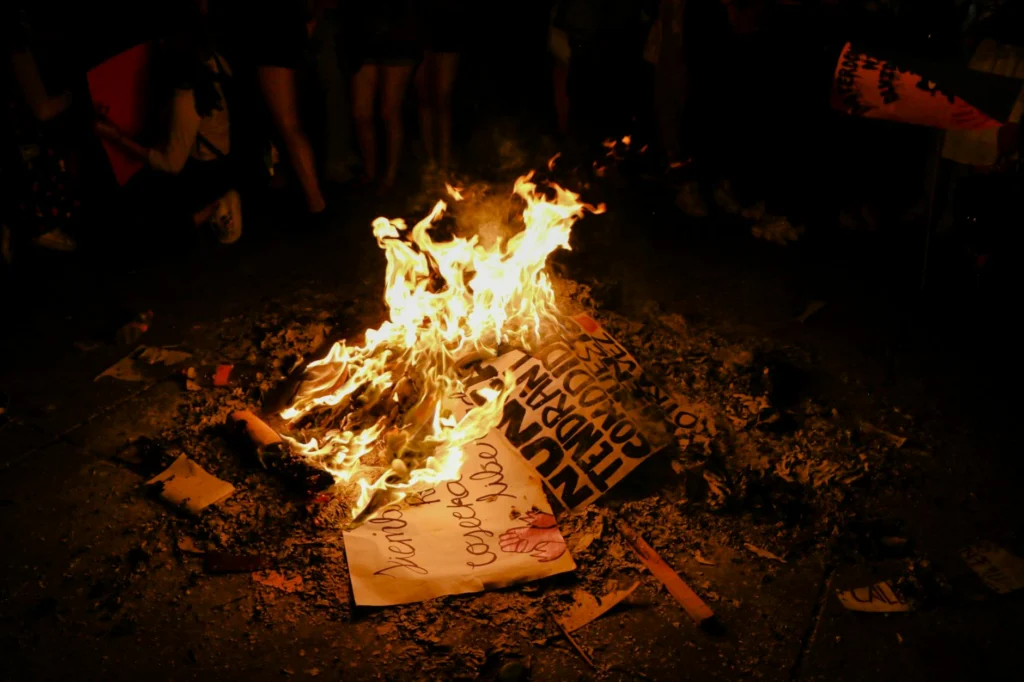
Protesters in the central Cuban city of Morón broke into the municipal Communist Party headquarters in the early hours of Saturday, March 14, dragging furniture and Castro-era symbols into the street and setting them ablaze. The attack on the Morón party office is the most significant act of physical destruction directed at Communist Party infrastructure during the current crisis, and one of the most dramatic confrontations between Cuban citizens and the state since the July 11, 2021 protests, which were themselves the largest anti-government demonstrations since the 1959 revolution.
How the Cuba Protests Reached Morón
The confrontation began as a peaceful rally on Friday evening, March 13, in Morón, a city in Ciego de Ávila province roughly 250 miles east of Havana. Residents gathered first at the local police station, chanting “Libertad!” (“Freedom!”), “Abajo la dictadura!” (“Down with the dictatorship!”), “Que pongan la luz, coño!” (“Turn the power back on, damn it!”), and “No tenemos miedo!” (“We are not afraid!”), according to Havana Times.
The crowd then moved to the municipal headquarters of the Communist Party of Cuba (PCC). Protesters entered the building, removed political materials and furniture from the reception area, and built a large bonfire in the street outside. The materials reportedly included portraits and propaganda from the Castro era. A smaller group threw stones through the building’s windows. Videos circulating on social media show flames in front of the headquarters and crowds cheering as party materials burned, according to Al Jazeera.
Other state facilities were also targeted overnight, including a pharmacy and a government-run store, NBC News reported.
Gunfire and Conflicting Accounts
What happened next is disputed. Independent journalist Guillermo Rodríguez Sánchez reported that a police officer discharged his weapon near the bonfire and struck a young man in the thigh. Unverified social media reports claimed the injured person was 16 years old. Video footage appears to show a person being carried away from the scene by other protesters.
The Cuban government denies that anyone was shot. State media outlet Vanguardia de Cuba stated that “no one was injured by gunfire,” attributing any injury to the young man falling during the confrontation. Human rights group Justicia11 reported hearing gunfire in the area, according to Al Jazeera.
This account cannot be independently verified. Internet access was cut in Morón following the events, a tactic Cuban authorities have used in previous unrest, including during the 2021 July 11 protests.
Arrests: Five or Fourteen?
The arrest figures from the Cuba protests depend on who is counting. Cuban authorities said five people were arrested in Morón for what the government characterized as “acts of vandalism,” according to the Associated Press via NBC News.
The legal advisory organization Cubalex, which monitors detentions on the island, reported at least 14 people detained across the broader wave of protests since March 6. Those detentions span multiple provinces, including Centro Habana, Marianao, and the municipality of Bolivia in Ciego de Ávila. The figure covers the protest wave, not the Morón incident alone.
Cuba currently holds over 1,000 political prisoners, according to the Spain-based monitoring group Prisoners Defenders. The government released 51 prisoners on March 12, though it remains unclear how many were political detainees.
Díaz-Canel’s Response
President Miguel Díaz-Canel responded by simultaneously acknowledging the underlying grievances and condemning the protest itself. He said that “complaints are legitimate when conducted civilly,” according to Cuba Headlines, but labeled the Morón events as “vandalism” and “violence,” warning that “for vandalism and violence, there will be no impunity,” as reported by CiberCuba.
This framing mirrors the government’s response to the July 11, 2021 protests, when authorities distinguished between legitimate economic frustration and what they called foreign-instigated unrest. In 2021, the crackdown that followed resulted in hundreds of prosecutions and prison sentences of up to 25 years for some participants.
Why Morón, Why Now
The immediate trigger was the collapse of the Antonio Guiteras thermoelectric plant on March 4. Guiteras, Cuba’s largest power plant, suffered a boiler pipe burst that cascaded across the national grid, leaving roughly 80% of the island without electricity and affecting an estimated 7 million people across at least 10 provinces, according to CiberCuba. The plant was restored on March 8, but the grid was already operating far below capacity: generating roughly 1,180 megawatts against a national demand of 2,250 megawatts, according to independent analysis.
Behind the grid failure is the fuel blockadeAn embargo on petroleum supplies imposed as economic or political pressure, restricting a nation's access to crude oil and refined fuel to coerce policy changes.. The United States cut off Venezuelan oil transfers to Cuba on January 3 after the capture of Venezuelan President Nicolás Maduro, and on January 29, the Trump administration issued an executive order threatening economic penalties against any country supplying Cuba with oil, directly or indirectly, Al Jazeera reported. No petroleum shipments have arrived in roughly three months.
Morón is not a random flashpoint. The city was also a site of significant protests during the July 11, 2021 demonstrations. Ciego de Ávila province, predominantly rural and dependent on centralized infrastructure, has been among the hardest hit by blackouts lasting 20 hours or more per day.
A Week of Cuba Protests Before the Fire
The Morón attack did not emerge from nothing. Cuba has experienced escalating unrest for over a week:
- Pot-banging protests (cacerolazosA form of political protest involving rhythmic pot or pan banging, common in Latin America as a coordinated expression of public discontent that requires no formal organization.) erupted in Havana neighborhoods starting around March 6, spreading to Santiago, Matanzas, and Ciego de Ávila over subsequent nights.
- Residents of Ceballos, also in Ciego de Ávila, took to the streets on March 9 in nighttime demonstrations, CiberCuba reported.
- University of Havana students staged sit-ins after in-person classes were suspended due to energy restrictions.
- Havana’s Nuevo Vedado neighborhood saw repeated nighttime protests, according to Cuba Headlines.
The progression from pot-banging to attacking party infrastructure represents a qualitative shift in the Cuba protests. Cacerolazos are a recognized form of protest across Latin America, noisy but contained. Entering and burning a Communist Party building crosses a line that Cubans have not crossed in the current crisis until now.
What the Cuba Protests Mean for US Talks
As we reported earlier this week, Díaz-Canel publicly confirmed that Cuba was in talks with the Trump administration, driven by the fuel blockade and grid collapse. The Morón events raise the stakes on both sides.
For Havana, the burning of a party headquarters is a direct challenge to state authority of a kind the government has not faced since taking power. The political cost of appearing weak in the face of such an attack is high, which increases the likelihood of a harsh crackdown. But repression requires resources (police, vehicles, communications infrastructure) that the same fuel crisis is depleting.
For Washington, the unrest may serve as evidence that the pressure campaign is working. But it also raises an uncomfortable question: if the stated goal is a democratic transition, what happens when the actual result is civil disorder and potential state violence against unarmed civilians?
The internet shutdown in Morón, amid the largest Cuba protests since 2021, suggests the government’s immediate priority is controlling the narrative, not addressing the grievances. That approach failed to prevent the July 11 protests from spreading in 2021. Whether it works in 2026, with a population three months into a fuel blockade and a grid that cannot reliably keep the lights on, remains to be seen.