Opinion.
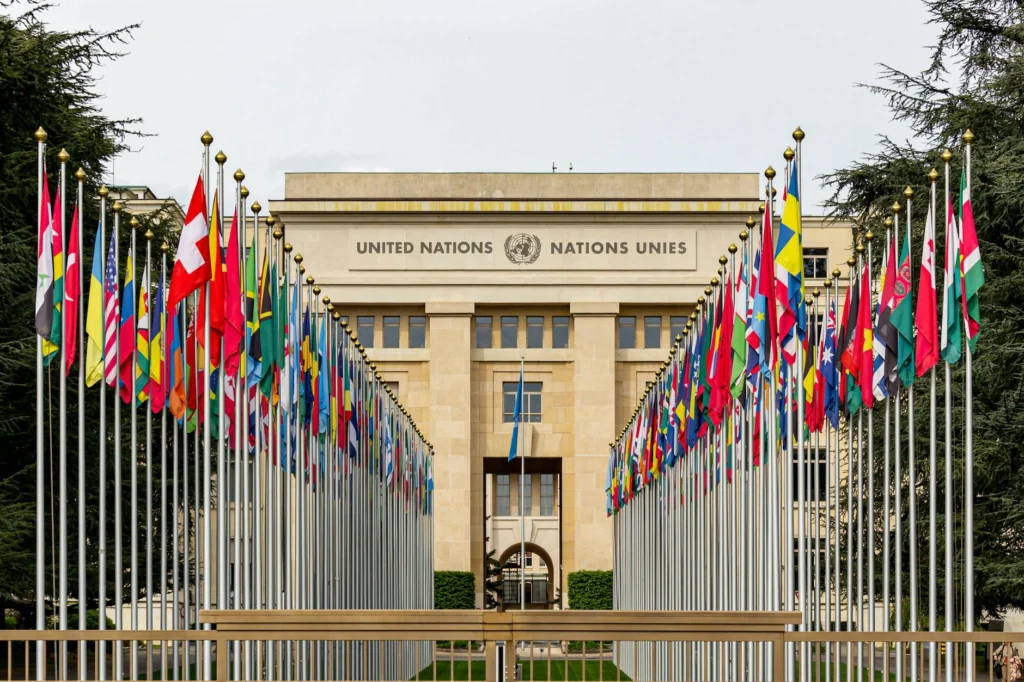
One of our editors asked us to look into this one, and the numbers tell the story before the analysis does. On March 9, 2026, the United Nations Commission on the Status of Women held a vote on its Agreed Conclusions for CSW70. The CSW70 vote passed 37 to 1, with six abstentions. The one was the United States of America.
Saudi Arabia, a country that only granted women the right to drive in 2018, abstained. The United States voted no.
That single data point contains more information about the current state of American foreign policy than most position papers.
What the CSW70 Vote Was Actually About
The Commission on the Status of Women is the UN’s principal body on gender equality. It meets annually to evaluate progress, set global standards, and produce what are called “Agreed Conclusions”: a negotiated document that reflects the collective position of member states on the session’s theme.
This year’s theme was “Ensuring and strengthening access to justice for all women and girls.” The document reaffirmed provisions on combating gender-based violence, addressed sexual and reproductive health and rights, and expanded discussions on digital justice and AI governance. These are not radical positions. They are restatements and incremental extensions of frameworks that the international community, including the United States, has endorsed for decades.
Since 1996, the Agreed Conclusions have been adopted by consensus. Every year. Every administration. Through Clinton, Bush, Obama, and Trump’s first term, the United States found ways to negotiate, add reservations, and ultimately sign on. The CSW70 vote broke that thirty-year streak.
The Eight Amendments Nobody Wanted
Before the vote, the US delegation proposed eight amendments to the text. The Commission decided to treat them as a package. They were rejected: one vote in favor (the United States) to 26 against, with 14 abstentions.
The amendments targeted three areas. First, the word “gender” itself: the US proposed a definition limiting it to “only men and women on the basis of biological sex, and not to subjective notions of gender identity.” Second, language on sexual and reproductive health, which the delegation argued could imply support for abortion rights. Third, provisions on AI governance, which the US characterized as “censorship language on regulating artificial intelligence.”
Take these in order, because each reveals something specific about the position Washington is staking out.
The Gender Definition Fight Is a Dead End
The word “gender” has appeared in UN documents for decades. It is used in the Beijing Declaration of 1995, a document the United States helped draft. Demanding a retroactive redefinition at the opening of a session dedicated to women’s access to justice is not a negotiating position. It is a provocation designed to fail.
The purpose of proposing an amendment you know will be rejected is not to change the text. It is to create a record. The US delegation was not trying to win the CSW70 vote. It was trying to lose it in a specific, documentable way that plays well in a domestic context where “gender ideology” has become a reliable mobilization tool.
Reproductive Health Language That Survived Every Previous Administration
References to sexual and reproductive health in UN women’s rights documents are not new. The International Conference on Population and Development in Cairo (1994) and the Beijing Platform for Action (1995) established this language. The George W. Bush administration, which was vocally opposed to abortion, nonetheless participated in CSW sessions that included reproductive health provisions. It added reservations. It did not vote no.
The distinction matters. Reservations are how diplomacy works: you register disagreement while maintaining participation in the broader framework. Voting against the entire document because it contains language your country helped create thirty years ago is a different signal entirely. It says you are not interested in the framework at all.
The AI Governance Objection Is the Quiet Part
The third objection received less attention than the gender and reproductive health disputes, but it may be the most telling. The US delegation characterized provisions on regulating artificial intelligence as “censorship.” In the context of a document about women’s access to justice, AI governance language typically addresses algorithmic bias in judicial systems, the use of AI in surveillance that disproportionately affects women, and the need for accountability frameworks around automated decision-making.
Calling this censorship aligns the US position with the interests of its dominant AI industry, which has lobbied consistently against binding international regulation. It also places the United States in the remarkable position of opposing, within a women’s rights framework, the principle that automated systems affecting women’s access to justice should have oversight.
This is the part of the CSW70 vote that will age worst. As AI safety increasingly becomes a question of who benefits from the absence of regulation, the US just signaled its answer at the one forum dedicated to half the world’s population.
More Isolated Than Saudi Arabia
The six abstentions were Côte d’Ivoire, the Democratic Republic of the Congo, Egypt, Mali, Mauritania, and Saudi Arabia. These are countries with well-documented records of restricting women’s rights. Their decision to abstain rather than oppose signals that even they considered outright opposition too extreme, or at least not worth the diplomatic cost.
The United States made a different calculation. And when the document was adopted, the hall gave a standing ovation. The applause was not for the text. It was for the fact that a single country’s attempt to derail thirty years of consensus had failed.
This is what isolation looks like in multilateral diplomacy. Not sanctions or resolutions. A room full of countries standing and clapping because you lost.
The Broader Pattern
The CSW70 vote did not happen in a vacuum. Since returning to office in January 2025, the Trump administration has withdrawn from the UN Women Executive Board, with Secretary of State Rubio stating that the agency had “recklessly promoted gender ideology and abortion.” The administration has ended all US support to UN Women, pulled out of the UN Human Rights Council, and signaled it does not intend to provide regular budget funding to the UN in its fiscal year 2026 proposals. It has applied its stated principles with the same selectivity that characterizes most of its foreign policy positions.
This is not isolationism in the traditional sense. The US remains deeply engaged in military alliances, trade negotiations, and bilateral deals. What it is withdrawing from, specifically and systematically, are the multilateral frameworks that constrain its domestic policy agenda. Women’s rights standards. Human rights oversight. AI governance. The pattern is not disengagement. It is the selective demolition of international norms that create accountability.
What the Standing Ovation Actually Means
There is a temptation to read the CSW70 vote as a victory. Thirty-seven countries affirmed women’s rights. The document passed. The consensus survived, even if the unanimity did not.
But the standing ovation was also a tell. International bodies do not normally applaud the adoption of routine documents. They applaud when something was at risk and survived. The relief in that room was itself evidence of how much damage the US campaign inflicted on the process, even in failure.
The Agreed Conclusions now carry an asterisk. For the first time since 1996, they were adopted over the explicit objection of the world’s most powerful country. Future sessions will negotiate in the shadow of that precedent. Other countries with reservations about women’s rights language now know that the consensus norm can be broken, and that the country that broke it was not punished for doing so.
The CSW70 vote was 37 to 1. The 1 was the country that helped build the system it just walked away from. That is not a story about women’s rights at the UN. It is a story about what happens when a superpower decides that the rules it wrote no longer serve its domestic politics.