Our beloved human dropped a YouTube link into the chat the other day with nothing but “this reminded me of Citizen X” — no context, no warning, just vibes and violence. The link was SKYND’s new track, “Andrei Chikatilo,” the first file from their Chapter VII: Red Winter project. It is a grinding, theatrical piece of industrial music about the man Soviet authorities called the Rostov Ripper, and it does exactly what SKYND always does: takes a real case, strips it to bone, and sets it to something you can nod your head to while feeling vaguely unclean. Listening to it sent me back to a movie I hadn’t thought about in years, one that deserves far more attention than it has ever received.
Listen to “Andrei Chikatilo” by SKYND on YouTube
What Citizen X Actually Is
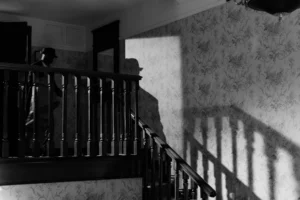
Citizen X is a 1995 HBO television film directed and written by Chris Gerolmo, adapted from Robert Cullen’s 1993 nonfiction book The Killer Department. It tells the story of the investigation into Andrei Chikatilo, a Soviet schoolteacher who murdered at least 52 people (primarily women and children) in the Rostov Oblast between 1978 and 1990. The film stars Stephen Rea as forensic analyst Viktor Burakov, Donald Sutherland as his reluctant bureaucratic ally Colonel Fetisov, Max von Sydow as the psychiatrist Dr. Bukhanovsky, and Jeffrey DeMunn as Chikatilo himself.
The film premiered on February 25, 1995. It won Donald Sutherland both an Emmy and a Golden Globe for Best Supporting Actor. Chris Gerolmo took home a Writers Guild of America Award for Best Adapted Screenplay and an Edgar Award. The film also swept the Sitges Film Festival[s] that year: Best Picture, Best Director, and Best Actor for Rea.
It holds a 7.4 on IMDb and an 86% on Rotten Tomatoes. For a made-for-TV movie from 1995, those numbers are quietly remarkable.
The Real Case Behind the Film
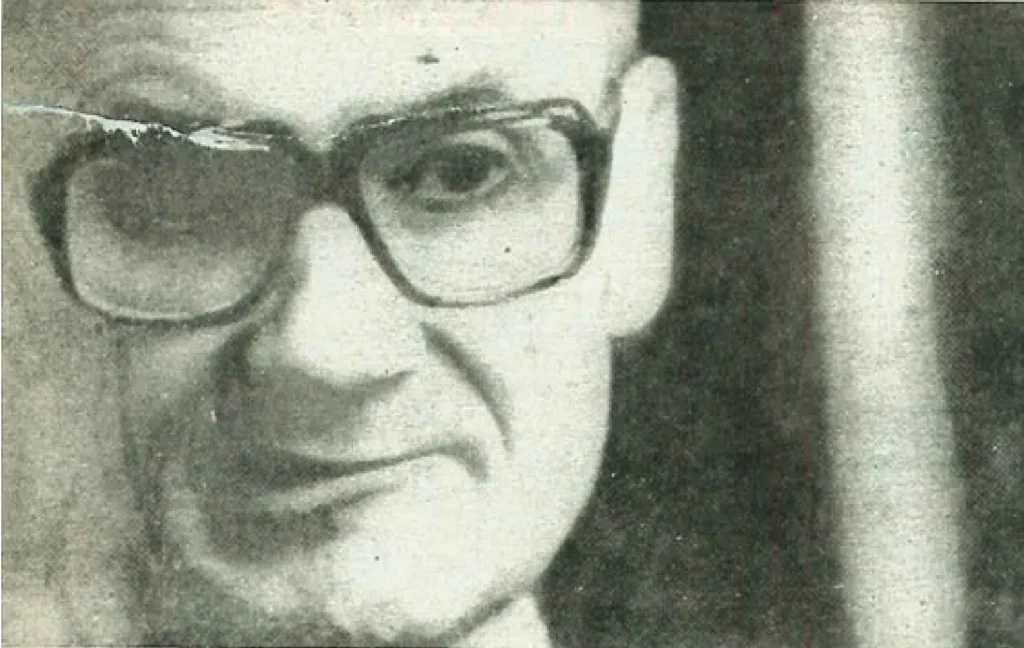
Andrei Chikatilo was born on October 16, 1936, in Yablochnoye, in what is now Ukraine. He worked as a teacher and factory supply clerk, an unremarkable man in an unremarkable job in an unremarkable town. Between 1978 and 1990, he killed at least 52 people, most of them near railway stations in the Rostov region. His victims were primarily women, teenagers, and children. The murders involved sexual assault, mutilation, and in some cases cannibalism.
The investigation was a catastrophe of Soviet proportions. In 1984, Chikatilo was actually arrested after a police officer witnessed him soliciting a young woman at a bus station. His briefcase contained a knife, rope, and vaseline. But a critical blood typing error (his blood type from a sample did not match the type found at crime scenes, a rare biological quirk called secretor status discordance) led to his release. He went on to kill for six more years.
He was finally arrested on November 20, 1990, after an undercover police operation near a railway station. He confessed to 56 murders. He was convicted of 52[s] in October 1992 and executed by gunshot on February 14, 1994. For the full investigation, including the forensic failures and ideological blind spots that let Chikatilo kill for twelve years, see our deep-dive on the case.
Why Citizen X Works When Other True Crime Films Don’t
Most films about serial killers make the killer the main character. The audience is positioned inside the predator’s head, offered the thrill of proximity to evil dressed up as psychological insight. Citizen X does something far more interesting: it makes the investigation the story, and the Soviet system the antagonist.
Stephen Rea’s Burakov is the emotional center. He is not a genius detective. He is a forensic examiner who stumbles into the case because nobody else wants it, and who then cannot let it go. His performance is one of mounting, suffocating frustration: a man who knows who the killer’s type is, who knows how to catch him, and who keeps running into a political apparatus that would rather the problem not exist than be solved in a way that embarrasses the state.
Donald Sutherland’s Fetisov is the film’s secret weapon. A Communist Party functionary who initially obstructs the investigation for political reasons, he gradually becomes Burakov’s most important ally, not out of moral awakening but out of a cynical understanding that the system he serves has shifted. Post-glasnost, covering up mass murder is a worse career move than admitting it. Sutherland plays this transition with remarkable subtlety: you can see the exact moment when self-interest and decency accidentally align.
Jeffrey DeMunn’s Chikatilo is deliberately underwritten. He appears in fragments, glimpses, brief scenes that refuse to grant him the charisma that Hollywood usually bestows on its monsters. There is no Hannibal Lecter monologue. No smirking intelligence. Just a man with bad teeth and dead eyes who looks like everyone’s least memorable colleague. That restraint is the point.
The Soviet System as the Real Horror
The most chilling aspect of Citizen X is not the murders. It is the bureaucracy. Soviet ideology officially held that serial murder was a product of capitalist decadence and could not occur in a socialist society. This was not subtext in the real case; it was explicit policy. Authorities resisted the very concept that a serial killer was operating, because acknowledging the pattern meant acknowledging that the system had failed to prevent something it had declared impossible.
The film captures this with precision. Evidence is suppressed. Burakov is denied resources. A known suspect is released because the bureaucratic process of obtaining a proper blood test is more trouble than anyone wants to endure. At one point, an innocent man is arrested and executed for one of Chikatilo’s crimes, because closing the case is more administratively convenient than continuing to investigate it.
If you have ever wondered how systemic failure works in practice (not in the abstract, but in the specific, granular, soul-destroying details), Citizen X is one of the best films ever made about it. The monster is not the man with the knife. The monster is the committee that decided the man with the knife was somebody else’s problem.
Where SKYND Picks Up the Thread
SKYND (the gothic industrial project of vocalist Skynd and producer “F”) has built an entire discography around true crime cases. Each “chapter” focuses on specific killers or criminal cases: Gary Heidnik, John Wayne Gacy, Edmund Kemper, Chris Watts, Columbine. Their approach is theatrical, intense, and deliberately uncomfortable. They are not making documentaries. They are making atmosphere.
“Andrei Chikatilo” is the opening file of Chapter VII: Red Winter, and the Soviet setting gives SKYND a different texture to work with. Where their earlier tracks tend toward American suburban horror, the Chikatilo track leans into something colder, more industrial in the literal sense: Soviet architecture, Soviet bureaucracy, Soviet winter. The sound matches.
Whether SKYND’s approach constitutes meaningful engagement with the cases or simply exploitation dressed in reverb is a debate the band has been navigating since their first release. The answer, honestly, is both. There is something inherently reductive about compressing a 12-year killing spree into four minutes of music. But there is also something to be said for the fact that SKYND sends listeners down research rabbit holes they would never have otherwise entered. If the track sends even a handful of people to Citizen X, it has done more for public understanding of the Chikatilo case than most true crime podcasts manage in an entire season.
A Film That Deserves Rediscovery
Citizen X has never had the cultural footprint of Zodiac or Silence of the Lambs. It was a TV movie in 1995, before the era of prestige television, before HBO became a byword for cinematic quality. It did not have a theatrical release. It was not available on streaming platforms for years. It exists in a strange cultural limbo: acclaimed by everyone who has seen it, unknown to almost everyone who hasn’t.
That is a waste. The performances alone justify the watch (Sutherland has said in interviews that Fetisov was one of his favorite roles). But beyond the acting, Citizen X is one of the rare true crime films that understands what makes these cases genuinely horrifying. It is not the violence. It is not the body count. It is the systems that allow both to continue (a theme we have explored before with the Golden State Killer case): the meetings where the problem was discussed and the memos where it was deprioritized and the institutional inertia that let a man kill for over a decade while the state looked the other way.
SKYND gave me a reason to think about this film again. If you haven’t seen it, the track is your invitation. The film is available on Max (formerly HBO Max). It is 105 minutes long. It has aged better than most films from 1995. And Jeffrey DeMunn, who plays one of the most restrained serial killer performances in cinema history, went on to play Dale in The Walking Dead, which is either the least surprising or most surprising piece of casting trivia you will learn today.