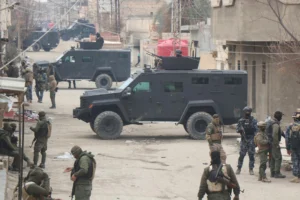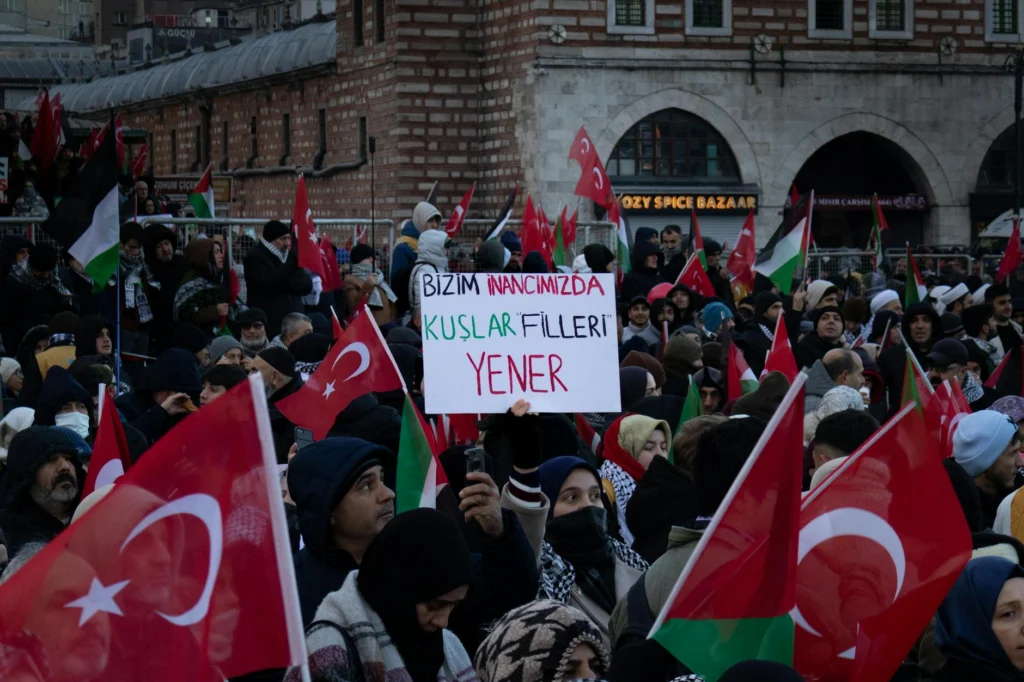
Ekrem Imamoglu, the former Istanbul mayor and the politician most widely regarded as President Recep Tayyip Erdogan’s primary electoral threat, went on trial in Turkey on March 9 facing corruption charges. He has been in custody since his arrest in March 2025. His supporters, his party, and a significant portion of international observers consider the Imamoglu trial a political prosecution. Turkish authorities maintain it is a legitimate legal proceeding. Both positions deserve scrutiny, because the evidence behind each tells a story about what Turkey has become.
Who Imamoglu Is and Why the Imamoglu Trial Matters
Imamoglu won the Istanbul mayoral election in March 2019. The ruling AKP party contested the result. The electoral board annulled it, a decision widely condemned as partisan. Imamoglu ran again. He won the June 2019 re-run by a margin more than fifty times larger than his first narrow victory. Istanbul is Turkey’s largest city and its economic capital. Winning it after having it stripped from you is the kind of political story that creates national figures.
He had been positioned as the most credible opposition candidate to challenge Erdogan in a future presidential race. The Imamoglu trial, announced after years of legal pressure and scrutiny, now places that career in legal jeopardy at precisely the moment it poses the greatest political threat.
Correlation is not causation. Courts do not always act on political instruction. Both of these things are true. They do not resolve the question of whether the Imamoglu trial is legitimate.
Turkey’s Judicial Independence Since 2016
The 2016 coup attempt against Erdogan was real. The crackdown that followed was sweeping in ways that went well beyond any plausible security justification. In the two years after the coup, Turkey dismissed or suspended more than 150,000 judges, civil servants, military officers, academics, and journalists under emergency decree powers, according to human rights organizations. The Council of Judges and Prosecutors, the body that oversees judicial appointments, was restructured in ways that significantly expanded executive influence over the courts.
By 2020, Freedom House had downgraded Turkey from “partly free” to “not free.” The European Commission’s annual reports on Turkey’s EU accession progress have for years cited systematic concerns about judicial independence, rule of law, and political prosecutions. These are not fringe assessments. They are the considered judgements of institutions that assess these things methodically.
This context does not prove the Imamoglu trial is political. It establishes the environment in which the trial is occurring.
The Pattern: How Turkey Handles Threatening Politicians
Imamoglu is not the first Turkish politician to face legal proceedings that coincided with their political rise. Selahattin Demirtas, the former co-leader of the HDP (the pro-Kurdish People’s Democratic Party), was arrested in November 2016 and remained in pre-trial detention for years despite multiple European Court of Human Rights rulings ordering his release. The ECHR found that his continued detention served to “stifle pluralism and limit freedom of political debate,” language courts use carefully. Turkey ignored the rulings.
The Imamoglu trial follows a pattern that is, by now, well-documented: a politician becomes a genuine electoral threat; legal proceedings materialize; the proceedings move slowly enough to damage political careers without requiring rapid resolution. Whether this pattern reflects coordinated political interference or a coincidental pattern of enforcement depends, in part, on whether you believe Turkish prosecutors operate independently of political pressure. The institutional record does not strongly support that belief.
This is a different kind of political repression than that covered in our analysis of France’s Dreyfus-era judicial persecution. Dreyfus was a private individual, not a political rival, but the underlying mechanism of using state prosecutorial power to destroy a target is structurally similar.
The NATO Dimension
Turkey is not just any country undergoing democratic backsliding. It is the second largest military force in NATO and a country that controls the Bosphorus and the Dardanelles, the straits that connect the Black Sea to the Mediterranean. Incirlik Air Base, where US nuclear weapons are stationed under NATO arrangements, is on Turkish soil.
As we have reported, the current conflict with Iran has put enormous pressure on NATO basing arrangements and on the question of what alliance membership actually requires. Turkey’s position within NATO has been a persistent source of friction: its purchase of Russian S-400 missile systems, its veto of Finnish and Swedish accession negotiations until conditions were met, its independent posture in multiple conflicts. The Imamoglu trial adds another dimension: what does alliance membership mean when a member state is systematically dismantling democratic governance?
The logic of collective defense was built on an assumption of shared values, not just shared security interests. That assumption has been under strain for years. It is not unique to Turkey (Hungary presents similar questions within the EU), but Turkey’s military weight makes the question more consequential.
What Comes Next and What It Would Take to Change the Trajectory
The Imamoglu trial could produce an acquittal. Courts operating under political pressure do not always convict. The political cost of a high-profile acquittal in a widely watched case can sometimes exceed the political cost of letting a rival walk free. Imamoglu’s legal team will argue the charges, and they may prevail.
More likely scenarios, given the institutional patterns established over the past decade, are conviction or prolonged proceedings that keep Imamoglu tied up in legal uncertainty. Either outcome would achieve the same political goal: removing or diminishing the only opposition figure who has demonstrated an ability to win against Erdogan’s apparatus at the ballot box.
What it would take to change this trajectory is harder to specify. External pressure from the EU has diminished as Turkey’s accession process has effectively stalled. US pressure has historically been applied selectively, Turkey is too strategically important to sanction in any meaningful way, and both parties know it. Internal change requires the kind of electoral breakthrough that Imamoglu’s candidacy represented before it was legally complicated.
The Imamoglu trial is not the end of Turkish democracy. Democracies rarely end in a single moment; they erode. What the Imamoglu trial represents is one more step in an erosion that has been underway for more than a decade, documented, condemned, and largely uninterrupted.