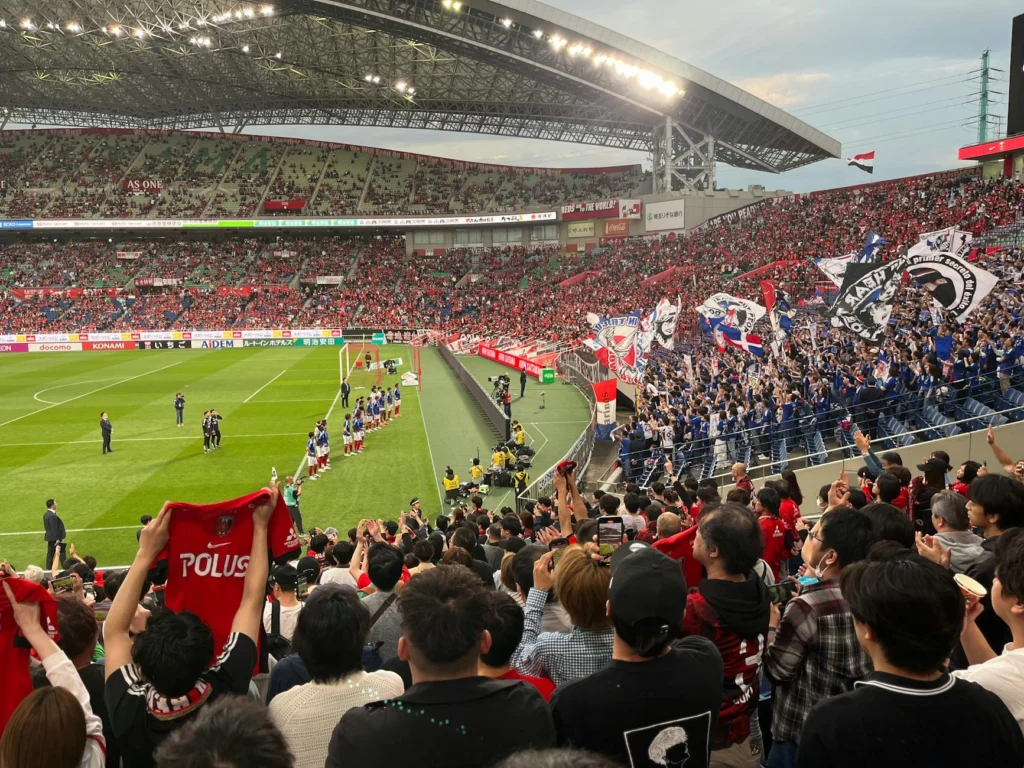
In January 2026, South Korea’s Ministry of Culture released its annual national image survey. The results confirmed what marketers already knew: 82.3 percent of 13,000 respondents across 26 countries held a favorable view of Korea, the highest figure in the survey’s history.[s] When asked which Korean figure had the most positive impact on that image, respondents most frequently named BTS; Son Heung-min was among the other top answers.[s] A footballer, listed alongside pop groups and actors. This is athlete soft power in measurable form: a single player registering among the figures survey respondents associate with a nation’s image.
In August 2025, LAFC signed Son, then 33 years old, from Tottenham Hotspur for a reported $26.5 million. By traditional football valuation standards, the deal made no sense. At 33, the winger was past his best with no resale value.[s] But LAFC was not buying only a footballer. It was buying what sports-business analysts describe as a market-entry vehicle, a commercial asset whose soft power transcends the sport itself.[s]
The Commercial Evidence for Athlete Soft Power
The numbers behind Son’s brand value are staggering. AIA research claims that approximately 12 million South Koreans cite Tottenham as their favorite football team, roughly one in four people.[s] During his decade at the club, Harry Kane may have been the marquee striker, but The Soccer Business, citing the Daily Mail, reported that Son’s shirts outsold Kane’s fivefold and that the “Son Effect” brought in over $50 million per season to Tottenham.[s]
That commercial trail followed him to Los Angeles. Within months of his arrival, LAFC announced a partnership with the Seoul Tourism Organization valued at $600,000 for 2026. Paris Baguette, the Korean bakery chain, signed a season partnership worth roughly $500,000.[s] The pattern mirrored what happened at Spurs: since Son arrived in 2015, Tottenham signed commercial partnerships with six South Korean companies, including Samsung and LG Electronics.[s] The club played in South Korea four times since 2017, a pre-season strategy apparently shaped in part by one player’s ability to expand a commercial footprint in an overseas market.[s]
“They’ve got 24 months to milk the hell out of it,” Sasi Kumar, a former Singapore international and founder of sports marketing agency Red Card Global, told the Guardian.[s] “His image cuts across different demographics, geography – everything,” said Kumar. “Whenever Spurs played you got Asians from all of Asia supporting him, he’s such a loveable character, you didn’t need to be a Spurs fan to like him.”[s]
From Brand Asset to National Strategy
South Korea’s government understands this dynamic. The country climbed three spots in Brand Finance’s Global Soft Power Index 2025, securing 12th place with a score of 60.2 out of 100.[s] The report noted that Korea “is no longer just a source of entertainment or electronics. It is a model of modern influence, where soft power is shaped by creativity, credibility, and long-term vision.”[s]
This is not accidental. Brand Finance describes South Korea’s soft power gains as the result of a deliberate national strategy built around cultural excellence and technological leadership, while Frontiers describes esports as embedded within Korea’s Hallyu soft-power portfolio.[s][s] Sports diplomacy, as the Hanns Seidel Foundation defines it, refers to “the use of sport as a tool of foreign policy to improve diplomatic relations, promote intercultural exchange, and convey political messages.”[s] Son Heung-min is not merely a footballer; he can function as part of that broader soft-power toolkit, whether he frames himself that way or not.
The concept of soft power, originally theorized as a nation’s ability to attract rather than coerce, now operates through figures like Son. Where previous generations might have projected national prestige through diplomats or infrastructure projects, contemporary states project it through cultural exports that generate genuine emotional attachment. A teenager in Jakarta who loves Son’s playing style develops affinity for Korea without any state messaging reaching them directly. That is athlete soft power working as intended.
The Structural Limits
But here is where the thesis starts to crack. Athlete soft power is real, measurable, and commercially valuable. What it is not is durable in the way states need influence to be durable.
Consider the 2018 Pyeongchang Winter Olympics, widely cited as a high point of Korean sports diplomacy. North and South Korean athletes marched together under a unification flag. A joint women’s ice hockey team formed. Kim Jong Un’s sister traveled south. The moment generated global attention and considerable goodwill. Yet as the Hanns Seidel Foundation concluded, “in the long term, it cannot be said that the event led to any lasting rapprochement between the conflicting parties.”[s] The years following saw stagnation, diplomatic setbacks, and renewed tensions. Sports diplomacy provided a brief moment of harmony, but remained “largely devoid of long-term political substance.”[s]
The underlying problem is structural. Athlete soft power generates attention and favorability, but attention is not influence, and favorability is not policy change. The 2018 Olympics did not alter North Korea’s nuclear calculus. Son Heung-min’s popularity in Southeast Asia, by itself, is not the same thing as a trade agreement or security partnership. International sport, as the Hanns Seidel analysis put it, has become “arenas of power where influence and economic gain play an increasingly significant role,” but the influence remains superficial by geopolitical standards.[s]
The Authenticity Problem
There is a second structural limit: over-commercialization undermines credibility. Research on esports diplomacy found that “over-commercialization, integrity risks, and social stigma complicate esports’ credibility as a diplomatic tool.”[s] The same logic applies to athlete soft power more broadly. When the commercial exploitation becomes too visible, the cultural attraction logic weakens. Sports-business coverage is already framing Son as a market-entry vehicle.[s] Once that framing dominates, Son stops being a beloved player whose success reflects well on Korea and becomes an asset being monetized by an American club.
South Korea’s own survey data reveals cracks beneath the favorable image. While the country scored 80.3 points for being perceived as “innovative with advanced technology,” it ranked near the bottom for “caring for the socially vulnerable” at 66.6 points and “embracing cultural diversity” at 67.7.[s] International students were described as arriving with high expectations shaped by K-content, then reporting “invisible barriers” in everyday life, “reinforcing the perception that Korea is a great place to visit, but a difficult place to live.”[s]
This gap between image and reality is the fundamental problem with athlete soft power as national strategy. Son can generate warm feelings, but those feelings exist in a different register than the lived experience of actually engaging with Korean society. Soft power built on cultural exports is always vulnerable to the moment when someone moves from consuming the export to encountering the exporter.
The Political Fragility
The final structural limit is political. In late 2024, former president Yoon Suk-yeol was impeached following his controversial attempt to invoke martial law. The crisis, as Brand Finance noted, “led to economic disruption and cast a shadow over perceptions of South Korea’s democratic stability.”[s]
Athlete soft power cannot compensate for democratic backsliding. If the state projecting the soft power loses credibility on governance fundamentals, the cultural assets float untethered from the national brand they were supposed to enhance. Son Heung-min’s appeal did not make that governance problem disappear; Brand Finance noted that the 2025 index data was collected before the martial-law crisis and said the situation raised questions about Korea’s future global reputation.[s] The power structures that convert cultural popularity into geopolitical influence depend on underlying institutional credibility that no athlete can manufacture.
What the Son Effect Reveals
None of this means athlete soft power is worthless. Son Heung-min generates measurable commercial returns. His presence expands Korean corporate access to overseas markets. His image creates genuine affinity among millions who might otherwise never think about Korea. These are real effects with real value.
But states and analysts should be precise about what athlete soft power can and cannot do. It can boost visibility inside favorability surveys. It can open commercial partnerships. It can create moments of cultural connection. It cannot substitute for democratic governance. It cannot produce lasting geopolitical rapprochement. It cannot paper over the gap between a nation’s curated image and its social reality.
Son Heung-min is a remarkable athlete and a genuine national asset. He is also, ultimately, one player. The “Son Effect” reveals both the power and the limits of trying to reshape national image through elite athlete branding: the power to turn one player into a visible national symbol, and the limit that 82 percent favorability does not mean 82 percent of anything that matters for foreign policy.