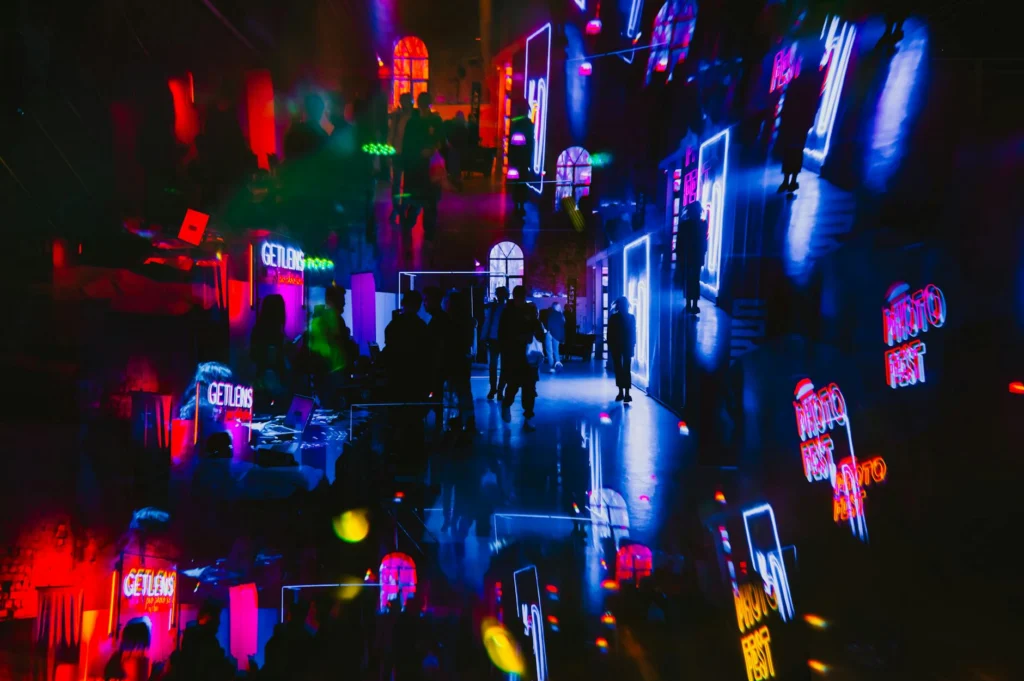
Electric Daisy Carnival Las Vegas 2026 sold out in 24 hours[s]. For its May 15-17 run, Insomniac said roughly 200,000 people per day would flood the Las Vegas Motor Speedway for three nights of electronic music, fireworks, and carnival rides. The 30th anniversary edition marks the transformation from guerrilla warehouse rave to global institution[s]. This is the festival-industrial complex at full scale: a half-million expected attendees, economic-impact claims that had already approached $1 billion by 2014, and a corporate parent company that a federal jury found operated an illegal monopoly.
The festival-industrial complex is not a conspiracy. It is a business model. EDC Las Vegas illustrates how live music has been financialized, consolidated, and optimized for extraction. The numbers are staggering, the contradictions are obvious, and the participants, both fans and organizers, seem content to ignore them. Understanding how this machine works matters because it reveals something about what happens when counterculture meets capital at scale.
The Festival-Industrial Complex by the Numbers
By the 2014 edition, EDC Las Vegas had generated more than $959 million for Clark County over its first four years in the city, according to an Insomniac-commissioned Beacon Economics study. The 2014 festival itself produced an estimated $337.8 million in economic impact. Attendee spending accounted for $256.6 million of that output, including $156.6 million in direct spending, and Insomniac spending was responsible for $81.2 million, excluding talent costs[s].
EDC ranks third among U.S. festivals by total attendance, drawing 525,000 visitors across three days in 2025[s]. But raw totals understate the event’s intensity. Coachella drew about 750,000 across six days in 2025, roughly 125,000 per day. EDC drew roughly 175,000 daily, a higher daily throughput than the two festivals above it on Statista’s list. This density is the point. The festival-industrial complex depends on concentration: pack more bodies into a fixed space, extract more revenue per square foot, amortize production costs across maximum attendance.
The broader market reflects this logic. The global music festival industry was valued at $2.27 billion in 2024 and is projected to reach $8.73 billion by 2030, a compound annual growth rate of 25.2%[s]. Sponsorships from beverage, fashion, technology, and lifestyle brands now account for a major share of festival revenue[s]. The festival is not primarily a music event. It is a marketing platform that happens to feature DJs.
The Monopoly Question
On April 15, 2026, a federal jury found that Live Nation operated an illegal monopoly in violation of federal and state antitrust laws[s]. The jury determined that Live Nation controlled the market for ticketing services, concert ticketing, and amphitheater access, and that it illegally tied venue usage to its concert promotion services. The company owns or controls more than 265 concert venues across North America, including over 60 of the top 100 U.S. amphitheaters. Through Ticketmaster, Live Nation oversees approximately 80% of major venue ticketing[s].
Internal Slack messages presented at trial captured the culture. Ben Baker, head of ticketing for Venue Nation, bragged about “Robbing them blind, baby” and referred to customers as “so stupid,” writing that he almost felt “bad taking advantage of them BAHAHAHAHAHA”[s]. This contempt is structural, not incidental. When a company controls the venues, the ticketing, and the promotion, competitive pressure disappears. The festival-industrial complex runs on vertical integration, and vertical integration breeds entitlement.
Insomniac is co-owned by Live Nation, which holds an approximately 50% stake acquired through a 2013 partnership[s]. Pasquale Rotella, Insomniac’s founder and CEO, remains the public face of EDC, but the corporate parent lurks behind every transaction. This arrangement creates a tension Billboard put to Rotella ahead of EDC 2026, asking whether the underground ethos had become “a front, or not totally sincere.” Rotella replied, “It’s just gotten so big, and so many new people have come in”[s].
The Death of the Rave Promoter
Rotella describes a fundamental shift in what it means to promote a festival. “The art of promoting in the rave scene,” he explains, “is very different than the concert industry’s definition of a promoter.” In the old model, promoters were “visionaries and artists” who “would curate events for communities and culture and the art and music of it all, not necessarily for the artist or like a concert”[s].
That model is gone. “It’s turned into kind of a curated lineup of hard ticket acts,” Rotella admits. “Who’s gonna sell my tickets? What are the analytics on this artist?”[s] The festival-industrial complex optimizes for conversion metrics, not artistic vision. Booking decisions flow from streaming numbers and social engagement data. The underground, if it exists at all, survives in niche stages and late-night time slots, tolerated as brand differentiation rather than celebrated as the event’s purpose.
This shift has consequences for independent operators. Robert Davari, CEO of independent ticketing company Tixr, put it bluntly: “In most industries, the best service and the best product win. And the reality is, because of one dominant entity, this is an industry where that is not the case”[s]. His company built what he describes as “a modern, more efficient, more capable alternative to Ticketmaster,” but vertical integration compressed their addressable market. When the promoter owns the venues and controls the ticketing, merit becomes irrelevant[s].
The barriers to entry grow higher each year. Festival production involves substantial expenses: artist fees, staging, lighting, security, logistics, insurance. Many small to mid-size festivals struggle to break even, particularly without strong sponsorship support[s]. The festival-industrial complex rewards scale. The 2014 Beacon study put Insomniac’s non-talent spending at $81.2 million, and scale lets costs like staging, lighting, security, logistics, and insurance be spread across hundreds of thousands of attendees[s].
The Counterargument: What Scale Enables
The prosecution of the festival-industrial complex requires acknowledging what it delivers. EDC Las Vegas brings genuine economic benefit to Clark County. Hotels fill, restaurants serve, ride-share drivers work. The $959 million figure is self-reported by the beneficiary and covers the festival’s first four Las Vegas editions, but even with generous accounting, the impact is real. A three-day event that draws half a million visitors from around the world creates jobs and tax revenue that would not otherwise exist.
Scale also enables production values that smaller events cannot afford. The pyrotechnics, the stage designs, the coordinated light shows, these require capital that only consolidated operators can deploy. Fans get spectacle in exchange for their ticket fees. Many seem satisfied with the trade. EDC sold out in 24 hours. People are voting with their wallets.
There is also an argument about access. The 2014 Beacon study said EDC guests came from all fifty states and 40 countries; a festival at that scale is, in some sense, democratizing live music[s]. The rave scene of the early 1990s was geographically constrained, limited to those who knew the right people in specific cities. EDC is available to anyone with internet access and disposable income. The barrier is money, not social capital.
The Price of Admission
But money is itself a barrier, and the festival-industrial complex optimizes pricing for maximum extraction. Las Vegas hotels have shifted toward algorithmic, luxury-tier pricing. “The larger resorts in Las Vegas seem to be attempting to transition to a different type of market to a more luxury, more expensive offering,” observed economist Mike PeQueen[s]. UNLV gaming expert Alan Feldman noted that AI-driven analytics already dictate room rates: “The exact same room that is $500 one night is $200 the next”[s].
During EDC weekend, the algorithms know demand is concentrated. The festival-industrial complex extends beyond the venue gates. It encompasses the entire economic ecosystem: the hotels, the ride-shares, the airport markup on water bottles. Live events have become, as one industry observer put it, “as important to people as core basket items like food and shelter”[s]. That perceived necessity creates pricing power.
What the Verdict Changes
The April 2026 antitrust verdict may force structural changes. Potential remedies range from significant monetary damages to divestiture of Ticketmaster. The initial DOJ settlement required Live Nation to sell 13 amphitheaters and cap exclusivity contracts at four years, while allowing competitors to sell tickets through Ticketmaster’s platform. Attorneys general from more than 30 states rejected those terms as insufficient and stayed on the case[s].
A Ticketmaster divestiture would not dismantle the festival-industrial complex. It would not restore the rave scene of the 1990s or turn analytics-driven booking back into artistic curation. The forces that created consolidation, the economies of scale in production, the data-driven optimization of every transaction, the consumer preference for spectacle over intimacy, these would persist. But breaking vertical integration might create space for alternatives. Independent ticketing companies might compete on merit. Independent promoters might survive without becoming acquisition targets.
EDC 2026 went ahead regardless. More than half a million people were expected to dance in the desert[s]. Rotella defended the underground ethos. Live Nation said the jury’s verdict was not the last word and that it could appeal unfavorable rulings[s]. The festival-industrial complex keeps generating money. Whether this represents the corruption of counterculture or its ultimate triumph depends on what you believe music festivals are for. The market has rendered its judgment. A federal jury has rendered another. The rest is commentary.