China controls roughly 70% of global rare earth mining, but that figure understates Beijing’s true leverage. The country commands close to 90% of the world’s rare earth processing capacity[s], and nearly 94% of permanent magnet production[s]. That downstream dominance is the real chokepoint. Mining rare earths is relatively straightforward. Separating and refining them into usable materials is where China’s four decades of accumulated expertise creates a barrier that may take Western nations a full decade to overcome.
Why Rare Earth Processing Is the Real Bottleneck
Despite their name, rare earth elements are not geologically scarce. Cerium and neodymium are more abundant in Earth’s crust than gold or silver[s]. The problem is that these 17 elements almost always occur together in ore, and they are chemically near-identical to one another. Separating them requires an industrial process so demanding that, according to Fortune, it could optimistically take countries a decade to build their own rare earth industry, with veteran mining executive Mick McMullen adding he is “not sure how long it takes to solve it, and whether it can get done in one administration term.”[s]
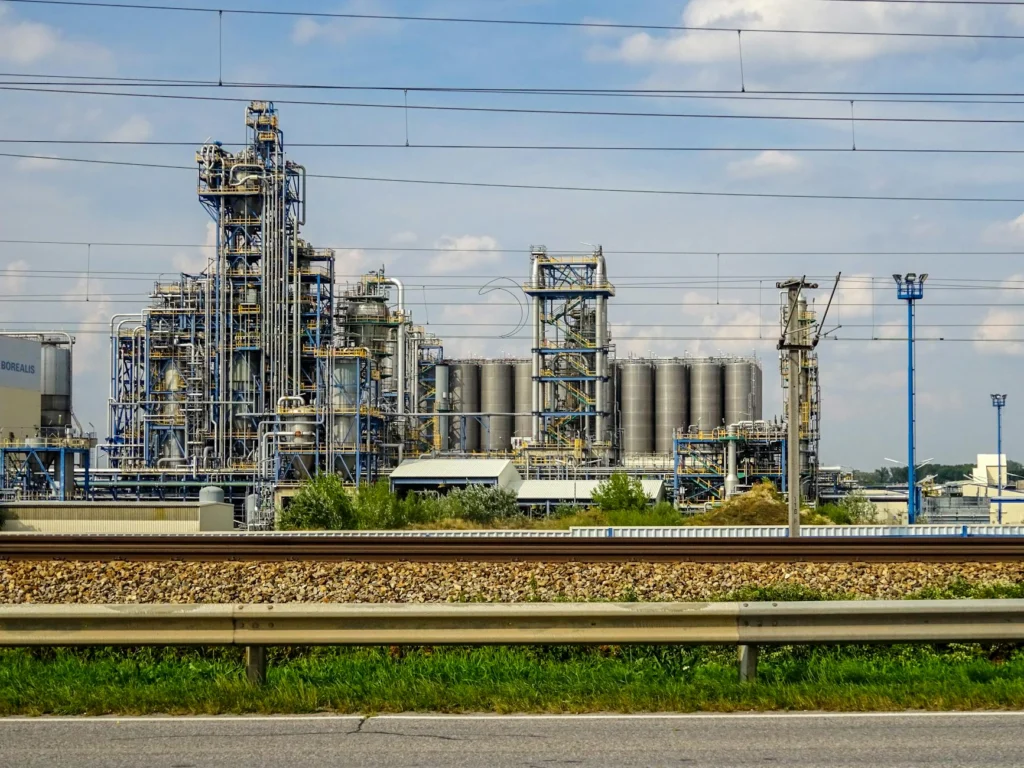
The standard separation method, called solvent extraction, forces rare earth ores through hundreds of chemical stages. Each stage uses acids and organic solvents to gradually pull individual elements apart based on minute differences in their properties. A full separation plant may involve hundreds of stages of extraction and stripping cycles[s]. The process is slow, expensive, and environmentally punishing.
The Environmental Cost Nobody Wants to Pay
For every tonne of rare earth output, conventional processing produces roughly 2,000 tonnes of toxic waste[s]. The detailed breakdown is grim: 13 kilograms of dust, 9,600 to 12,000 cubic meters of waste gas, 75 cubic meters of wastewater, and one ton of radioactive residue per ton of rare earth produced[s]. Western environmental regulations make such operations extremely costly, while China has historically operated refineries with relatively lower regulatory constraints.
This is not a matter of political will alone. Rare earth processing relies on sulphuric acid baking, multi-stage leaching, and solvent extraction that generates toxic waste streams and radioactive tailings[s]. Permitting such facilities in the United States or Europe requires extensive environmental review, community consultation, and long-term liability planning. China spent decades building this infrastructure before environmental enforcement tightened. Replicating it under Western standards is a different proposition entirely.
The Knowledge Gap Is Just as Severe
Beyond equipment and permits, there is a human capital problem. Only a handful of seasoned experts in rare earth separation reside in the United States, Europe, or Japan, while China has thousands of engineers with decades of experience[s]. China boasts 39 research institutes dedicated to training rare earth specialists, while the United States has a few, such as the Ames Laboratory in Iowa. China files approximately 30 rare earth patents for every one filed by the US, and for every US government-funded researcher focusing on rare earths, China supports around 120[s].
Beijing guards this expertise aggressively. Chinese authorities now require rare earth firms to register their technical specialists and even confiscate passports to prevent sensitive know-how from leaking overseas[s]. The tacit knowledge of how to run these complex separation processes, learned through years of trial and error, cannot be replicated from textbooks alone.
Western Efforts Are Accelerating, But the Gap Remains
The Trump administration has committed over $7.3 billion in capital to accelerate domestic rare earth processing capabilities[s]. In July 2025, the Department of Defense invested $400 million in equity in MP Materials, becoming the company’s largest shareholder[s]. MP Materials plans to commission its heavy rare earth refinery by mid-2026, targeting 200 metric tons per year of dysprosium and terbium[s].
In Australia, Lynas Rare Earths announced the first production of samarium oxide at its Malaysia facility in March 2026, ahead of schedule, reinforcing its status as the sole commercial producer of separated heavy rare earth oxides outside China[s]. These are meaningful milestones. But independent analysts note that full on-shoring of heavy rare earth separation may take five to seven years even from this starting point[s].
What This Means for Supply Chains
The strategic vulnerability became painfully clear in April 2025, when China imposed export restrictions on heavy rare earths and permanent magnets in retaliation to US tariffs. Chinese customs data show that China exported just 17 tons of yttrium to the United States in the eight months after restrictions began, compared to 333 tons in the eight months prior[s]. Aerospace manufacturers raised alarms about potential production pauses.
Even after tensions eased with a one-year suspension of export controls in late 2025, the underlying dependence remains. China has been at this for more than 30 years[s]. Global demand for rare earths is expected to increase by more than 60% by 2040[s]. The math is stark: Western nations are trying to build in a decade what China built over three, while demand surges and Beijing continues to deepen its advantage.
The Separation Chemistry Problem
Rare earth elements share similar electronic configurations, with their distinguishing electrons occupying core-like 4f orbitals. This gives all 15 lanthanides (plus yttrium and scandium) remarkably similar physical and chemical properties, leaving only minute differences by which to distinguish them during separation[s]. The chemical engineering involved in persuading these almost chemically identical elements to part from one another is, as Chemistry World puts it, “a gargantuan task, requiring huge amounts of energy and generating enormous volumes of wastewater and tailings.”[s]
The dominant industrial method is liquid-liquid solvent extraction. The highly acidic rare earth leachate is blended with a kerosene organic phase containing phosphoric acid-based extractants designed to chelate rare earth ions. Each element has a subtly different affinity for the extractant, so successive cycles gradually concentrate each rare earth in turn. A full separation plant may involve hundreds of stages of extraction and stripping cycles[s]. Conventional rare earth processing relies on sulphuric acid baking, multi-stage leaching, and solvent extraction, generating toxic waste streams and radioactive tailings[s].
Waste Generation and Regulatory Barriers
The waste output is staggering. For every tonne of rare earth output, conventional processing produces roughly 2,000 tonnes of toxic waste[s]. More granularly: 13 kilograms of dust, 9,600 to 12,000 cubic meters of waste gas, 75 cubic meters of wastewater, and one ton of radioactive residue per ton of rare earth produced[s]. The radioactive component derives from thorium and uranium often found alongside rare earth ores.
Western regulatory frameworks internalize these costs through permitting requirements, environmental liability, and community opposition. This creates a structural disadvantage relative to China’s processing infrastructure, which scaled during decades of lighter enforcement. Even if capital were unlimited, permitting timelines and technical reviews add years to any new project.
Expertise Asymmetry
The knowledge gap is quantifiable. China maintains 39 research institutes dedicated to rare earth specialists; the US has a few, notably the Ames Laboratory. China files approximately 30 rare earth patents for every one filed by the US. For every US government-funded researcher in the field, China supports around 120[s]. Only a handful of seasoned experts in rare earth processing reside in the US, Europe, or Japan, while China has thousands of engineers with decades of accumulated experience[s].
This expertise is actively protected. Beijing now requires rare earth firms to register technical specialists and confiscates passports to prevent know-how transfer overseas[s]. Rare earth processing is as much art as science; tiny adjustments in acidity, flow rates, or reagent ratios can make or break purity yields. This tacit knowledge, developed over years of trial and error, cannot be extracted from reference texts.
Current Western Capacity Development
The US response has been substantial. The Trump administration has committed over $7.3 billion in capital to rare earth processing capabilities[s]. MP Materials received a $400 million equity investment from the Department of Defense in July 2025, along with a $150 million loan to expand Mountain Pass heavy rare earth separation[s]. The company targets commissioning its heavy rare earth refinery by mid-2026, with 200 metric tons per year capacity for dysprosium and terbium[s].
Lynas Rare Earths achieved first production of samarium oxide at its Malaysia facility in March 2026, ahead of the original April deadline. The company plans to gradually increase heavy rare earth capacity, with the initial suite of separated products expected within two years[s]. Ucore Rare Metals is scaling its RapidSX column-based continuous solvent extraction system with Department of Defense funding; the company claims the platform processes rare earths approximately three times faster than a comparable conventional mixer-settler plant, with a smaller physical footprint[s]. These claims remain unproven at commercial scale.
Timeline Realism
Independent analysis suggests full on-shoring of heavy rare earth separation, the most technically challenging segment, may take five to seven years[s]. Fortune reports that it could optimistically take countries a decade to build their own rare earth industry; veteran mining executive Mick McMullen told Fortune he is “not sure how long it takes to solve it, and whether it can get done in one administration term.”[s] China has been at this for more than 30 years[s].
The supply disruption from April 2025 export restrictions illustrates the stakes. Chinese yttrium exports to the US collapsed from 333 tons in the eight months before restrictions to just 17 tons in the eight months after[s]. Even with the November 2025 truce, flows remain volatile and licensing has been uneven. A 2026 Griffith Asia Institute study concludes that control of processing, not mining, defines modern resource power, and that Western efforts focused solely on new mines without parallel investment in separation will fail[s].
Global demand for rare earths is projected to increase by more than 60% by 2040[s]. Building competitive rare earth processing capacity will require not just capital but sustained policy coordination, workforce development, and a willingness to accept that meaningful diversification is measured in years, not quarters.