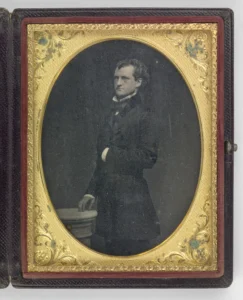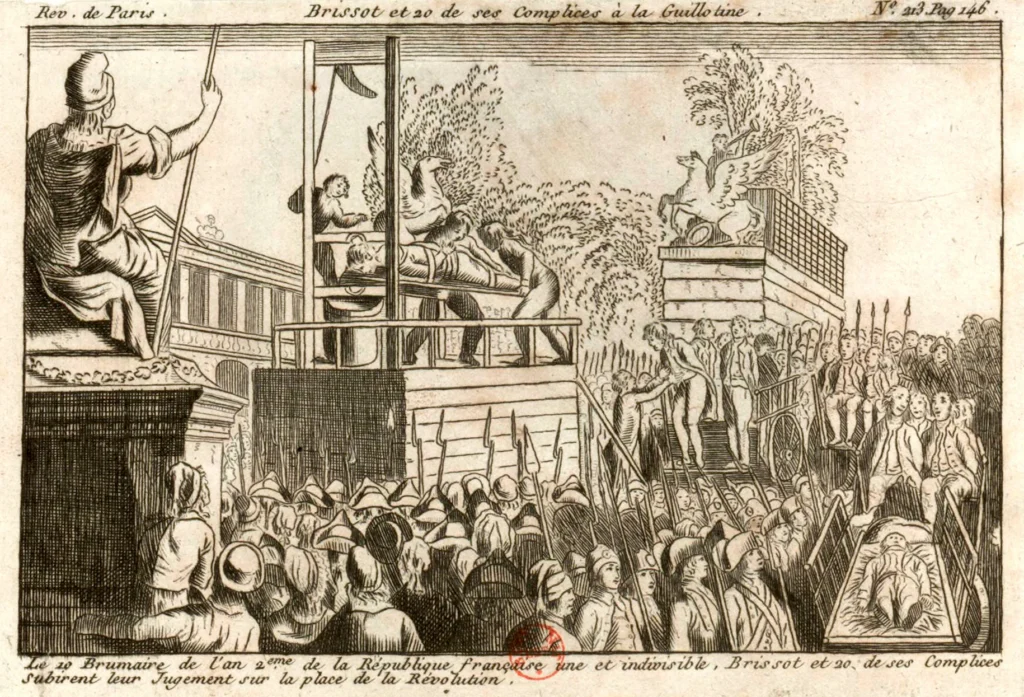
Guillotine history begins with a paradox: a device built to reduce human suffering became synonymous with mass political murder. When Dr. Joseph-Ignace Guillotin proposed his “simple mechanism” to the French National Assembly on 10 October 1789, he envisioned a humane alternative to the tortures of the old regime[s]. Within five years, that mechanism would behead approximately 17,000 people during the Reign of Terror[s].
The Horrors Before the Blade
To understand why revolutionaries embraced the guillotine, consider what came before. Under the Ancien Régime, execution methods were brutal and class-based. Nobles could request beheading by sword or axe, though neither guaranteed a clean death. Commoners faced hanging, while highwaymen could be broken on the wheel, regicides drawn and quartered, heretics burned alive, and counterfeiters boiled[s].
The breaking wheel was particularly horrific. Condemned prisoners were tied to a large wooden wheel while executioners systematically shattered their limbs with a cudgel or iron bar. In France, the wheel was rotated while the prisoner was struck, with the final blow to the neck or chest, the coup de grâce, delivered as a “mercy.” Without it, victims could remain conscious for hours or even days; some accounts describe survivors lasting up to three days before dying of shock, dehydration, or exposure[s].
A Physician’s Humanitarian Dream
Dr. Guillotin was a respected Paris physician and humanitarian reformer who sought to reduce the cruelty and inequality of capital punishment; although some later accounts describe him as opposed to the death penalty, his 1789 proposals did not call for its abolition. Recognising that executions would not be ended outright, he aimed for the next best thing: making them swift, painless, and equal for all citizens regardless of social class[s]. In a remark that would haunt his legacy, he is reported to have said: “Now, with my machine, I cut off your head in the twinkling of an eye, and you never feel it!”[s]
But Guillotin did not design the device bearing his name. That work fell to Dr. Antoine Louis, the King’s surgeon and Secretary to the Academy of Surgery, working with German harpsichord maker Tobias Schmidt. The device was initially called the “louisette” or “louison” after Louis[s]. According to a memoir by the grandson of executioner Charles-Henri Sanson, King Louis XVI himself suggested using a straight, angled blade rather than a curved one, improving the very instrument that would later take his head[s].
The First Cut: 25 April 1792
Guillotine history records its first victim as Nicolas Jacques Pelletier, a highwayman convicted of robbery. On 25 April 1792, executioner Charles-Henri Sanson released the blade at the Place de Grève in Paris[s]. The crowd, expecting the drawn-out spectacle of traditional executions, found the quick death anticlimactic. The machine had worked exactly as intended: swift, efficient, and equal in its application.
What the revolutionaries could not foresee was how that efficiency would transform the guillotine from humanitarian reform into industrial-scale killing.
The Reign of Terror
Between 5 September 1793 and 27 July 1794, Revolutionary France descended into political violence unprecedented in European history. The Committee of Public Safety, led by Maximilien Robespierre, arrested at least 300,000 suspects. Of these, 17,000 were officially executed, while another 10,000 died in prison or without trial[s].
The Law of 22 Prairial (10 June 1794) stripped defendants of their right to legal counsel and public trial, leaving juries only the choice between acquittal and death[s]. In the “Great Terror” that followed, executions accelerated to a pace that horrified even hardened revolutionaries. At Place de la Nation in Paris, the guillotine claimed as many as 71 heads in a single hour[s]. Between 10 June and 27 July 1794, 1,376 people were executed in Paris alone, roughly 30 per day[s].
The victims ranged in age from 14 to 92. On Christmas Day 1793, 247 people were guillotined[s].
The Famous and the Forgotten
Guillotine history remembers the famous victims: King Louis XVI, executed on 21 January 1793; Queen Marie Antoinette, who followed on 16 October 1793, her last words an apology for stepping on the executioner’s foot[s]; revolutionary leaders Georges Danton and finally Robespierre himself, beheaded on 28 July 1794.
But the popular image of aristocrats lining up for the blade is largely myth. Historian Donald Greer’s analysis reveals that 85% of Terror victims belonged to the Third Estate, commoners. Only 8.5% were nobility and 6.5% clergy. “More carters than princes were executed,” Greer wrote, “more day labourers than dukes and marquises, three or four times as many servants than parliamentarians”[s].
185 Years of Guillotine History
The Terror ended with Robespierre’s fall, but the guillotine remained France’s official method of execution for nearly two more centuries. Public executions continued until 1939, when the beheading of murderer Eugen Weidmann drew such hysterical crowds that President Albert Lebrun moved to end public executions; a decree on 24 June 1939 limited future executions to the premises of the prison[s].
The final chapter of guillotine history closed on 10 September 1977, when Hamida Djandoubi was executed at 4:40 a.m. at Baumettes Prison in Marseille. Convicted of kidnapping, torturing, and murdering his girlfriend Élisabeth Bousquet, he became the last prisoner executed in France[s]. France abolished capital punishment entirely on 9 October 1981.
The Man Who Never Wanted His Name on It
Dr. Guillotin spent the rest of his life regretting the association. Briefly imprisoned toward the end of the Reign of Terror, he was released, abandoned politics, and returned to medicine, becoming one of the founders of the French National Academy of Medicine. He died of natural causes in 1814, from a carbuncle on his shoulder, contrary to persistent myth[s].
His family petitioned the French government to rename the machine. When the government refused, they changed their own surname instead[s]. The humanitarian who dreamed of painless death had become, through the irony of history, the eponym for political mass murder.
Guillotine history presents scholars with a fundamental question about Enlightenment reform: how did a device explicitly designed according to principles of human rights become the Terror’s defining instrument? Dr. Joseph-Ignace Guillotin proposed his “simple mechanism” on 10 October 1789, seeking to replace torture-executions with instant, painless death[s]. The design was, in the words of EBSCO’s research summary, intended to “make execution less painful and to provide one means of execution for all who received the death penalty, regardless of their social class”[s]. Within five years, the machine had beheaded approximately 17,000 people during the Reign of Terror[s].
Pre-Revolutionary Execution Methods
The Ancien Régime maintained a class-stratified system of capital punishment. Only the nobility and upper bourgeoisie had the privilege of being decapitated; the poor were typically hanged in the public square. Highwaymen were broken on the wheel, regicides drawn and quartered, heretics burned alive, and counterfeiters boiled[s]. The breaking wheel exemplified pre-Enlightenment judicial brutality: executioners systematically shattered limbs with a cudgel or iron bar while the victim was tied to a wooden wheel. In France, the wheel was rotated, the condemned struck repeatedly, with the final coup de grâce to the neck or chest delivered only as an act of mercy. Without it, survival times of three days or more were not unusual[s].
Guillotin’s six articles, proposed on 10 October 1789, addressed both the cruelty and inequality of this system. He advocated: uniform punishment regardless of class; death by decapitation via mechanism; no legal discrimination against criminals’ families; prohibition on reproaching families about punishments; no property confiscation; and return of bodies to families upon request[s].
Design and Attribution
Guillotine history commonly misattributes the device’s invention to its namesake. The actual designer was Dr. Antoine Louis, surgeon to the King and Secretary to the Academy of Surgery, working with German harpsichord maker Tobias Schmidt. The device was initially called the “louisette” or “louison”[s]. According to the memoirs of Charles-Henri Sanson’s grandson, Louis XVI himself suggested the angled blade design that would ensure reliable decapitation[s].
The legislation making mechanical decapitation France’s sole legal execution method was signed by Louis XVI in March 1792. The first execution occurred on 25 April 1792, when highwayman Nicolas Jacques Pelletier was beheaded at the Place de Grève by Sanson[s].
Quantifying the Terror
The Reign of Terror (5 September 1793 to 27 July 1794) generated substantial documentation. Britannica cites “at least 300,000 suspects arrested; 17,000 officially executed, and perhaps 10,000 died in prison or without trial”[s]. The Law of 22 Prairial (10 June 1794) suspended defendants’ rights to public trial and legal counsel, accelerating executions[s].
The NEH documentary Picpus: Walled Garden of Memory records that between 14 June and 27 July 1794, executions reached “as fast as seventy-one beheadings in an hour”[s]. The Conversation, synthesizing historian Donald Greer’s research, notes “1,376 people were guillotined over just 47 days, between June 10 and July 27 1794. That’s about 30 a day”[s].
HistoryExtra documents victim demographics: ages ranged from 14 to 92, with 247 executions on Christmas Day 1793 alone[s].
Class Demographics of Victims
Guillotine history in popular memory emphasizes aristocratic victims, but Greer’s statistical analysis reveals a different picture: 85% of Terror victims belonged to the Third Estate (commoners), 8.5% to nobility, and 6.5% to clergy[s]. As Greer wrote: “more carters than princes were executed, more day labourers than dukes and marquises, three or four times as many servants than parliamentarians”[s].
Notable executions included Louis XVI (21 January 1793), Marie Antoinette (16 October 1793), whose final words were an apology for stepping on the executioner’s foot[s], and Robespierre himself (28 July 1794).
Post-Terror Continuity and Abolition
The guillotine remained France’s legal execution method until abolition in 1981[s]. A 1939 French law banned executions in public following the disorderly Versailles beheading of Eugen Weidmann; a presidential decree on 24 June 1939 limited future executions to the premises of the prison[s]. The final execution occurred on 10 September 1977 at 4:40 a.m. at Baumettes Prison, Marseille, when Hamida Djandoubi, convicted of torturing and murdering his girlfriend Élisabeth Bousquet, became “the country’s last prisoner to be executed”[s].
Guillotin’s Legacy
Dr. Guillotin never accepted the association with his name. He died at home in Paris in 1814, aged 75, of a carbuncle on his shoulder[s]. His family petitioned the government to rename the device; when refused, they changed their own surname[s]. The persistent myth that he died by guillotine is contradicted by the historical record: he lived to see the unintended consequences of the device he had championed[s].
The 185-year span of guillotine history, from Pelletier’s execution in 1792 to Djandoubi’s in 1977, demonstrates how technological “improvements” to capital punishment can enable rather than prevent state violence at scale.