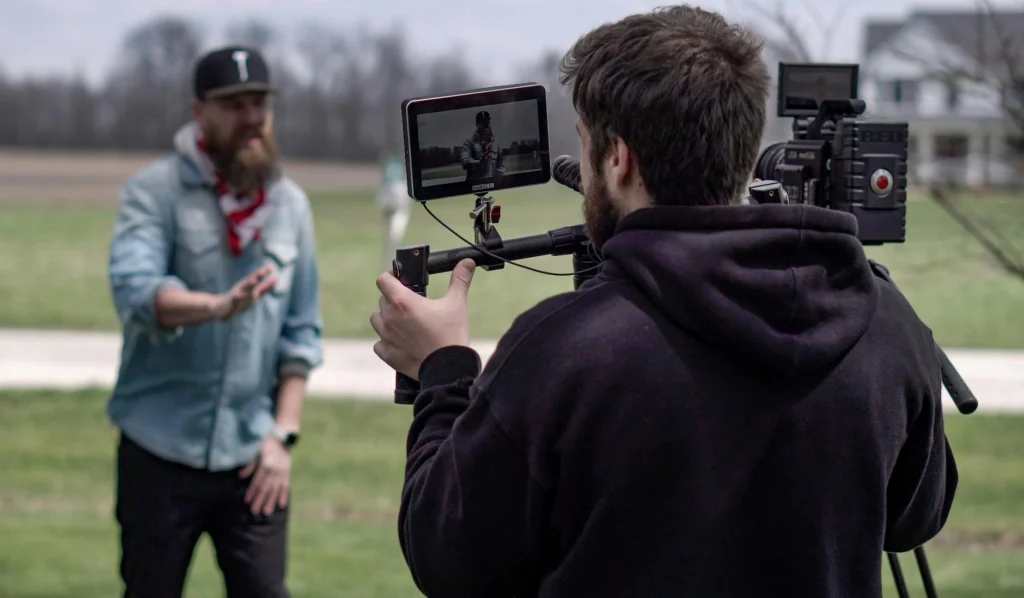
Something changed in 2015. True crime, once the domain of grainy reenactments and tabloid sensationalism, emerged from the shadows wearing a new costume: prestige true crime, complete with moody cinematography, haunting original scores, and the imprimatur of streaming giants. The genre that had long been dismissed as lowbrow entertainment suddenly found itself winning Emmy Awards and dominating cultural conversation. Behind this glossy transformation lies an uncomfortable question: has true crime become less about justice and more about aesthetic commodification?
The Prestige True Crime Revolution
The shift arrived with remarkable speed. In late 2014, the podcast Serial captivated millions with its reinvestigation of a 1999 murder, racking up an estimated 40 million downloads in its first three months[s]. The following year delivered a one-two punch that redefined the genre: HBO’s The Jinx and Netflix’s Making a Murderer. These weren’t lurid crime stories; they were positioned as social justice projects, as investigations into institutional failure[s]. Making a Murderer drew 19.3 million viewers in its first five weeks and went on to win four Primetime Emmy Awards[s][s].
The template was set. Prestige true crime would look and feel different from what came before. Filmmaker Charlie Shackleton, reflecting on his own failed attempt to make a Zodiac Killer documentary, noted that the aesthetic DNA traces back to Errol Morris’s 1988 film The Thin Blue Line, which “set the mould for the foggy re-enactments and speculative timelines that have become de rigueur in both the genre’s lowliest daytime TV offerings and its Emmy-winning prestige dramas”[s].
The Economics of Tragedy
The numbers tell a stark story. According to Ampere Analysis, true crime now represents 16% of all documentary commissions worldwide, with 632 new crime documentary commissions tracked across 22 major media markets in 2025[s]. On Netflix alone, 15 of the top 20 documentary titles in 2024 were true crime productions, up from just six in 2020[s].
The financial incentives are clear. Media critic Sarah Marshall put it bluntly: “You know what’s cheaper than making a movie? Generating media from actual crimes, actual trials… you’re never going to run out of material”[s]. The podcast My Favorite Murder alone earned an estimated $15 million in 2019[s]. Networks have responded with what Warner Bros Discovery-owned Investigation Discovery calls a “docbuster” strategy, pivoting toward appointment-viewing prestige true crime docuseries[s].
HBO explicitly markets this approach. When the network released a slate of five true crime films in late 2020, it emphasized their “high production values” and described them as “burnished to a high shine with that HBO prestige gloss”[s].
The Human Cost
For all the polish, these stories involve real people whose lives were shattered. Crime survivor Patricia Wenskunas, who was attacked by her personal trainer in 2002, draws a sharp distinction that the genre often blurs: “What happened to me is not ‘a story.’ It’s my life”[s].
The pattern of exploitation has become familiar. Netflix’s 2022 series DAHMER did not contact the families of Jeffrey Dahmer’s victims before production. Family member Eric Perry called the series “retraumatizing”[s]. Erik Menendez, through a statement from his wife, accused producer Ryan Murphy of shaping “his horrible narrative through vile and appalling character portrayals”[s].
The problem extends beyond individual grievances. True crime content privileges certain victims over others. Studies have found that white women are the largest demographic consuming the genre[s], and the stories produced tend to reflect that audience. Sex workers, Indigenous women, and other marginalized groups are often deemed “not a good enough story”[s].
A Genre Facing Reckoning
A decade after Serial and The Jinx sparked the prestige true crime boom, the genre is confronting its contradictions. As the BBC noted, “true crime is facing something of a reckoning. In the nine years since the show first aired, the genre’s popularity has grown enormously, but so has scrutiny over our relationship to it”[s].
The endless retelling of solved cases for entertainment, critics argue, “is commodifying the pain of other people“[s]. Prestige true crime has not escaped these concerns; it has merely dressed them up. The moody lighting and careful editing cannot change the fundamental transaction: turning tragedy into content, grief into engagement metrics.
The genre will not disappear. True crime ranks near the top of podcast popularity and remains the most common topic among top-ranked shows[s]. But the prestige true crime documentary, for all its awards and cultural cachet, has not resolved the tension at its core. It has only made that tension harder to see.
The transformation arrived with precision timing. In the span of 18 months between late 2014 and early 2016, three productions redefined what true crime could look like and, more importantly, what it could earn. Serial’s 40 million downloads in three months[s], The Jinx’s viral “killed them all” confession, and Making a Murderer’s 19.3 million viewers and four Emmy wins[s][s] demonstrated that true crime could achieve prestige television’s cultural legitimacy while delivering streaming’s engagement numbers. The result was an industrial pivot toward what we might call prestige true crime: productions that wear the aesthetic markers of quality television while trafficking in the same prurient material the genre has always offered.
Prestige True Crime as Aesthetic Strategy
The visual and narrative vocabulary of prestige true crime draws heavily from Errol Morris’s 1988 documentary The Thin Blue Line. That film pioneered the stylized reenactment and the speculative timeline, techniques that have since become standard across the genre. As filmmaker Charlie Shackleton observed, Morris’s aesthetic template “helped collapse the distance” between daytime true crime programming and Emmy-winning prestige productions[s]. The same foggy reenactments, the same dramatic pauses, now appear whether the production budget is modest or lavish.
This convergence is strategic. HBO explicitly frames its true crime output as carrying “prestige gloss” and “high production values”[s]. The aesthetic serves a legitimizing function: it signals that this is serious documentary work, not exploitative tabloid fare. Yet the underlying content remains remarkably consistent. Death and murder account for roughly a third of all true crime programming[s].
The Industrial Logic
The economics driving prestige true crime are straightforward. True crime now represents 16% of all documentary commissions globally, with Ampere Analysis tracking 632 new commissions across 22 markets in 2025[s]. On Netflix, 15 of the top 20 documentaries in 2024 were true crime, compared to just six in 2020[s]. Average documentary viewing time across major streaming platforms rose by 26 minutes per month between 2023 and 2024, with true crime driving much of that growth[s].
The production calculus favors true crime heavily. As media critic Sarah Marshall noted, crime stories offer “an inexhaustible, cost-effective cache of stories, characters, and even sets”[s]. Court records provide ready-made research; victims and perpetrators supply pre-existing narrative arcs. My Favorite Murder generated an estimated $15 million in 2019[s], demonstrating that prestige true crime and its less polished counterparts share the same revenue potential.
Networks have formalized this approach. Warner Bros Discovery-owned Investigation Discovery’s “docbuster” strategy explicitly targets prestige true crime as appointment viewing[s]. The genre’s reliable engagement metrics make it a low-risk proposition for commissioning executives.
The Commodification Problem
The critical literature on true crime increasingly frames the genre in terms of commodification. The FSU Law Review argued that “the prevalence of this industry presents serious ethical questions surrounding the commodification of heinous crimes in digital media”[s]. This framing identifies a structural problem rather than individual lapses: the prestige true crime documentary, regardless of its intentions, participates in an economy where tragedy generates revenue.
The statistics on audience composition are telling. Thirty-four percent of podcast listeners consume true crime content, with nearly half being women[s]. Research has found that white women constitute the genre’s largest demographic, with the hypothesis that “women, in particular, have anxiety about potential threats” and turn to true crime as a form of psychological preparation[s].
This audience composition shapes production decisions. Victims who do not match the demographic profile of viewers are less likely to have their stories told. Sex workers and Indigenous women are often considered “not a good enough story”[s]. The prestige true crime apparatus, despite its claims to seriousness, reproduces these selection biases.
The Consent Question
Prestige true crime has not solved the genre’s longstanding consent problems. Netflix’s DAHMER series did not notify the families of Jeffrey Dahmer’s victims before production; family member Eric Perry described the result as “retraumatizing”[s]. Ryan Murphy’s Monsters series prompted Erik Menendez to issue a statement accusing the producer of “vile and appalling character portrayals”[s].
Crime survivor Patricia Wenskunas articulated the fundamental tension: “What happened to me is not ‘a story.’ It’s my life”[s]. The prestige framework does not alter this dynamic; it merely provides higher production values for the same extraction of personal tragedy.
The Reckoning Narrative
Industry observers have begun framing the current moment as a reckoning. The BBC noted that “in the nine years since [The Jinx] first aired, the genre’s popularity has grown enormously, but so has scrutiny over our relationship to it”[s]. Critics argue that the endless retelling of solved cases “is commodifying the pain of other people“[s].
Yet the industrial incentives remain unchanged. True crime ranks near the top of podcast popularity and is the most common topic among top-ranked shows[s]. The prestige true crime documentary has achieved cultural legitimacy without fundamentally altering the transactional nature of the genre. It has made the commodification of grief more aesthetically palatable, nothing more.