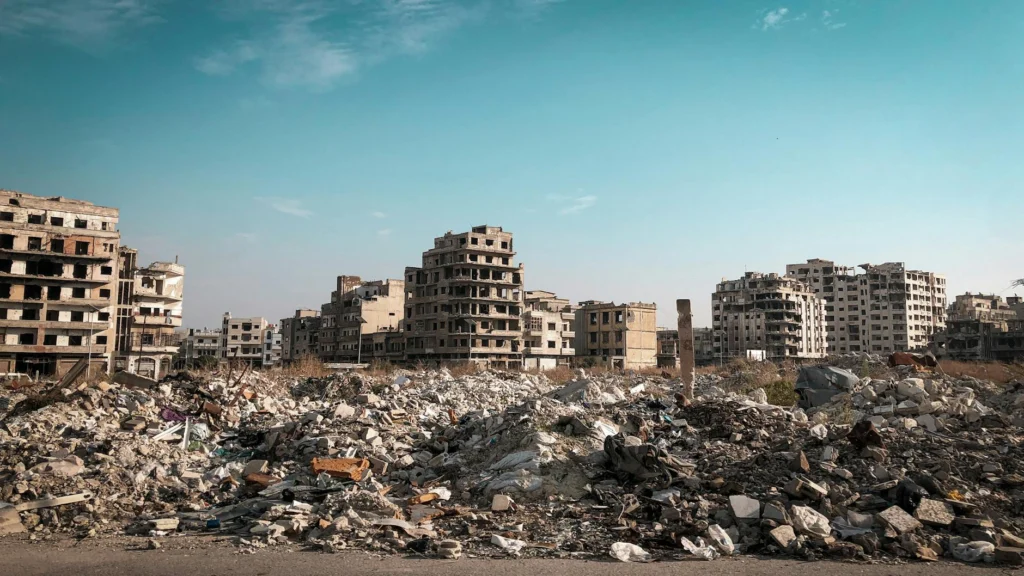
The number of active armed conflicts worldwide has reached a level not seen since the end of World War II. According to the Uppsala Conflict Data Program[s] (UCDP), 61 state-based conflicts were recorded in 2024, spread across 36 countries. Eleven of those crossed the threshold of 1,000 battle-related deaths in a single year, qualifying them as wars. With several conflicts escalating further into 2025 and 2026, as many as 14 now meet or approach that grim benchmark.
The scale of killing has matched the scale of conflict. The SIPRI Yearbook 2025[s] recorded 239,000 conflict-related fatalities in 2024, up from 188,000 the previous year, the highest annual total in the 2018-2024 period. The IISS Armed Conflict Survey 2025[s] counted nearly 240,000 people killed in violent events between July 2024 and June 2025, a 23% year-on-year increase. These are not abstractions. They represent a world where organized violence is spreading faster than the institutions designed to prevent it.
Active Armed Conflicts: Where the Wars Are
Five conflicts produced more than 10,000 fatalities in 2024: the Russia-Ukraine war, the Israel-Hamas war in Gaza, the civil wars in Sudan and Myanmar, and the subnational armed conflicts in Ethiopia. Ukraine alone accounted for roughly 76,000 battle-related deaths, according to UCDP data[s]. As of March 2026, the UN reported[s] that “the violence is worse than ever,” with 15,364 Ukrainian civilians killed and over 42,000 injured since the invasion began.
In Sudan, the power struggle between the Sudanese Armed Forces and the Rapid Support Forces has killed an estimated 400,000 people[s] since April 2023, according to the former U.S. envoy. More than 11 million have been displaced, making it the world’s largest displacement crisis. The RSF’s capture of El Fasher in October 2025, after an 18-month siege, triggered reports of mass atrocities including killings, sexual violence, and what multiple observers have called genocide.
Myanmar’s civil war, now in its fifth year since the 2021 coup, has spread to all 14 of the country’s states and regions[s]. The military junta controls roughly a fifth of the territory but continues to carry out airstrikes on civilians, schools, and hospitals. The United Nations reported[s] 5.2 million people displaced and an economy that has lost nearly $100 billion since the coup.
Conflicts Most People Never Hear About
The deadliest active armed conflicts dominate headlines, but a second tier of wars is just as consequential. In the eastern Democratic Republic of Congo, the Rwanda-backed M23 rebel group captured the cities of Goma and Bukavu in early 2025[s], killing over 7,000 people in a matter of weeks. The DRC prime minister warned the UN that “the security situation in eastern DRC has reached alarming levels.”
Across the Sahel, jihadist insurgencies in Mali, Burkina Faso, and Niger have intensified despite military coups in all three countries. The Council on Foreign Relations reports[s] that 51% of global terrorism-related deaths in 2024 occurred in the Sahel. Jihadist groups have seized large swaths of territory, including provincial capitals in Burkina Faso.
Somalia’s decades-long conflict with Al-Shabaab continues. Yemen’s civil war grinds on. Nigeria faces both Boko Haram and widespread banditry. Ethiopia’s subnational conflicts produced enough casualties in 2024 to rank among SIPRI’s five deadliest. And the Israeli military’s operations have expanded well beyond Gaza, with campaigns in Lebanon and direct exchanges of fire with Iran reshaping the regional security landscape.
Why the Number Keeps Climbing
The rise in active armed conflicts is not a sudden spike but a decade-long trend. UCDP data shows the number of state-based conflicts has nearly doubled since 2010, climbing from 31 to 61. The ICRC’s Humanitarian Outlook 2026[s] puts the broader count at around 130 when including non-state conflicts, more than double the number 15 years ago. Over 20 of these conflicts have lasted more than two decades.
Several structural factors explain the trend. International mediation has weakened. The UN Security Council is frequently paralyzed by vetoes. Regional powers increasingly back opposing sides in civil wars, turning local disputes into proxy conflicts. The ICRC notes that 204 million people now live in areas under the full or contested control of armed groups, beyond the reach of state institutions.
Meanwhile, the world is arming up. Global [s]military spending hit $2.7 trillion in 2024[s], rising for the tenth consecutive year, with a 9.4% increase that was the steepest since at least 1988. As the UN Secretary-General observed[s], “The world is spending far more on waging war than in building peace.” For context, eliminating extreme poverty worldwide would cost an estimated $300 billion, roughly one-ninth of the global military budget.
The Human Cost
Behind the statistics are people. The ICRC reports[s] that 284,000 people are now registered as missing by the Red Cross and Red Crescent Movement, a 70% increase in a single year. The IISS found that civilian deaths globally rose 40% in 2024, with Gaza accounting for 80% of child casualties and 70% of female casualties worldwide.
Forced displacement has reached levels that would have been unthinkable a generation ago. UNHCR data[s] shows 123.2 million people forcibly displaced at the end of 2024. Sudan alone has produced the world’s largest displacement crisis, surpassing Syria.
The Peace Research Institute Oslo[s] frames the moment bluntly: 2024 was the fourth most violent year since the end of the Cold War. The trajectory into 2025 and 2026 has not improved. Fourteen governments were responsible for one-sided violence against civilians in 2024 alone, and the active armed conflicts that produce this violence show no signs of resolution.
What Comes Next
None of the major active armed conflicts currently have credible peace processes. Russia-Ukraine negotiations have stalled. Sudan’s warring factions refuse to halt fighting. Myanmar’s junta held sham elections that deepened divisions. The DRC’s crisis risks pulling the entire Great Lakes region into wider war.
The ICRC’s director-general, Pierre Krahenbuhl, warned in the Humanitarian Outlook 2026: “If what we are seeing in Gaza, eastern Congo, Sudan and Ukraine is the future of war, we should all be extremely concerned, as this would shake the very foundations of our humanity.” The question facing the international community is not whether these conflicts will continue but whether any institution has the will, or the capacity, to stop them.
The Uppsala Conflict Data Program recorded 61 active armed conflicts involving at least one state in 2024[s], the highest number in the dataset’s history going back to 1946. Eleven crossed the war threshold of 1,000 battle-related deaths per year. With escalations in eastern Congo, the Sahel, and the broader Middle East through 2025 and into 2026, at least 14 conflicts now meet or closely approach that threshold. The world has not seen this many simultaneous wars since the immediate aftermath of World War II.
The fatality data is consistent across major research institutions. SIPRI’s Yearbook 2025[s] recorded 239,000 conflict-related fatalities in 2024, up 27% from 188,000 in 2023, and the highest annual total in the 2018-2024 data window. The IISS Armed Conflict Survey 2025[s] counted nearly 240,000 killed in violent events between July 2024 and June 2025, a 23% year-on-year increase, with civilian deaths specifically rising by 40% to nearly 50,000. The Peace Research Institute Oslo[s] classified 2024 as the fourth most violent year since the end of the Cold War.
Mapping the Active Armed Conflicts
The Five Deadliest
SIPRI identified five major active armed conflicts with over 10,000 fatalities each in 2024. The Russia-Ukraine war remains the deadliest single conflict, with approximately 76,000 battle-related deaths[s] in 2024 according to UCDP. By March 2026, the UN reported[s] that “the violence is worse than ever,” with civilian casualties in February 2026 up 45% over the same month in 2025. Some 60% of Ukraine’s gas production capacity has been destroyed and all power stations are damaged.
Israel’s wars in Gaza and Lebanon produced approximately 26,000 deaths in 2024, with 94% classified as civilians or of unknown identity by UCDP. In the Gaza conflict specifically, only 2% of the dead could be identified as members of a warring party. The IISS found that Gaza accounted for 80% of global child casualties and 70% of female casualties.
Sudan’s civil war, pitting the Sudanese Armed Forces against the Rapid Support Forces since April 2023, has killed an estimated 400,000 people[s] according to the former U.S. envoy, though independent verification remains impossible in much of the country. Over 11 million are displaced. The RSF’s capture of El Fasher in October 2025, after an 18-month siege, was followed by reports of mass killings and genocide.
Myanmar’s civil war, now five years into the post-coup period, has expanded to all 14 states and regions[s]. The junta retains most urban centers but controls a diminishing share of the country’s territory. Human Rights Watch documented airstrikes on schools, hospitals, and IDP camps throughout 2025. The UN reports[s] 5.2 million displaced, with the economy losing nearly $100 billion since the coup. A devastating 7.7-magnitude earthquake in March 2025 compounded the crisis, and the military reportedly carried out over 550 attacks in the two months following it, despite announcing a ceasefire.
Ethiopia’s subnational conflicts, particularly in the Amhara and Oromia regions, produced enough battle deaths to rank among SIPRI’s five deadliest, with fatalities increasing 152% between 2023 and 2024.
The Escalating Second Tier
Several conflicts intensified dramatically through 2025 and into 2026, pushing the total count of simultaneous active armed conflicts at war level higher.
In the eastern Democratic Republic of Congo, the Rwanda-backed M23 captured Goma on January 27, 2025, then Bukavu on February 16. The DRC prime minister told the UN Human Rights Council that over 7,000 people were killed[s] in the first two months of 2025 alone, with 3,000 deaths in Goma. Human Rights Watch documented M23 war crimes including killings, indiscriminate shelling of civilians, sexual violence, and forced displacement across North and South Kivu.
The Sahel jihadist insurgencies have reached a new intensity. The CFR reports[s] that 51% of global terrorism-related deaths in 2024 occurred in the Sahel. Jihadist groups have seized large swaths of Burkina Faso’s territory, including provincial capitals, and continued to overrun military positions.
Israel’s military operations expanded well beyond Gaza, with a ground campaign against Hezbollah in Lebanon and direct exchanges of fire with Iran, escalating the conflict from a proxy contest to interstate warfare. The Middle East regional war complex, including Yemen’s Houthi conflict, constitutes multiple interlocking active armed conflicts within a single theatre.
Structural Drivers: Why Conflict Is Proliferating
The rise is not a single event but a decade-long acceleration. UCDP data shows state-based conflicts nearly doubling since 2010, from 31 to 61. The ICRC’s Humanitarian Outlook 2026[s] counts approximately 130 armed conflicts when including non-state violence, more than double the figure 15 years ago, with over 20 lasting more than two decades.
Four structural factors are driving the increase:
- Collapsed mediation infrastructure. The UN Security Council is deadlocked by competing vetoes. Few of the major active armed conflicts have credible peace processes. SIPRI noted that “few peace processes linked to ongoing armed conflict advanced in 2024.”
- Proxy warfare. International powers increasingly supply arms, intelligence, and direct military support to opposing sides. Rwanda backs M23 in the DRC. Iran, the UAE, and others fuel the Sudan conflict. North Korea deployed troops to Russia in 2024.
- Armed group proliferation. The ICRC reports that 204 million people live in areas under full or contested control of armed groups. The IISS identified 380 armed groups “of humanitarian concern” as of June 2025.
- Military spending spiral. Global military expenditure reached $2.7 trillion in 2024[s], a 9.4% annual increase and the steepest rise since at least 1988. Spending has risen for 10 consecutive years and increased 37% since 2015.
The UN Secretary-General’s September 2025 report[s] on military spending put the disparity starkly: eliminating extreme poverty would cost roughly $300 billion, about one-ninth of global military budgets. “The world is spending far more on waging war than in building peace,” he said.
The Civilian Toll
The ICRC documented[s] 338 attacks against humanitarian workers in 2024, over 600 attacks on health facilities and personnel across 2023-2024, and the deaths of 25 Red Cross and Red Crescent workers in 2025. Missing persons registered with the Movement reached 284,000, a 70% annual increase.
UNHCR data[s] shows 123.2 million people forcibly displaced worldwide at the end of 2024. Sudan surpassed Syria as the world’s largest displacement crisis. One in 67 people on Earth is now forcibly displaced.
Global defence spending reached $2.7 trillion in 2024, while the entire humanitarian system appealed for just $50 billion, an amount that still went unmet.
Outlook: No Exit Ramps in Sight
None of the 14 wars currently have viable off-ramps. Russia-Ukraine peace talks have produced no results. Sudan’s SAF and RSF refuse to negotiate. Myanmar’s junta held elections that the UN called illegitimate. The DRC crisis threatens to engulf the Great Lakes region. Ethiopia-Eritrea tensions are rising again, with both countries massing troops along their shared border.
ICRC Director-General Pierre Krahenbuhl’s assessment in the Humanitarian Outlook 2026 is unequivocal: “If what we are seeing in Gaza, eastern Congo, Sudan and Ukraine is the future of war, we should all be extremely concerned, as this would shake the very foundations of our humanity.”
The data from UCDP, SIPRI, IISS, and PRIO converge on the same conclusion: the world is in the most dangerous period for organized violence since the founding of the United Nations. Whether it becomes more dangerous still depends on choices that the major powers have, so far, declined to make.