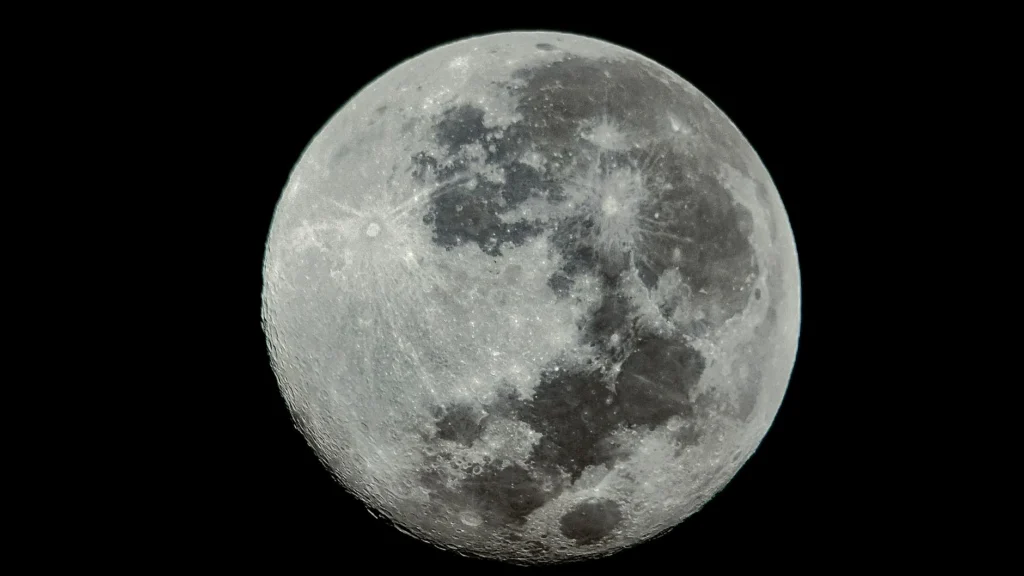
On April 1, 2026, four astronauts are scheduled to launch aboard NASA’s Orion spacecraft on a crewed lunar mission[s] that will take humans beyond Earth orbit for the first time since Apollo 17 in 1972. The mission is called Artemis 2, and it will not land on the Moon. That is the point. Before anyone sets foot on the lunar surface again, NASA needs to know that the spacecraft, the rocket, and the people inside can survive the trip.
This is not a ceremony. It is a test.
What the Crewed Lunar Mission Will Actually Do
Artemis 2 will carry NASA astronauts Reid Wiseman, Victor Glover, and Christina Koch, along with Canadian Space Agency astronaut Jeremy Hansen, on a 10-day journey around the Moon and back[s]. The crew will orbit Earth twice, test spacecraft systems, then fire the engines to head for the Moon. They will fly within roughly 6,400 to 9,600 kilometers of the lunar far side before swinging back toward Earth on a path shaped by gravity alone.
Victor Glover will become the first Black person, Christina Koch the first woman, and Jeremy Hansen the first non-American to travel this far from Earth. Depending on the launch date, the crew may travel farther from Earth than any humans in history[s], potentially exceeding the record set by Apollo 13 in 1970.
But the mission’s value is not in the records. It is in the data.
Life Support Has Never Been Tested Like This
The Orion capsule flew once before, on the uncrewed Artemis 1 mission in late 2022. But that version of the spacecraft was missing several key systems, chief among them the Environmental Control and Life Support System[s]. ECLSS manages breathable air, drinkable water, temperature, humidity, and pressure inside the capsule.
On Artemis 2, the crew will put ECLSS through its paces for the first time. The schedule includes aerobic exercise on a flywheel device to stress-test the system[s] before the spacecraft leaves Earth orbit. If ECLSS cannot handle four humans breathing, sweating, and working in a capsule for 10 days, the mission stops there.
ESA’s European Service Module provides the consumables: 240 kg of drinking water, 90 kg of oxygen, and 30 kg of nitrogen[s], along with propulsion and electricity from four solar arrays.
The Heat Shield Problem
When Orion returned from Artemis 1, engineers found something troubling. More than 100 locations on the heat shield showed unexpected cracking and char loss[s] in the ablative material called Avcoat.
The root cause: during reentry, gases generated inside the Avcoat could not escape fast enough. Pressure built up and cracked the charred outer layer. Ground testing before the flight had used higher heating rates, which allowed gases to vent normally. The actual, less severe heating during Artemis 1’s reentry slowed char formation while still producing gases[s], trapping them inside.
NASA says that even with the damage, cabin temperatures remained safe[s] and crew would have survived. For Artemis 2, the fix is a modified reentry trajectory with a steeper entry angle and no skip[s], reducing the time Orion spends in the temperature range that caused the problem.
A NASA Inspector General report noted that this approach does not retire the heat shield risk for Artemis 3[s] and caused cascading delays across the entire program.
Practicing for the Docking That Is Not Happening Yet
Future Artemis missions require Orion to dock with a separate lander in orbit. The Artemis 2 Orion does not have a docking hatch, but the crew will still simulate proximity operations using the spent upper stage of the SLS rocket[s] as a stand-in target. This rehearsal tests the manual piloting and close-approach capabilities that will be critical when a real lander is waiting in orbit on later missions.
Radiation Beyond Earth’s Shield
Outside the protection of Earth’s magnetic field, the crew will be exposed to deep-space radiation for the first time since the Apollo era. Orion carries radiation sensors throughout the cabin, and the astronauts wear personal dosimeters. On day eight of the mission, the crew will perform a radiation drill simulating a solar flare, building an improvised shelter from supplies stored in the capsule[s] and measuring its effectiveness.
NASA and NOAA will monitor space weather around the clock during the flight to provide real-time protection decisions.
What Comes After
If Artemis 2 succeeds, the next step is Artemis III, a crewed docking test in low-Earth orbit[s], followed by Artemis IV, which aims to land two astronauts on the lunar south pole by 2028 for roughly 30 days.
The entire sequence depends on what happens in these 10 days. As commander Reid Wiseman put it at a press conference: “Not for one second do we have an expectation that we are going. We will go when this vehicle tells us it’s ready.”[s]
That is the right attitude for a crewed lunar mission designed to answer, for the first time in half a century, whether the hardware actually works with humans inside it.
Artemis 2, targeting a no-earlier-than launch of April 1, 2026, at 22:24 UTC from Kennedy Space Center’s Launch Complex 39B, represents the first crewed lunar mission since Apollo 17 in December 1972. The 10-day flight will send four astronauts beyond Earth orbit[s] on a free-return trajectory around the Moon, generating the engineering data needed to certify every system in the SLS-Orion stack for subsequent landing missions.
Mission Architecture: The Crewed Lunar Mission Profile
The SLS Block 1 rocket will loft the Orion Multi-Purpose Crew Vehicle (MPCV) into low Earth orbit. After two orbits, the Interim Cryogenic Propulsion Stage (ICPS) will perform a perigee raise burn, then a second burn to establish a high elliptical orbit[s]. Following spacecraft separation, the crew will conduct proximity operations demonstrations using the ICPS as a cooperative target, testing the manual control and rendezvous capabilities that future missions will require for lander docking.
On flight day two, the European Service Module’s main engine, a refurbished Orbital Maneuvering System engine with six prior Space Shuttle flights[s], will execute the trans-lunar injection (TLI) burn. This single maneuver places Orion on a free-return trajectory, a fault-tolerant flight path that will bring the spacecraft back to Earth even in the event of a propulsion failure[s], the same contingency architecture that brought Apollo 13 home.
The lunar flyby will bring Orion within 6,400 to 9,600 km of the far side[s], with a maximum Earth distance of 370,000 to 450,000 km depending on launch date. This may exceed the 400,171 km record set by Apollo 13.
ECLSS: First Crewed Validation in Deep Space
Artemis 1 flew without the Environmental Control and Life Support System, making Artemis 2 the first test of ECLSS with crew aboard[s]. The system manages atmospheric composition (O2/CO2 balance, humidity, pressure), thermal regulation, potable water, and waste management.
ESA’s second European Service Module (ESM-2), with a launch mass of 13,500 kg including 8,600 kg of propellant[s], supplies 240 kg of water, 90 kg of oxygen, and 30 kg of nitrogen. Its 33 engines (one main, eight auxiliary, 24 attitude control) handle all propulsion after ICPS separation, and four solar arrays generate enough electricity to power two households.
The ECLSS stress test protocol includes aerobic exercise on a flywheel-based device on day two[s] to spike metabolic loads before the TLI commit point. The crew must validate that CO2 scrubbing, thermal loops, and humidity control can handle peak human output. If the system cannot maintain habitable conditions, the mission aborts before leaving Earth orbit.
Heat Shield: The Avcoat Char Loss Problem
Post-flight inspection of the Artemis 1 heat shield revealed more than 100 locations of unexpected char loss[s] in the Avcoat ablative thermal protection system. At 5 meters in diameter, it is the largest crewed-rated heat shield ever built.
Root cause analysis determined that during the skip-entry reentry profile, heating rates between atmospheric dips were lower than ground test conditions[s]. The lower heating slowed char formation while pyrolysis gases continued to accumulate. Without sufficient permeability in the Avcoat blocks, internal pressure exceeded the material’s fracture strength, causing cracking and liberation of charred material.
Key finding: areas of pre-existing permeable Avcoat did not experience cracking[s], because gases could vent through the material as designed. This confirmed the permeability hypothesis.
For Artemis 2, NASA has adopted a modified reentry trajectory: a steeper entry angle, elimination of the skip maneuver, and a shorter downrange landing[s]. This reduces the time the heat shield spends in the problematic low-heating-rate regime.
However, a NASA Inspector General report noted this approach does not retire the heat shield risk for Artemis 3[s] and that the investigation caused cascading schedule delays across all Artemis missions. The same Avcoat formula will fly on Artemis 3. Whether the trajectory-based mitigation can become a permanent solution, or whether a material redesign is needed, depends partly on what Artemis 2’s heat shield looks like after splashdown.
Proximity Operations and Navigation
Artemis 2’s Orion does not have a docking adapter, but the crew will still practice rendezvous maneuvers using the spent ICPS as a cooperative target[s]. This demonstration validates the manual piloting, relative navigation, and ESM engine control needed for future docking with Gateway modules and landers[s].
The Deep Space Network communications link must also be verified before the TLI commit, as it will be the crew’s sole communication path for eight days beyond Earth orbit.
Deep-Space Radiation Exposure
Beyond Earth’s magnetosphere, the crew will face galactic cosmic radiation and the risk of solar particle events for 10 days. Cabin radiation sensors and personal crew dosimeters will contribute to studies of human physiology and [s]biological responses to space travel[s].
On mission day eight, the crew will execute a solar flare simulation drill, reconfiguring cabin equipment into an improvised radiation shelter[s] and measuring attenuation with onboard sensors. This data directly informs crew protection protocols for the longer Artemis IV mission, which plans to keep astronauts at the Moon for roughly 30 days.
Reentry: The Final Exam
On day 10, the European Service Module will separate from the crew module at approximately 122,000 meters altitude. Orion will reenter at 40,000 km/h[s], generating a superheated plasma envelope that will temporarily block all communications. Two drogue parachutes will slow the capsule to roughly 480 km/h, followed by three pilot and three main parachutes reducing speed to 27 km/h for splashdown in the Pacific Ocean off San Diego.
The modified, steeper reentry profile means the heat shield will face a different thermal environment than Artemis 1. Post-recovery inspection of the Avcoat will be among the most consequential analyses in the program, determining whether the same shield design can fly on Artemis 3 or whether further redesign is required.
The Path to a Landing
Artemis 2’s success gates everything that follows. Artemis III will test Orion docking with a lunar lander in low-Earth orbit. Artemis IV, the first crewed landing since 1972, targets the lunar south pole by 2028[s] for a roughly 30-day surface mission.
As Christina Koch stated before launch: “Not for one second do we have an expectation that we are going. We will go when this vehicle tells us it’s ready.”[s]
That discipline is what separates a crewed lunar mission from a publicity stunt. Every hour of this 10-day flight generates data that either confirms or denies readiness for what comes next. The Moon is not going anywhere. The question is whether the spacecraft is ready to take people there.